Church of Sweden and Equality Watchdog Fight Checks on Foreign Mosque Money
Sweden wants to know who is paying for its mosques - and to stop the money when it risks strengthening Islamism. Both the Equality Ombudsman and the Church of Sweden oppose the bill, warning that religious groups could feel singled out.
STOCKHOLM - Swedish authorities are meant to be able to find out who is paying for a new mosque - and to stop the money if it risks strengthening anti-democratic forces.
That is the idea behind a new bill. But it has run into opposition from two unexpected directions: the state's own Equality Ombudsman and the Church of Sweden.
The Ombudsman wants a higher bar before any investigation can even begin. The Church of Sweden says the proposal risks casting suspicion on religious communities.
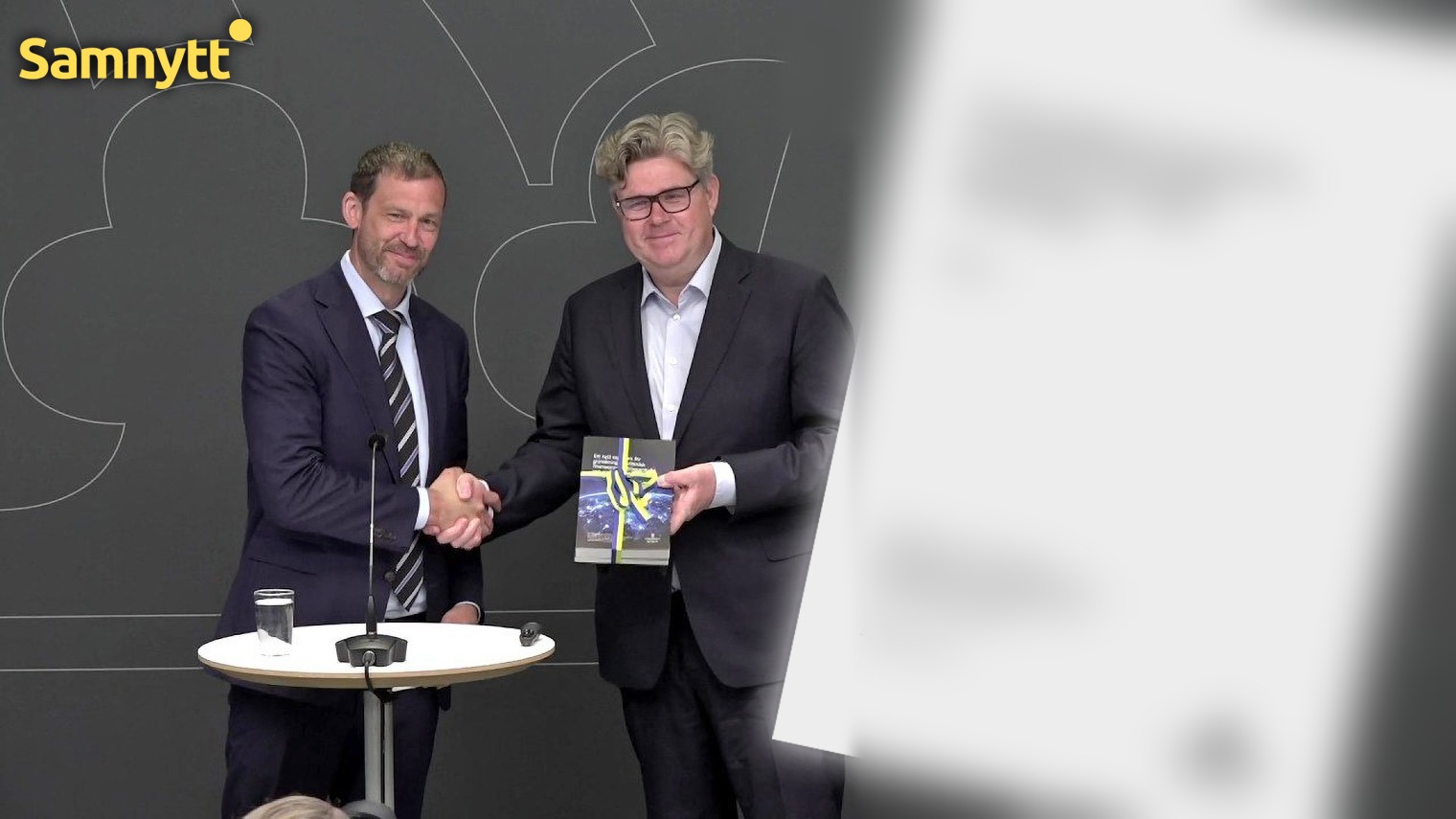
When Justice Minister Gunnar Strömmer received the inquiry on 23 June, Islamism was an explicit reason for it. The government had asked special investigator Michael Målqvist to propose rules against foreign funding of activities linked to Islamism, extremism and other anti-democratic interests.
The law Målqvist presented applies to all registered religious communities, whatever their faith. Non-profit associations and foundations that run or promote religious activities are also covered.
Gulf money bought influence
The background becomes concrete when the inquiry goes through what is already known about how Swedish mosques have been financed.
A report from the Swedish Defence University, cited in the inquiry, shows how donors in Qatar, Kuwait and Saudi Arabia have funded mosque construction and property purchases in Sweden.
According to the report, a single Saudi donor covered the entire 67 million kronor cost of the Gothenburg mosque. In Gävle, the Al-Rashideen foundation received around eight million kronor from Qatar-based Eid Charity to buy a building for its mosque.
What worries the inquiry is what comes with the money. In several cases, donors gained influence over how the recipient was run. Meanwhile, Swedish authorities have had little ability to even spot the financial ties - foundations, for example, are not required to report foreign donations separately.
The inquiry's own mapping shows how hard it is to judge a payment from bank data alone. Between 2020 and 2025, around 3.5 billion kronor in cross-border payments went to organisations that banks listed as religious communities, across all faiths.
What any single payment was for, or what conditions the donor attached, cannot be seen.
Most notifications to be waved through
The inquiry therefore proposes that anyone planning to accept foreign funding worth more than 150,000 kronor must, as a rule, report it at least a month in advance. The Swedish Agency for Youth and Civil Society would handle the reviews.
Most notifications are expected to be closed without action. For the agency to take a closer look, there must be "reason to assume" that grounds for a ban exist.
READ ALSO: Swedes and Christian Immigrants Fear Stockholm Mega-Mosque - "They Are Dangerous"
The agency would be able to stop the funding if it could harm Sweden's security or public order, or if the recipient works against society's fundamental values. It could also approve the money with conditions. A ban on future funding from a specific donor would apply for one year at a time.
Watchdog wants stronger suspicion first
The threshold for opening a review is one of the things the Equality Ombudsman objects to. In its formal response on 9 November, the agency rejected the bill in its current form.
It says it shares the view that Sweden must be able to act against funding of violent extremism. But it wants it to appear "probable" that there are grounds for a ban before a review is even opened.
How such an assessment could be made without first looking into the matter is unclear. The Ombudsman focuses instead on the risk that, for example, Muslim communities might feel singled out if a government agency examines them.
"The consequence of a low and vague threshold is that far more actors than necessary risk being placed under suspicion and investigated," the Ombudsman writes.
It also stresses that foreign donations have historically made it possible for Muslims to practise their religion in countries where they are a minority.
Church wants a higher limit
The Church of Sweden also rejects the bill as drafted. It wants the government to consider a limit higher than 150,000 kronor, pointing to the cost of handling notifications and the difficulty for an association to know whether it is covered - especially when failing to report could bring criminal penalties.
The church also fears that smaller congregations could find it harder to rent premises, open bank accounts and take out insurance "if those around them begin to view them with suspicion" - which, it argues, is what a government review amounts to.
The investigator sees it differently. Knowing who actually paid, and on what terms, would let authorities focus on recipients where there are concrete reasons for concern. According to the inquiry, that would also spare other communities sweeping suspicion over their foreign contacts.
The law is proposed to take effect on 1 January 2028. The bill is still out for consultation.
READ ALSO: Sweden Reviews State Funding for Muslim Groups After Polygamy Exposé
Mats Dagerlind · Senior Political Columnist
Mats Dagerlind is Senior Political Columnist at Samnytt and Samnytt News. A veteran Swedish political commentator and essayist, he covers Swedish domestic politics, free speech, cultural identity, and media accountability.
Follow @SamnyttNews on 𝕏 ↗