Centre Party Says Yes to Kristersson - Government Will Rely on Sweden Democrats
After 75 days of deadlock, Sweden's Centre Party voted 36 to 23 to back Ulf Kristersson and revive the old centre-right Alliance. The new government plans softer migration rules but needs the Sweden Democrats to abstain in Monday's vote.

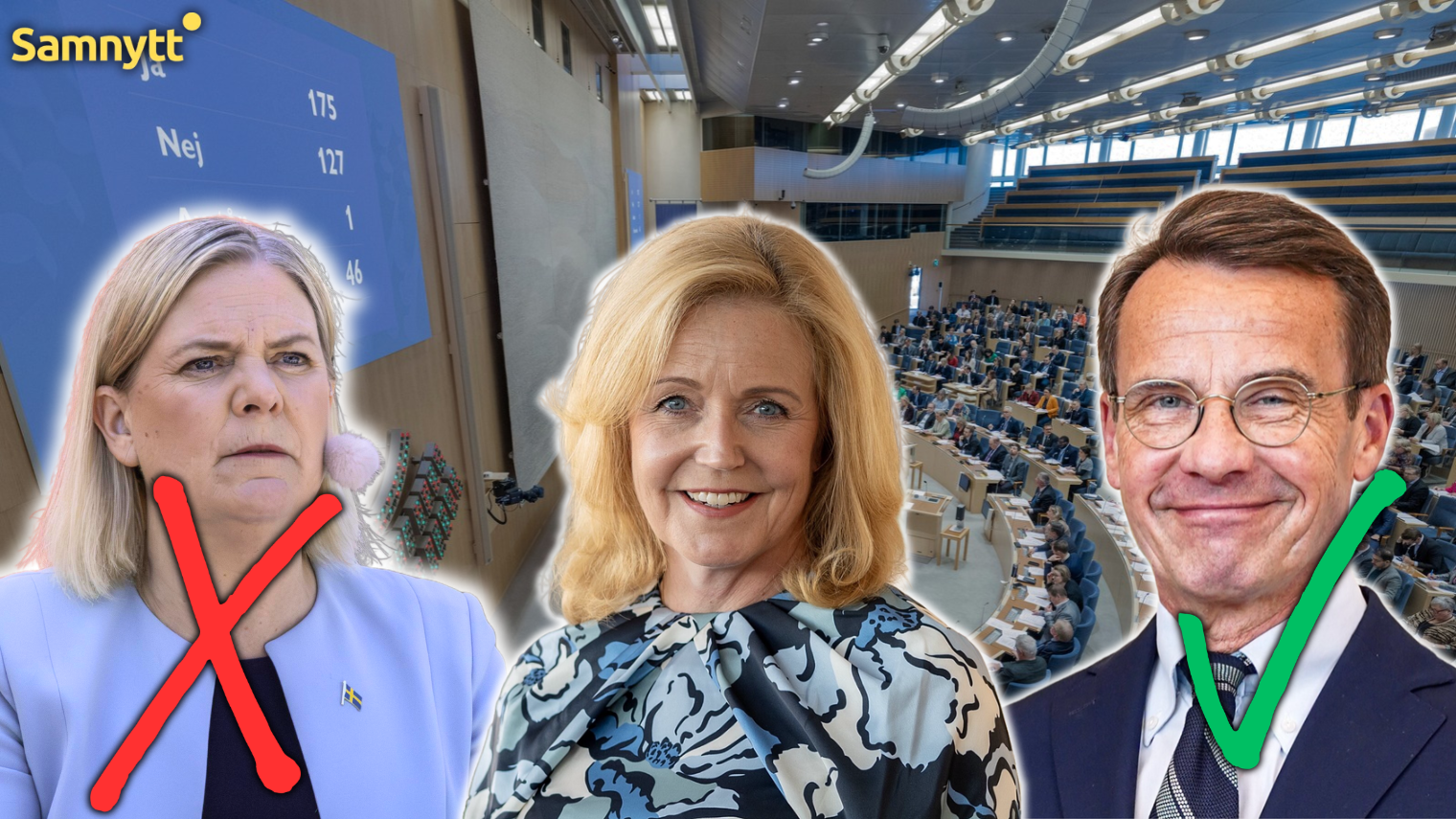
STOCKHOLM - After 75 days of deadlock, Social Democrat leader Magdalena Andersson has failed to form a government. On Sunday afternoon the Centre Party's national council voted to let Moderate leader Ulf Kristersson become prime minister and to join a four-party centre-right government with the Moderates, the Christian Democrats and the Liberals. That government will only get into office if the Sweden Democrats let it. Parliament votes on the new prime minister on Monday.
The council, a 59-member body that decides major political questions between party congresses, met around 1 pm. A majority of both the party board and the parliamentary group had already backed party leader Elisabeth Thand Ringqvist's proposal to vote yes to Kristersson, but it met stiff resistance inside the party.
When the votes were counted, 36 members backed the leadership and 23 voted against.
"After 75 days of political negotiations and deadlock, Sweden can now move forward," Thand Ringqvist told reporters after the vote.
The old Alliance is back
The decision means the four parties of the old centre-right Alliance look set to govern together again, twelve years after Fredrik Reinfeldt's government lost power.
Thand Ringqvist explained the U-turn by pointing to the collapse of talks with the red-green parties. The Left Party's demand for cabinet posts was one of the main sticking points. She also says the Centre Party won major parts of its agenda in the policy agreement negotiated with the Moderates, the Christian Democrats and the Liberals.
Softer migration rules on the table
The return of the Alliance does not mean the tough immigration line of the Tidö agreement, the deal between the previous government and the Sweden Democrats, will simply carry on. The agreement the Moderates, Christian Democrats and Liberals presented on Friday contains several easings on migration.
Deportations of teenagers who turn 18 are to be stopped. An inquiry will look at giving people and families with strong ties to Sweden a better chance to stay. The parties also want better terms for skilled labour migration.
That leaves the Sweden Democrats about to let a government into office that plans to loosen parts of migration policy, without being part of the deal it rests on.
The Centre Party wants to go much further. In a fresh parliamentary motion it proposes a fivefold increase in UN quota refugees, from 900 to 5,000 a year. It also wants to scrap the salary floor for labour migrants and let some people who have already been deported return to Sweden.
Hanging on the Sweden Democrats
Despite years of refusing any cooperation with the Sweden Democrats, the Centre Party is now joining a government that depends on them not voting against Kristersson on Monday.
Sweden Democrat leader Jimmie Åkesson has already said his party is ready to abstain and tolerate a four-party centre-right government. After that, the party says it will go into "total opposition" and judge every government proposal case by case. No guarantees have been given that the government's budgets will pass.
A party split down the middle
Sunday's vote shows how deeply divided the Centre Party is. Close to four in ten council members voted against the leadership.
The Centre Party's opposition leader in the city of Falun, Fredrik Adolphson, broke down in tears when local paper Falu-Kuriren asked him about the party's turn to the right. Adolphson, who joined the party because of former leader Annie Lööf's line, has warned of a wave of resignations and says he is weighing his own future in politics.
"What am I supposed to tell my children?" he said.
Johan Naddebo, the Centre Party's district chairman in Stockholm, is also disappointed and says he formally dissented from the decision.
Third time lucky
At 1 pm on Monday, parliament will vote on Speaker Andreas Norlén's proposal to make Ulf Kristersson prime minister.
It is the third prime ministerial vote since the September election. Both Magdalena Andersson and Elisabeth Thand Ringqvist have already been voted down.
Kristersson is approved as long as fewer than 175 of the 349 members vote no.
With the Centre Party on board and the Sweden Democrats' promise to tolerate Kristersson, Sweden's drawn-out government crisis looks close to an end, and the snap election that had begun to look increasingly likely now seems to be off the table.
Daniel Lönn · Reporter
Daniel Lönn reports for Samnytt. This article is an English adaptation of his Swedish reporting.
Follow @SamnyttNews on 𝕏 ↗