No Ham or Herring - Left-Wing Gothenburg Goes Vegetarian at Christmas
Gothenburg's left-wing city government has made vegetarian food the default at staff Christmas dinners. Employees who want the traditional ham and herring must ask and explain why, and can still be refused.

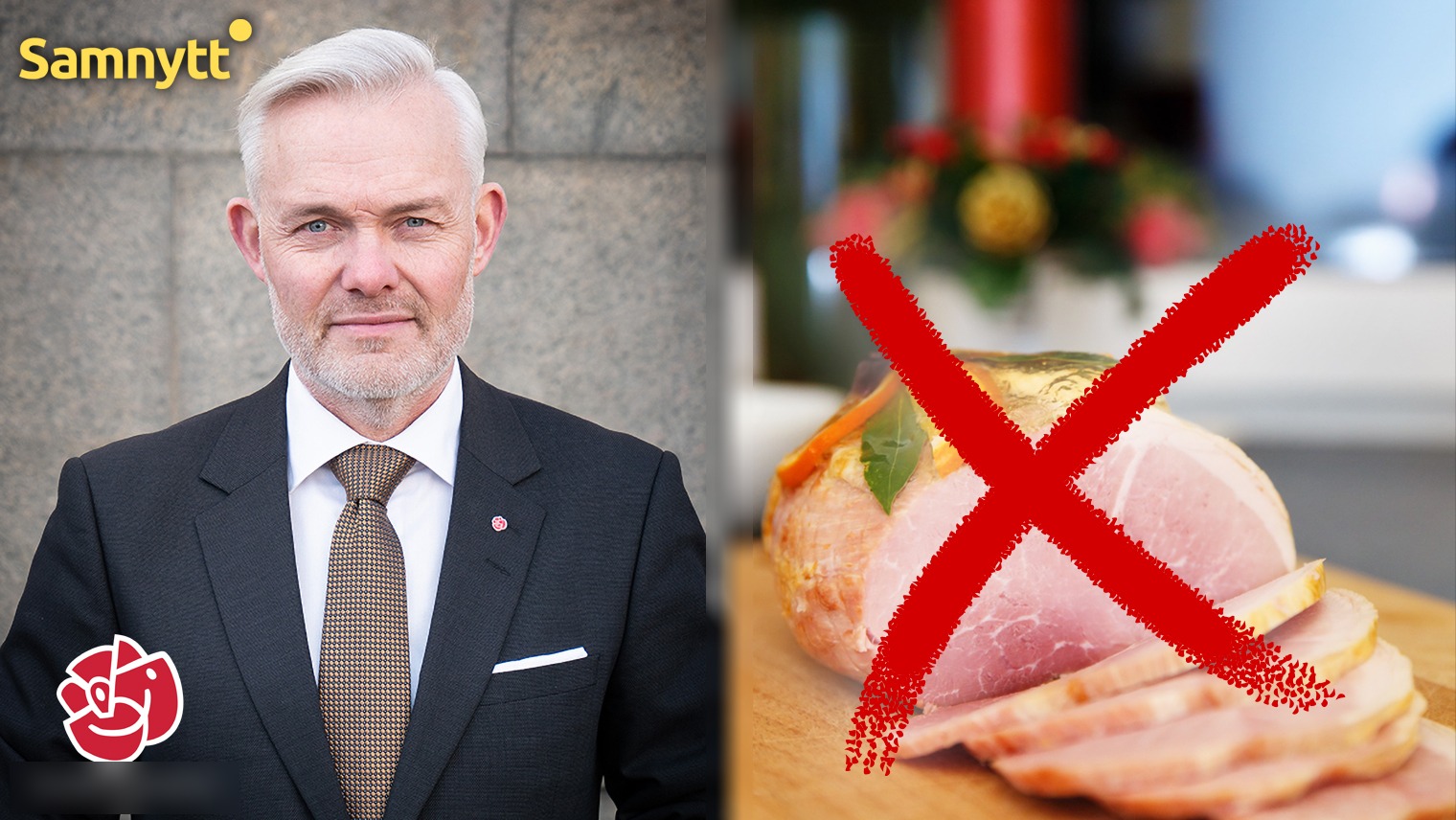
GOTHENBURG - Christmas ham and pickled herring are the heart of the Swedish Christmas buffet. In Gothenburg, Sweden's second city, they have now been recast as climate villains. City employees who want a traditional spread at their staff Christmas dinner have to ask for it and explain why. Otherwise the whole table goes vegetarian.
The rule comes from the city's left-wing government, a coalition led by the Social Democrats together with the Left Party and the Greens, which has decided that vegetarian food should come first at every conference the city arranges. Three local politicians from the centre-right Moderates are now pushing back, arguing that staff should be free to choose what they eat.
Anyone booking this year's Christmas dinner for municipal staff in Gothenburg finds the restaurants listed under the city's framework deal for external conferences. Before booking, they must check what their own workplace allows, and after the order from the ruling majority it can be hard to find a traditional buffet at all. For the sake of the climate, ham and herring are out by default and vegetarian dishes are in.
Meat second, preferably not at all
The reasoning is set out in Gothenburg's budget for 2026, where the governing parties wrote that vegetarian food must be the first choice at all conferences organised by the city.
Meat and fish come second, and ideally not at all. Since the same contract is used to book staff Christmas dinners, departments and city-owned companies interpret the rule differently, but many do not dare challenge the political leadership.
"Should be decided by the individual"
Moderate councillors Mattias Tykesson, Hampus Magnusson and Anneli Rhedin have filed a motion in the city council to scrap the vegetarian default, which they say singles out meat eaters as climate offenders.
They want meat, fish and vegetarian food offered on equal terms again, both at external conferences and at Christmas dinners, and they want employees to be able to choose without having to justify it or get approval.
According to the three, the framework deal that took effect on 1 March means that anyone who wants meat or fish has to ask specially and can still be turned down.
"Decisions about what goes on the plate should first and foremost be made by the individual, not by the employer," they write.
The Moderates also point out that by buying Swedish produce, the city could support Swedish farmers and strengthen the country's food security.
"We take the climate crisis seriously"
Two city committees, one for purchasing and procurement and one for environment and climate, have both recommended rejecting the motion. In the procurement committee, the Social Democrats, the Left Party and the Greens forced through a no, even though the civil servants had suggested the committee stay out of it.
"We in the red-green government take the climate crisis seriously and want to do what we can to reduce the city's environmental and climate impact," the three parties wrote in their proposal on what city employees may eat at Christmas.
The environment committee stresses that meat and fish can still be ordered, even if it may mean hassle and possibly a refusal. In its view, a vegetarian default cuts the climate footprint of the city's purchases, and that justifies limiting staff choices so that the most popular and traditional dishes disappear from the Christmas table.
Nobody knows who judges the reasons
The city's business development company takes no position on the motion. It has, however, looked at what the booking instructions mean for anyone who wants to opt out of the vegetarian choice.
According to the company, any such exception has to be justified. But the instructions do not make clear which reasons are good enough, who is supposed to judge them, or whether they need to be documented. The company also wants to know what happens if an employee cites their health or other personal circumstances to get a different meal.
Mats Dagerlind · Senior Political Columnist
Mats Dagerlind is Senior Political Columnist at Samnytt and Samnytt News. A veteran Swedish political commentator and essayist, he covers Swedish domestic politics, free speech, cultural identity, and media accountability.
Follow @SamnyttNews on 𝕏 ↗