EU Court Puts Wind Turbines Above Landscape and Heritage - Sweden Must Follow
The EU's top court has ruled that wind farms get priority over landscape and cultural heritage in permit decisions. Authorities can still refuse, but must justify it case by case. The ruling applies in Sweden too.

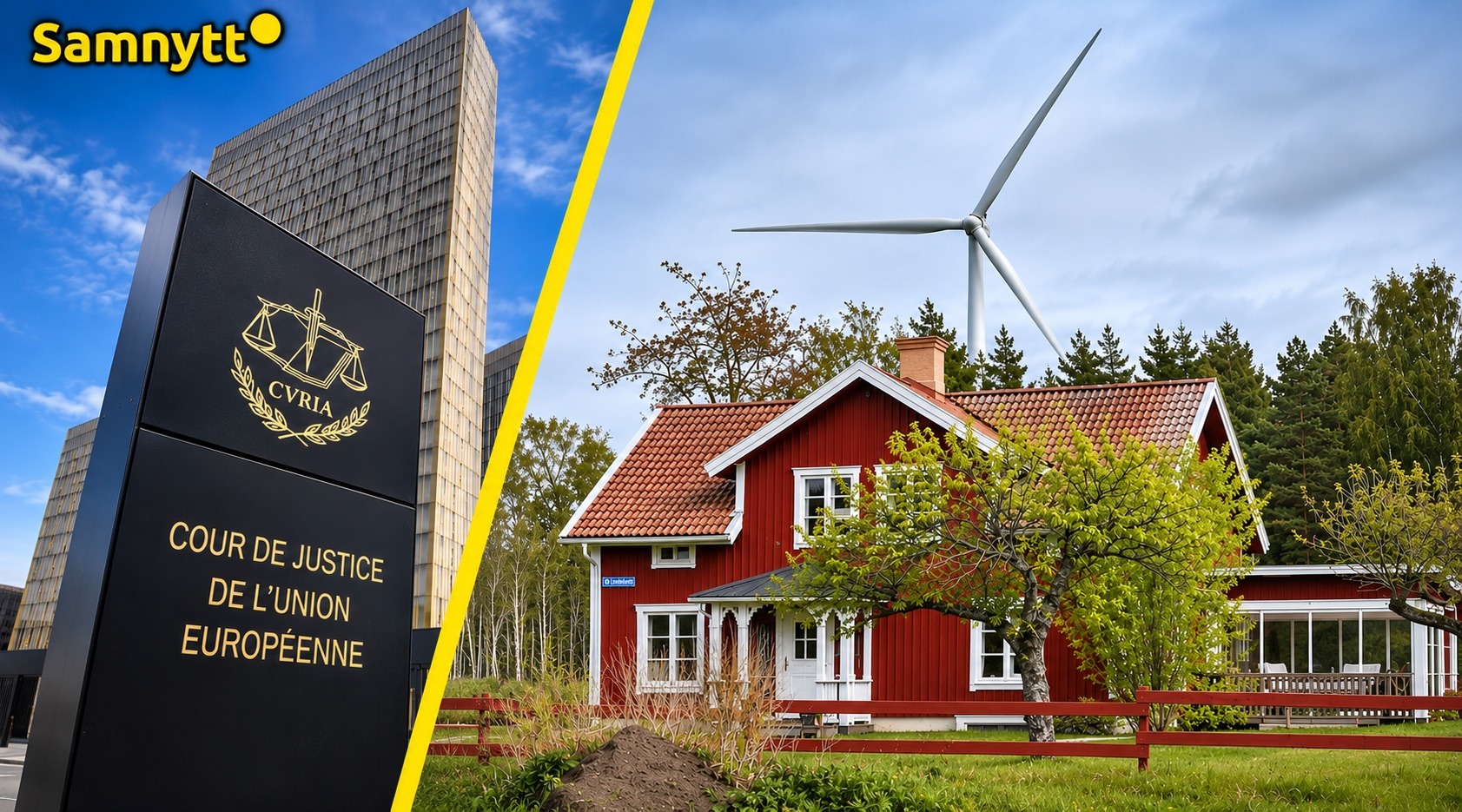
BRUSSELS / STOCKHOLM - The European Union's top court has ruled that wind farms should get priority when authorities weigh them against other interests, even when what stands in the way is the landscape or a country's cultural heritage. The reason given is that the EU treats the green transition as an "overriding public interest". The ruling applies across the bloc, including Sweden.
Authorities can still say no, but only if they can give specific reasons why a particular project should be stopped.
Two turbines and ten homes
The judgment, delivered on November 26, concerns how to read a temporary EU emergency regulation from 2022. It was rushed through after Russia's invasion of Ukraine to speed up the build-out of renewable energy.
The case began in April 2023, when the wind company Eneco Wind Belgium applied to build two turbines of up to 4.28 megawatts each in Andoy, part of the city of Namur in Wallonia. In October 2023, Walloon officials turned it down because wind power could not be expanded at the expense of the area's landscape and heritage.
According to an opinion from one of the court's advisers ahead of the ruling, the visual impact affected ten homes. The company appealed. Officials reviewing the appeal recommended approval with conditions, but the regional ministers missed their deadline and the refusal stood. The company then went to Belgium's highest administrative court, which asked the EU court whether the regulation means wind power always beats landscape and heritage.
Yes, but with conditions
The court's answer was that the priority is not limited to EU nature laws on birds, habitats and water. It also applies when the opposing interest falls outside those rules, such as landscape protection and the protection of cultural heritage.
The priority is a principle rather than an automatic win. Authorities can depart from it, but they have to justify it case by case. In practice, the court says, a hesitant authority should first try to attach conditions to a wind project rather than block it. Those conditions could include showing there is no better alternative and limiting or offsetting the damage to nature.
The judgment also sets a pace. Authorities may not let a whole case stall while every detail of the mitigation measures is investigated. Those parts can be sorted out later, after the permit has been granted. Only for protected animals and plants are the rules stricter, with measures, money and land required up front.
Environmental law expert Hendrik Schoukens of Ghent University told Courthouse News the ruling carries weight because the EU has no common rules on landscape protection. Each country still controls its own planning, which the court also confirmed.
Harder for neighbours to say no
The ruling says nothing directly about local residents who protest against wind farms, but it makes their fight harder. An authority that wants to refuse a permit must now point to exactly what will be harmed at that specific site and explain why it outweighs the need for more renewable energy.
The Belgian case is not over. It now goes back to the Belgian court, which must rule in line with the EU court's guidance. That guidance cannot be appealed.
What it means for Sweden
Because the regulation applies throughout the EU, Swedish authorities are in principle required to give wind power priority when weighing it against other interests, and anyone trying to stop a turbine will need strong grounds. The Swedish Agency for Marine and Water Management already noted in 2023 that renewable energy must be treated as an overriding public interest in permit decisions under EU rules.
Wind power is already a fierce local issue in Sweden, where residents in many rural areas have complained of noise, sleep problems and falling house prices after turbines went up nearby.
The regulation was meant to be a temporary emergency measure. But the European Commission has proposed bringing the priority back. If that goes through, wind power could keep its fast lane in Sweden for years to come.
Simon Kristoffersson · Responsible Publisher & Senior Editor (Ansvarig utgivare)
Simon Kristoffersson is the Legally Responsible Publisher (Ansvarig utgivare) and Senior Investigative Editor of Samnytt and Samnytt News under Sweden's Constitutional Freedom of the Press Act, specializing in courts, organized crime, municipal governance, and public-sector investigations.
Follow @SamnyttNews on 𝕏 ↗