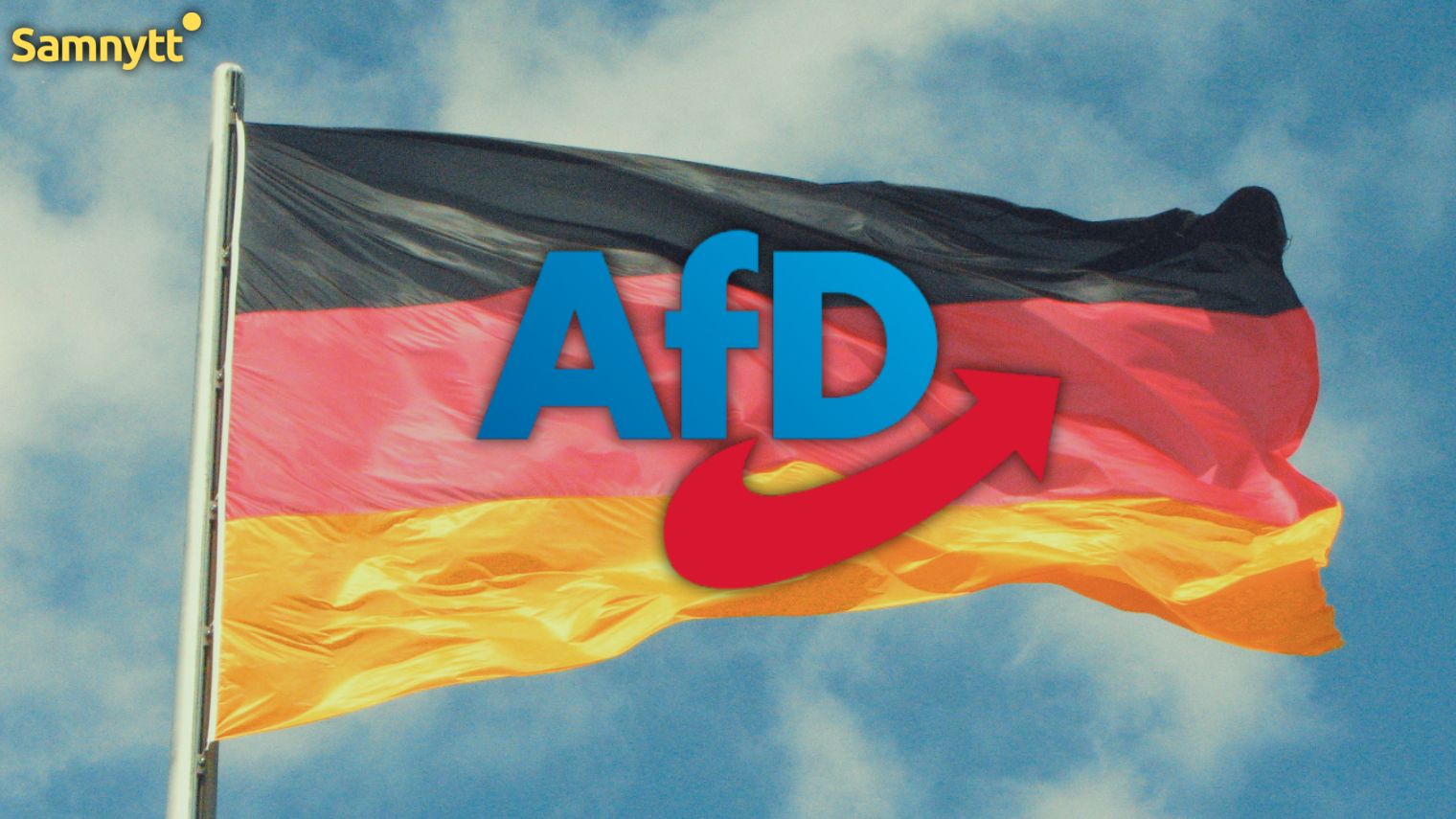
The AfD is facing its greatest breakthrough in power since the party was founded. Ahead of Sunday’s state election in Saxony-Anhalt, the right-wing party is polling around 40 percent – nearly double that of the CDU. Such a success could force Germany’s established parties to choose between a difficult minority government and, for the first time, seriously responding to AfD’s demands for political influence.
What just a few years ago seemed unthinkable may now become reality. When the residents of Saxony-Anhalt head to the polls on Sunday, AfD could write a new chapter in Germany’s postwar history.
The latest Infratest dimap poll gives AfD 42 percent compared to only 22 percent for the CDU. Forschungsgruppe Wahlen places AfD at 41 percent. In the 2021 election, AfD received 20.8 percent.
So it’s no longer a question of whether AfD will be the largest party. That question appears to have already been decided by polling. The real question is what Germany’s political establishment will do when a party they have tried to keep out of power for years receives the backing of around four in ten voters.
The Firebreak Under Pressure
The so-called Brandmauer – the political wall against cooperation with the AfD – has been one of the cornerstones of German politics. The CDU has consistently ruled out a coalition with the party. But the electoral arithmetic in Saxony-Anhalt may make the wall increasingly difficult to maintain.
The CDU looks set for its worst result ever in the state, while both the FDP and BSW risk falling below the five percent threshold. A government without AfD may therefore be very difficult to assemble. Infratest dimap assesses that the CDU may, in practice, need support from the left-wing party Die Linke in order to form a government.
This creates a political dilemma that is difficult to explain away. Should the CDU cooperate with the left to keep AfD from power even if AfD might enjoy nearly double the voter support? Or should they stick to the firebreak and risk political chaos?
Voters Break With the Establishment
The AfD’s rise is especially dramatic because it comes after several years of intense political mobilization against the party. The party has made migration, integration, national identity, and criticism of the EU key issues of its campaign. In Saxony-Anhalt, support has grown sharply while the CDU has lost ground.
The latest poll also shows that the AfD candidate Ulrich Siegmund is close to CDU’s Sven Schulze in the question of who should become Minister-President. Meanwhile, the overall electorate still prefers a CDU-led government over one led by AfD.
This means that a strong AfD result does not automatically mean the party will be able to form a government. But a result over 40 percent would make it considerably harder for other parties to treat AfD as a political sideshow.
Merz Warns Against AfD
The development has also become a problem for Chancellor Friedrich Merz. He has warned that a state government led by AfD could damage Saxony-Anhalt’s appeal to international investors.
Merz has said he finds it hard to imagine international companies establishing factories in a state with an AfD politician as Minister-President.
At the same time, it is precisely these kinds of warnings that illustrate the political conflict this election has become: the establishment warns of the consequences of an AfD victory, while a growing proportion of voters seem willing to support the party regardless.
The Start of Something Bigger?
For the AfD, the election is about much more than Saxony-Anhalt. The party sees the state election as a possible first step towards power at the national level. Further elections await in Mecklenburg-Vorpommern and Berlin later in September.
A historic strong showing in Saxony-Anhalt could grant AfD additional momentum while increasing the pressure on the CDU’s strategy to keep the party out of political influence.
This is also why Sunday’s election is being watched with such anxiety in Berlin. If AfD truly reaches around 40 percent, the German Brandmauer will be subjected to its toughest test yet. It may still hold, but the political reality on the other side of the wall has changed dramatically.
READ ALSO: Alice Weidel: AfD is set to take power – here are the reforms the party leader wants to implement