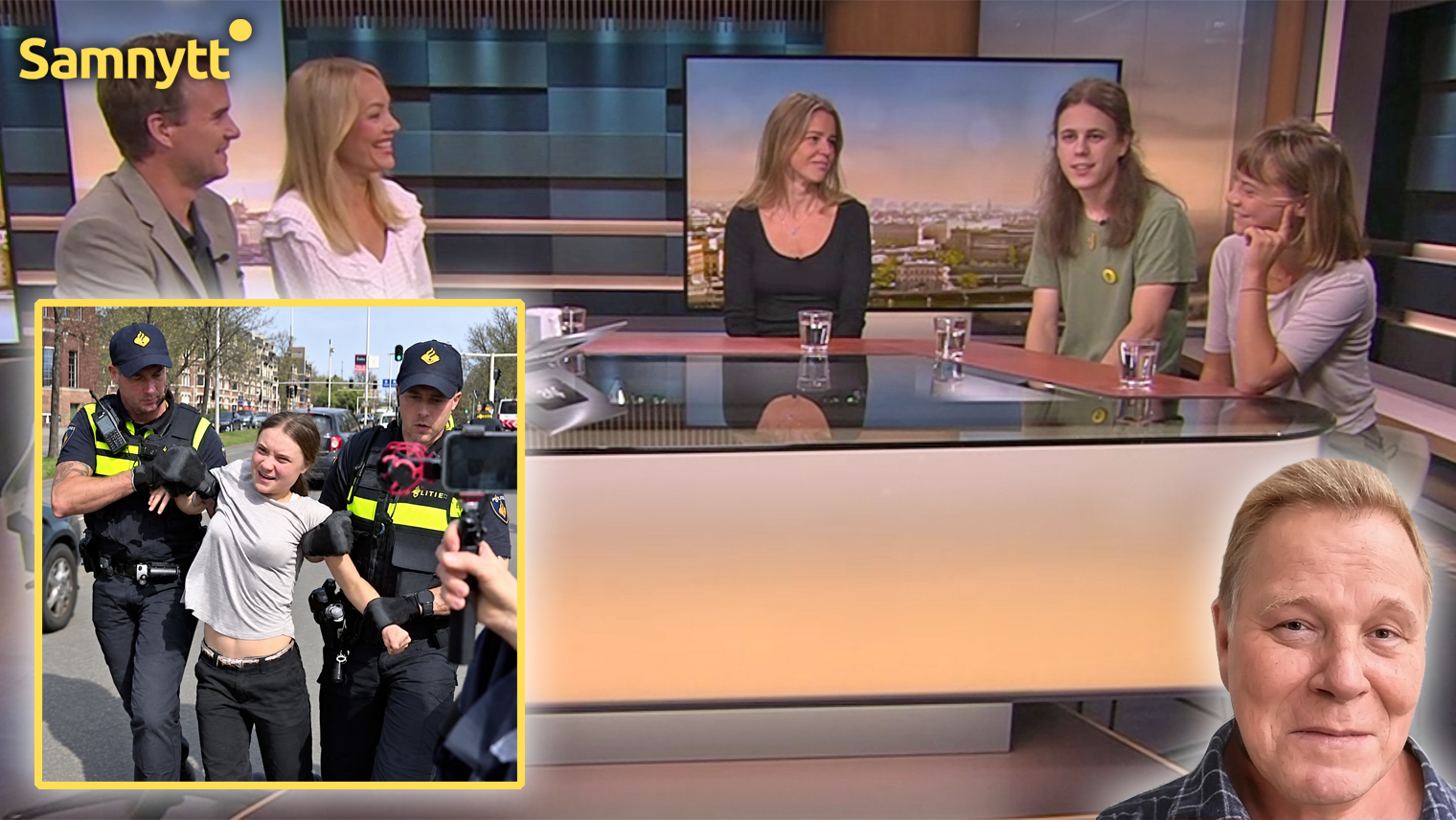
EDITORIAL • SVT has participated in producing a documentary that explicitly tells the story of Fridays for Future from the activists’ perspective. When the film is then launched in the Morgonstudion, the news studio turns into an almost objection-free arena for Greta Thunberg’s and the director’s political messages – right in the middle of the election campaign. It’s hard to see how SVT believes this harmonizes with the public service requirement of impartiality.
Greta Thunberg speaks in SVT Morgonstudion about “green washing” and “youth washing.” According to her, politicians and other power holders have wanted to pose alongside young climate activists without actually listening to them or implementing the policies they demand.
Perhaps there is reason to add yet another variant to the list: Greta-washing. It’s hard to find a better word for the treatment Greta Thunberg receives when SVT launches the so-called documentary ‘Strejkarna’ about her early activist years with Fridays for Future and skipping school as a political method.
The Greta viewers encounter is primarily the 15-year-old girl who in 2018 sat outside parliament with her now globally notorious sign “School strike for climate.” She and the other youths are depicted as committed idealists let down by the adult world.
Greta herself says the movement was built on “empathy and logical thinking” and that the youths believed people would understand the seriousness of the climate crisis. Today, according to her, “all trends” are going in the wrong direction and “everything is going to hell.” That’s one narrative. The question is why SVT doesn’t seem interested in any other.
A One-Sided Account That Doesn’t Pretend Otherwise
‘Strejkarna’ is directed by Helena Molin and follows the core group around Fridays for Future since its start in 2018. Molin doesn’t hide her perspective. When she’s asked in Morgonstudion why she began following the activists, she says the project felt natural based on her “own engagement and personal causes.”
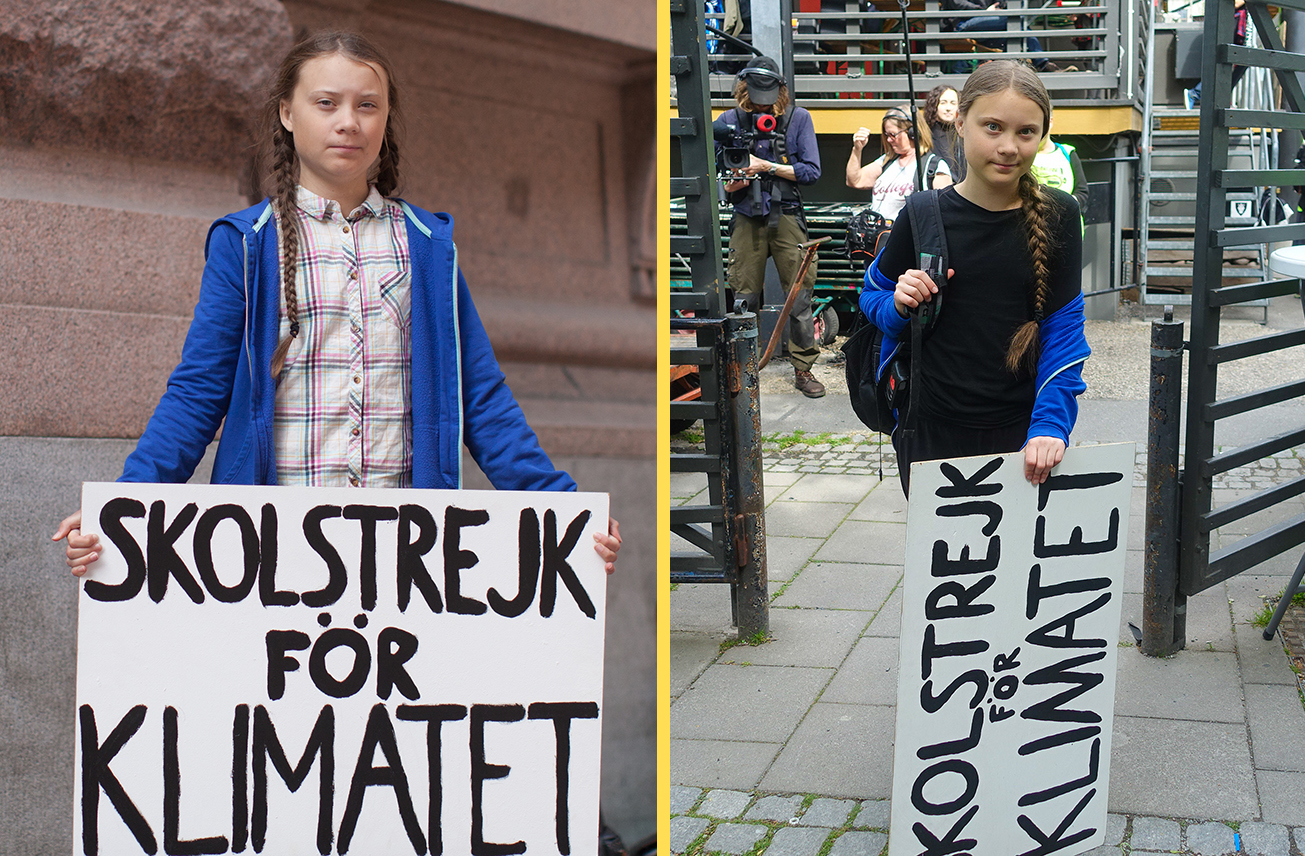
When she is later asked to describe the story she wants to convey, it becomes even clearer. She wants the audience to understand the struggle from the activists’ perspective and says that the increasingly harsh tone against activists from the media and politicians is “one of the most dangerous things I can imagine.”
This is a legitimate artistic choice. Films do not have to be clinically neutral. They can have a perspective, be driven by engagement, and allow a group to tell their own story. But there is still a limit to what kind of films deserve to be called documentaries. Most associate the term with some form of critical scrutiny, especially if, as here, a controversial political phenomenon is to be documented.
Most importantly – SVT is not Fridays for Future. And ‘Strejkarna’ is also not an entirely independent film that Public Service just happened to buy. SVT is listed as a co-producer together with, among others, Filmpool Nord, and the film also received production support from the Swedish Film Institute. Thus, it is a production that has been made possible to a large extent within publicly funded structures.
One may question whether our tax revenues should be used for such things at all. But above all, one can criticize supposedly impartial SVT, which is also financed by taxpayers, for having its hand in the cookie jar. There is a difference between reporting on an activist phenomenon in a balanced and critical way, and joining it to become part of it. That line is difficult to distinguish both in SVT’s involvement in the film’s production and in how the film is launched in news segments with invited guests.
SVT Draws the Election Campaign In
The most remarkable thing happens near the end of the interview. It’s not the guests who, on their own initiative, steer the conversation towards which parties Swedes should vote for. It’s the SVT hosts.
– The election campaign is going on right now. Does it matter how we vote?, one of them asks.
Director Helena Molin replies that according to various surveys there are clear facts about which parties are better or worse for the climate. Then comes the conclusion:
– And that means the right wing is in a bad position.
Here, a journalist could have asked a follow-up question. Which surveys? Which criteria? What does “better” mean? How are the costs of climate policies weighed against energy supply, industry, jobs, competitiveness, and household finances?
And is it really SVT’s role to, right in the middle of an election campaign, give its studio to the director of a film that SVT itself co-produced to talk about which side in Swedish politics voters should not cast their ballots for?
No such questions are raised. Instead, the host turns to Greta. When she doesn’t immediately give as clear an answer, the host repeats the question:
– Does it matter how we vote?
Now, after repeated urging, the desired political outcome arrives. Greta speaks about human rights and then says:
– There is a party in the government with brand-new neo-Nazi roots.
Not even then does the host react. She does not point out that the Sweden Democrats are not actually in the government. She does not ask what Greta means by “brand-new.” She does not ask her to specify the crude rhetorical accusation. The statement is allowed to hang in the air.
One does not need to sympathize with the Sweden Democrats to understand the problem. It is enough to mentally switch the roles involved.
In an SVT segment two weeks before an election, a conservative documentary filmmaker declares that the left is bad for Sweden. SVT has participated in producing the film and it was financed with tax money. The film portrays a right-wing radical movement on the anti-immigration side that has used various extra-parliamentary and, in several cases, illegal methods to gain attention for its cause.
READ ALSO: Greta Thunberg Calls Trump a “Pedophile” – Takes Sides for Cuba’s Communist Dictatorship
Afterwards, a studio-invited right-wing activist makes a grossly historically loaded attack on the Social Democrats about the party’s connections with communist dictatorships or support for the real Nazis during World War II – and the host lets it all pass unchallenged. Instead, everything is done to give a positive, polished image of an idealistic youth movement fighting for a better world.
Would SVT also have regarded that as neutral journalism? Would the rest of opinion-forming Sweden have let it pass? Hardly. Other media would have been full of critical headlines with comments both from their own editorial writers and interviewed politicians. In particular, there would have been talk of inappropriate election influence by a media actor who is supposed to steer as far away from such things as possible.
The Unasked Questions
The strangest thing about the interview may still be all the things that are not asked, all that is omitted. Greta Thunberg is no longer the 15-year-old girl who sat outside Parliament in 2018. She is an adult and experienced political activist who has, over the years, gradually broadened her engagement far beyond the original school strike.
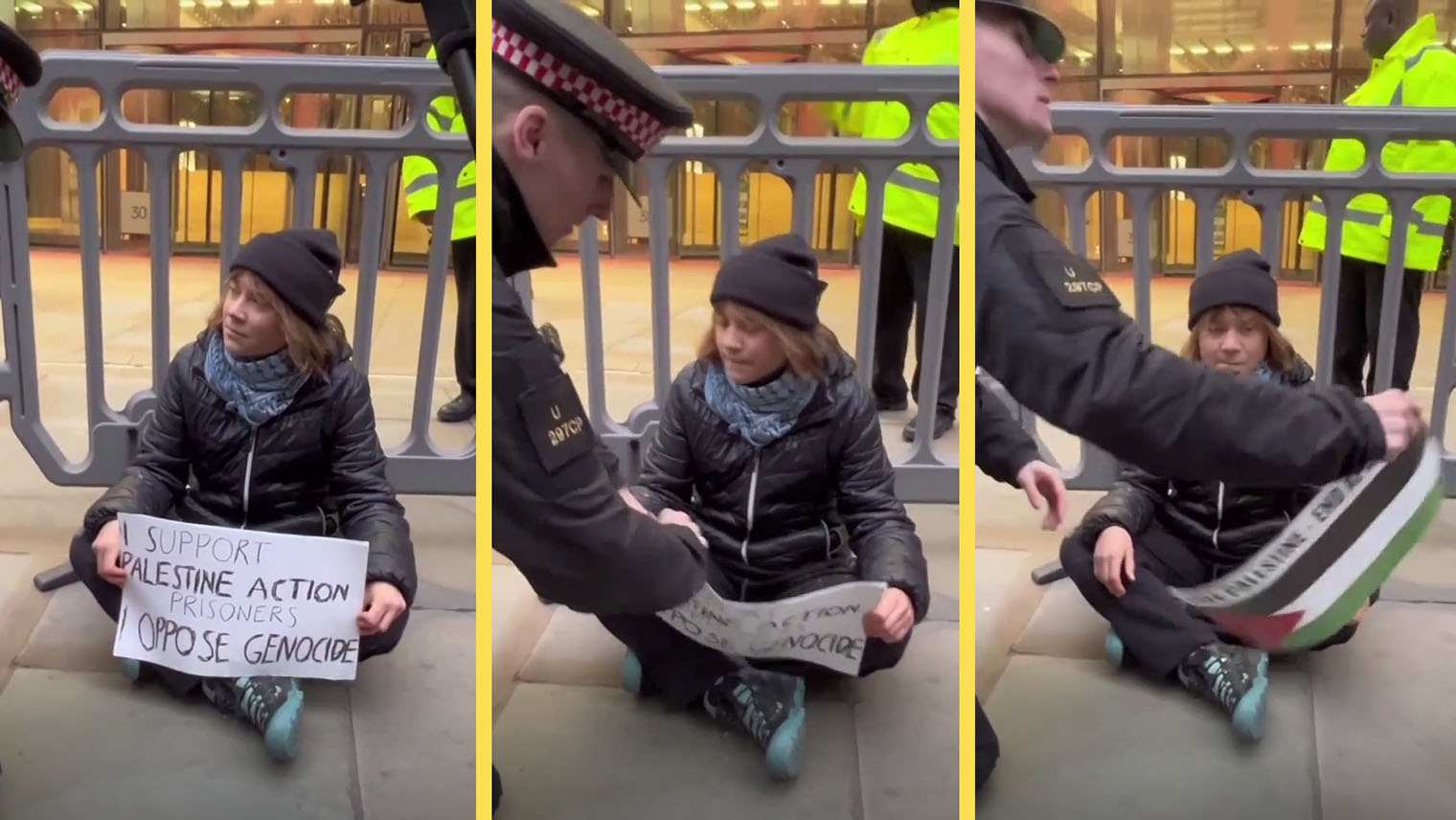
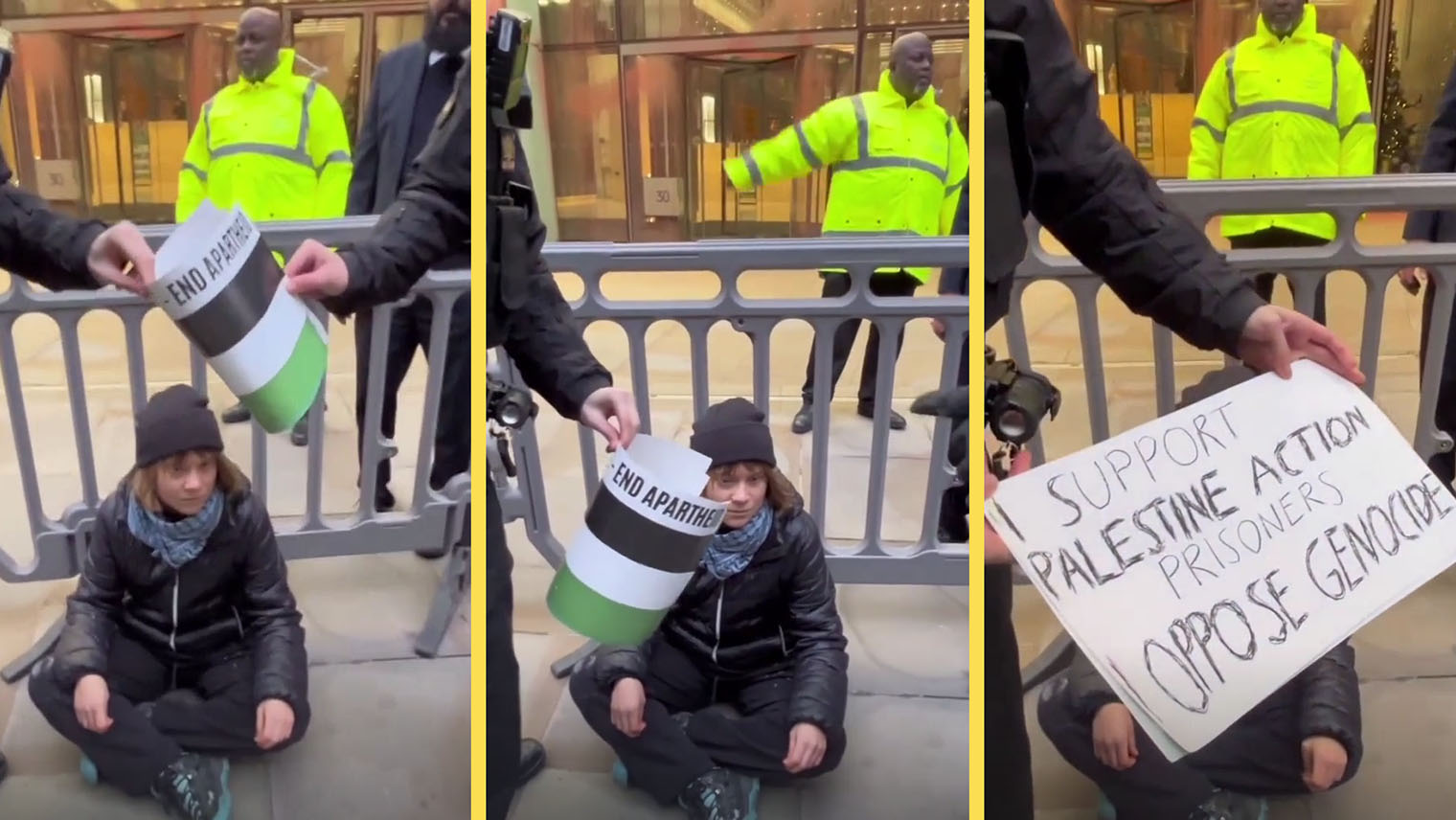
She has participated in actions with the violence-promoting Marxist group Extinction Rebellion. She has been removed by police after blockades. In Sweden, she has twice been convicted of disobeying law enforcement after climate actions in Malmö. At one of the actions, the activists blocked the road for oil shipments and Greta refused to obey the police order to move.
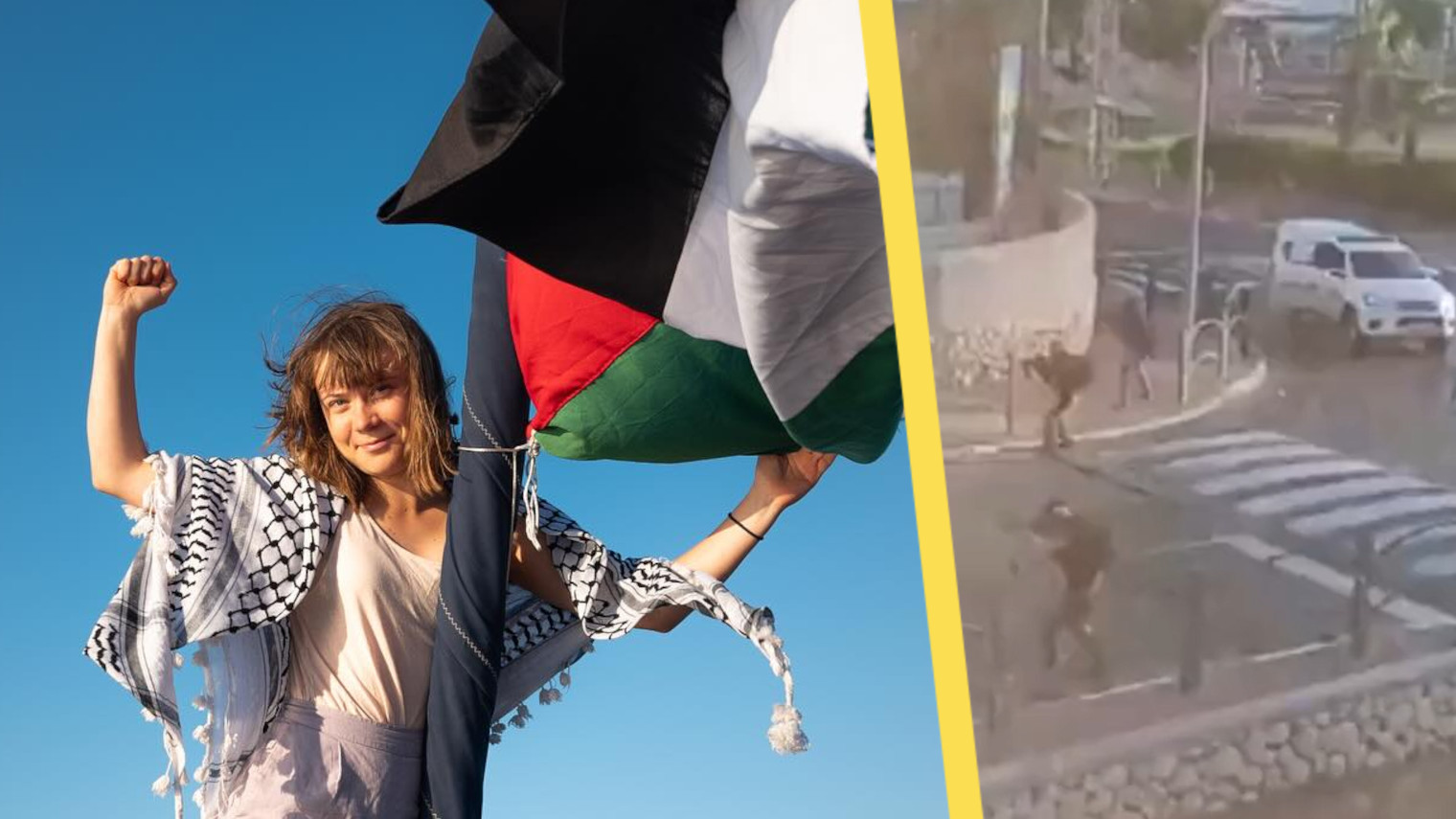
In London, she was prosecuted after another climate action but was later acquitted by a court that decided to turn a blind eye to the crime—since it was, after all, Saint Greta on trial.
She has also become increasingly engaged in the Palestinian conflict in a way that many see as an anti-Semitic stance against the Jewish state of Israel and as a violence-promoting Islamist stance in favor of the terror organization Hamas, which controls Gaza. Both in speeches and in illegal actions on site in the Middle East.
This significantly changes her political role. Greta Thunberg in 2026 should journalistically be treated as the adult and internationally established and more controversial political activist she actually is today—not as the 15-year-old girl she was in 2018. Yet not a single critical question is asked about where she herself draws the line between democratic advocacy and breaking the law as a political method.
Not a single question about civil disobedience—whether it’s just a glorified euphemism for ignoring laws and democratic rules. Not a single question about her own criminal convictions. Not a single question about left-wing extremist Extinction Rebellion. Not a single question about her ever-widening, almost anti-democratic system criticism. Not a single question about why she posed with criminal gangsta rappers. Not a single question about the appropriateness of calling the Jews in Israel genocidal.
On the contrary, she is allowed, unchallenged, to describe today’s order as an “extremely violent status quo” and to portray the opportunity to vote every four years between democratic parties as almost an insufficient alternative to activism. According to her reasoning, the climate crisis was created by overconsumption and capitalism.
Even there, SVT journalists seem unable to find a follow-up question. This even though Greta’s statements contain clear undertones of questioning parliamentary democracy in favor of something more green-authoritarian and proposing to replace the market economy with something more planned-economy-based.
“Countless Death Threats Every Day”
The same strange passivity arises when Greta describes her personal vulnerability. “I get countless death threats every day,” she says, adding that she cannot go out without being harassed or exposed to violence. She further points out that elected politicians, media, think tanks, and companies are driving forces behind climate activists’ vulnerability.
Greta Thunberg has been subject to real and serious threats—once. In 2019, a man was convicted at Stockholm District Court of aggravated unlawful threat after having sent letters including death threats to Greta and her family. The man received a suspended sentence and community service.
Of course, that is inexcusable. But one should distinguish between documented threats and sloppy, sweeping, and insinuating claims. And if Greta does not do this herself, SVT must.
READ ALSO: Greta’s Sailing Project Filled with Supporters of Terrorism
“Countless death threats every day” would mean an astonishing amount of serious crime. How many of these threats are reported to the police? How are they delivered? How many have been identified? Are there more legal proceedings? And in what way can politicians, media, and think tanks be held responsible for them?
These would have been self-evident journalistic questions. SVT asks none of them. Instead, afterwards, SVT itself made the death threat claim into a separate news item with the headline “Greta Thunberg on the Death Threats: ‘Every Day’,” where the claim is repeated without any verified accounting of the scale. It starts to look like a pattern.
A Climate Debate Without Target Conflicts
The same one-sidedness characterizes the climate issue itself. Greta states that emissions are still increasing, “not least here in Sweden,” and that people are already dying while things will only get worse. Again, there are no follow-up questions.
Sweden is one of the countries that has long undergone an extensive climate transformation. Electricity production is largely fossil-free. The forests and land use are also a significant carbon sink. Sweden now has net zero emissions, in some years even negative emissions of CO2 equivalents.
Why isn’t this communicated in the climate policy debate? Why doesn’t Sweden get credit for this? Why did the EU decide this? These would have been natural questions for supposedly impartial public service media to ask. This does not mean that the climate issue is globally solved. But it does mean that the Swedish political issue can no longer be reduced to simply being for or against the climate, or some parties in parliament being for and others against.
The question is what additional measures yield real effects, what they cost and what other societal interests have to be weighed at the same time. How much prosperity should be sacrificed for a calculated reduction of emissions in a country that already is at or just below net zero?
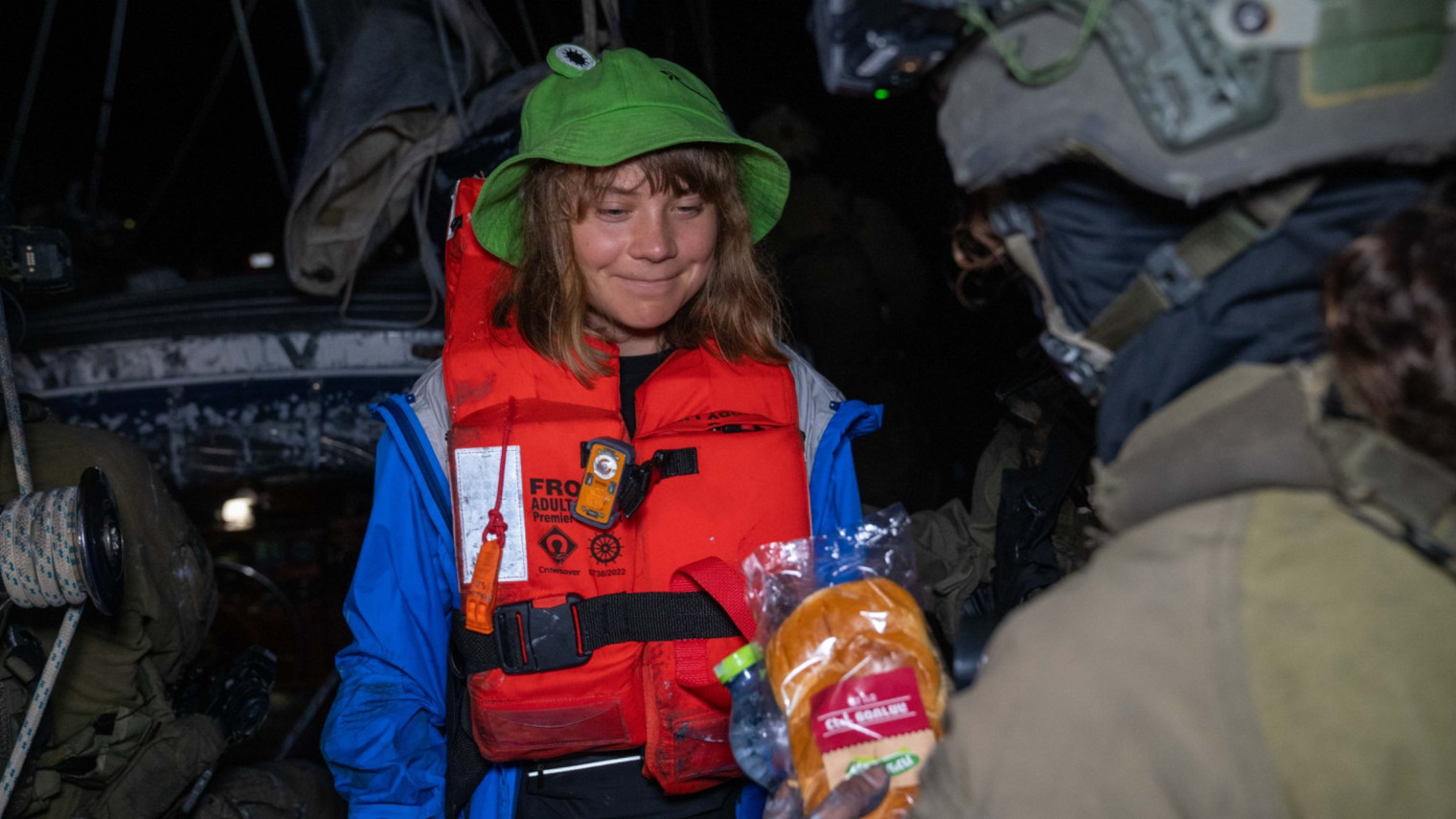
What global impact do Sweden’s virtue-signaling special demands have? How do you avoid energy-intensive production simply moving to countries with a dirtier energy mix? What role should nuclear power play – why is the green movement so hostile to this clean and manageable energy source?
And what do we learn from costly green industrial projects when the calculations do not hold? Sweden has already witnessed Northvolt’s spectacular bankruptcy after huge sums of capital were invested in the green transition. The wind power industry is struggling with significant profitability problems. Germany phased out its nuclear power and has subsequently had to deal with the consequences of a much more difficult energy supply.
The green transition does not abolish the laws of economics. Nor does it abolish the need for a functioning electricity grid, stable power production, competitive companies, jobs, defense, healthcare, school, police, or households being able to pay their bills, who need cars both for work and everyday life.
A society is made up of conflicting goals. The privilege of activism is to avoid having to take responsibility for them. The task of journalism is to make them visible. SVT often seems to see the opposite—making them invisible—as its mission.
From Journalist to Team Player
The SVT segment is problematic in more ways than simply being another uncritical, flattering interview with Greta Thunberg. SVT has co-produced a film whose director openly says she wants to portray the climate struggle from the activists’ perspective. SVT then uses its news program to launch the film.
Three people connected to the same movement and film are in the studio. There is no critical counterpart. The director is allowed to say that the right is badly positioned on the climate issue. Greta is allowed to describe capitalism and today’s social order in radically negative terms.
READ ALSO: Greta Arrested in London After Support for Terror-Designated Organization
The hosts themselves steer the conversation to how people should vote and do so two weeks before the election. A grossly distasteful statement about the governing coalition having “brand-new neo-Nazi roots” is left uncorrected and without follow-up. And the obvious critical questions about activism, breaking the law, political radicalization, the costs of climate policy, and conflicts of objectives are missing.
It’s hard to blame it on lack of time. There was time, after all, to ask Greta how it felt to see her old trousers. There was time to ask Anton Örtell how it was to meet Greta. There was time to talk about standing ovations at the UN. Above all, there was time to ask, twice, how important it is which parties we vote for. What was lacking was not minutes. What was missing was journalistic professionalism.
A Case for the Review Board
Public service should not be right-wing. Nor should it be left-wing, but it is nonetheless strikingly often. SVT may broadcast ‘Strejkarna’ even if the appropriateness and timing of it can be questioned—SVT’s range of documentaries consistently has a strong left-political slant and features a Soviet propaganda filmmaker in its logo.
Greta Thunberg should, of course, be allowed to be interviewed. Helena Molin should, of course, be allowed to make a film sympathizing with her protagonists even if perhaps it shouldn’t be funded by your and my tax money. But SVT has a different mission than Greta Thunberg, Fridays for Future, and Helena Molin.
When public service itself co-produces a film with an explicitly activist perspective and then uses its news studio to market it in the middle of an election campaign, the demands for journalistic distance should be higher, not lower. Here, the opposite occurs. Greta talks in the interview about “green washing” and “youth washing.”

But when her later radicalization, illegal actions, political activism, and controversial positions are washed away to restore the image of the brave little girl outside parliament, it’s hard to find a better word for it than “Greta washing.”
However, the real concern is not Greta. She is an activist. She does what activists do—pushes her worldview as forcefully as she can. Neither is it Helena Molin. She openly tells us what perspective her film has.
The concern is the journalists sitting across from them. Their job is not to help activists convince the voters. Their job is to ask the questions the activists would most like to avoid.
READ ALSO: Climate-Greta Shut Down Family Business – “No Hesitation for Sabotage”
When SVT instead steers the conversation to the question of how the Swedish people should vote and then lets the answer become that the right is badly placed and the government coalition has “brand-new neo-Nazi roots,” without a single critical objection, viewers have reason to ask where public service journalism went.
And SVT has provided its long-standing critics of political left-leaning yet another solid helping of ammunition. If the demand for impartiality is to mean anything, even during a Swedish election campaign, this segment appears a highly reasonable case for the Media Review Board to examine.