
The advertising industry has shifted from creative freedom to increased conformity. This is the view of Magnus Fermin, a long-time media producer in advertising, who describes a development where campaigns are shaped by core values, diversity, and fear of criticism—rather than by target audiences and business logic. In an interview with Samnytt, he points to recurring patterns in how people, relationships, and Swedishness are depicted.
It is hard to miss. On billboards in the subway, on TV screens, and in social media, Swedes today are met by a distinctly changed visual language. Whether it’s banks, clothing chains, or real estate companies, the same visual expression returns—a consistent emphasis on diversity, often far beyond how people experience their own daily lives.
For some, this is an obvious reflection of a new Sweden. For others, it raises the more uncomfortable question—does it show reality, or a picture of what it is expected to look like?
According to Magnus Fermin, the design and advertising industry has clearly changed over the past ten to twenty years. Where there was once greater room for variation and creativity, he now sees a more controlled and cautious environment.
In what way has the industry changed, in your view?
– It has become more conformist and cautious. People are following a paradigm. Previously, there was a bit more room to play with different parameters, and there was space for some humor and innuendo. But today, it’s very careful and everyone is afraid. Everything somehow ends up in a corridor of opinion, within what I’d call the woke paradigm.
He describes how, in practice, the work is governed by a set of requirements.
– It’s as if there’s a checklist that must be followed. There must be sustainability, there must be diversity, and it has to follow this woke paradigm.
READ ALSO: Criticism of Woke Advertising Dismissed by CEO: “We Can Do Without Those Consumers”
Some people use the phrase “go woke, go broke” nowadays. Do you think there’s some truth to that?
– Yes, it has been demonstrated in several cases that companies and agencies trying to follow this have ended up with farcical results in their campaigns. Customers have simply left because the campaigns targeted the wrong audience. Fermin continues:
– It’s very much about, and often includes, mocking the white Western man. They are portrayed as backward, or idiots, or hapless, or less successful individuals. He elaborates:
– This has been going on in advertising for a long time. Even before the woke craze, the goofy white Swedish dad was the typical figure in commercials. It’s rare to see strong, competent Swedish men depicted. The dorky man has become a stereotype, and it has only increased.
How would you describe how relationships between men and women are portrayed in advertising today?
– A white woman with a non-white man appears disproportionately often compared to the population. Conversely, a white man with a dark-skinned woman, we almost never see that.

Why do you think it looks like this?
– To begin with, it’s not just any non-white men. You never see Asians. It’s almost exclusively Africans or people from the Middle East. We don’t see white women with Japanese men, for example. Magnus Fermin continues:
– Partly it’s because of the big trend to mock white men. This ties into feminism. Swedish feminists have for decades criticized white men, saying they are patriarchal and should be feminized. He continues:
– But emotionally, women don’t want those men. It’s a biological drive to be attracted to masculine men. And which masculine men do we have? It’s the immigrant men from other cultures, especially the MENA countries.
It’s a bit like the ’68 left and the long march through the institutions. Like when journalists went straight in from the Communist school [sic!], to TV2. From the schools into the marketing departments. Then propaganda is pumped out to the whole population. It’s the same kind of movement.
Magnus Fermin, media producer in the advertising industry
He believes this creates a contradiction.
READ ALSO: Ikea’s New Islamization Campaign – Normalizes Veiled 11-year-old
– The patriarchy is criticized when it comes to Swedish men, but genuinely patriarchal cultures are celebrated. It becomes contradictory. Then we get stuck in this and no one dares to go outside the box, even though it’s totally absurd.

Some claim it is racist to show a family where everyone is white. What’s your view on that?
– Yes, that’s exactly how it has become. It’s very strange that it should be seen as racist to show white people in pictures in Sweden.
The Training Grounds and the Long March Through the Institutions
What do you think about the role of design and advertising schools in this development?
– We have Konstfack, Beckmans, Forsbergs, Berghs and Hyper Island above all. These are training grounds for these political ideals. Young people go to schools where they learn to think and reason this way—to buy into this worldview. Then they are recruited to the agencies. And the agencies influence the companies and say, “This is how we should do it.”
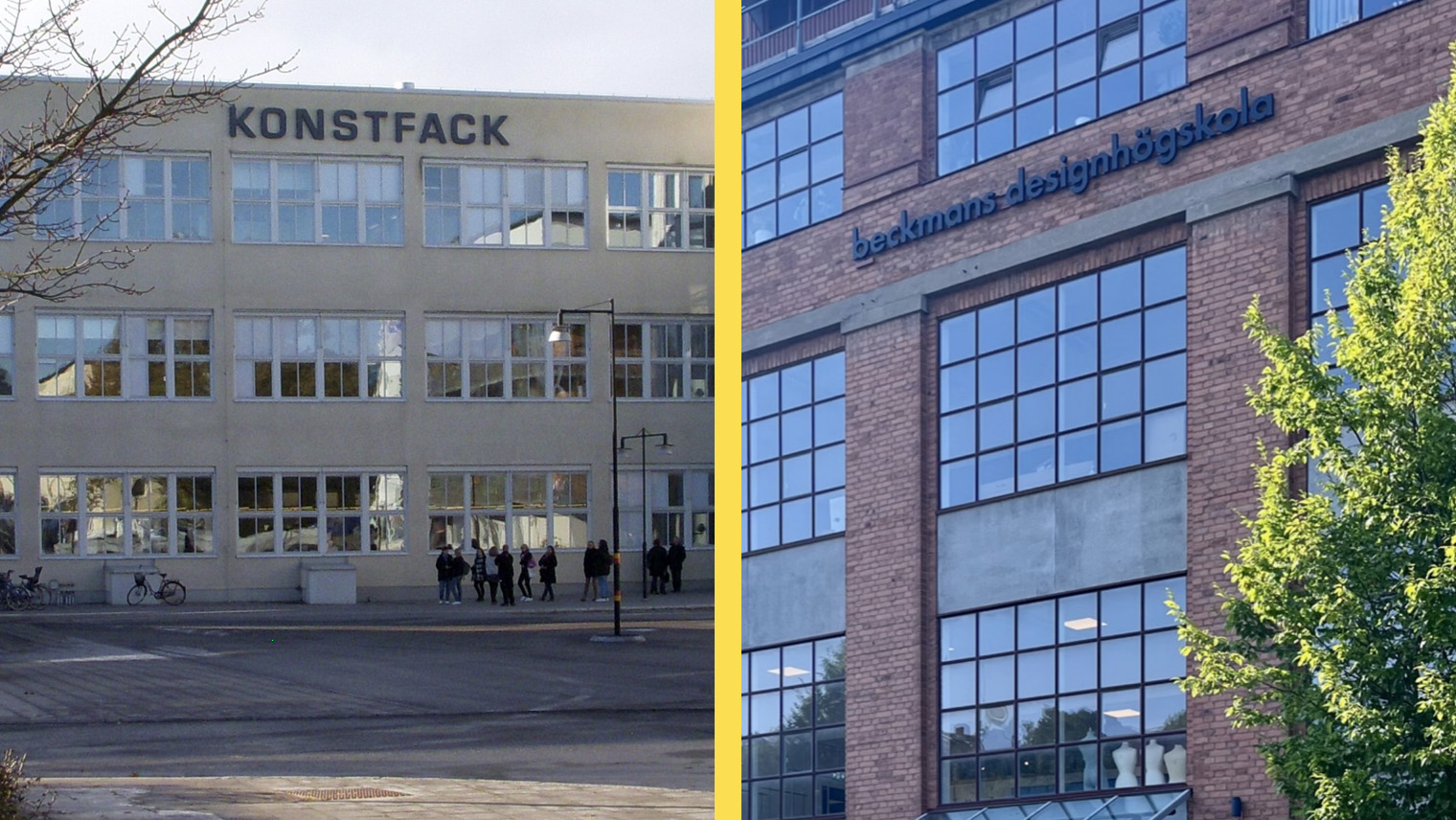
Fermin compares with a historical development.
– It’s a bit like the ’68 left and the long march through the institutions. Like when journalists went straight in from the Communist school [sic!], to TV2. From the schools into the marketing departments. Then propaganda is pumped out to the whole population. It’s the same kind of movement. He continues:
– The advertising industry has become a tool for forces that want to change the population, change Sweden. But there is no doubt that a forced population replacement is underway. Fermin continues:
– I’ve experienced having to produce photo material showing Swedish families. Then I’ve asked – why must there be African men in all the pictures? And I was told: it simply has to be that way. It has to look like that today. Every box has been checked. We have to include all this.
“Advertising Doesn’t Reflect – It Tries to Change”
Magnus Fermin believes that advertising today not only reflects society, but also tries to influence it.
– Some argue it’s not even about representation anymore, but that advertising is used to change the world. That it doesn’t represent what Sweden is, but tries to reshape it. And yes, that’s exactly how it is.
How does this influence how Swedishness is defined in advertising?
– It results in a strange definition. If you ride the subway in Stockholm, are you Swedish? These people might be Swedish citizens, and then you are Swedish and represent the country? But that goes against what people feel inside. He continues:
– Saying that you are as Swedish as I am just because we are both Swedish citizens is laughable. Origin and culture matter.
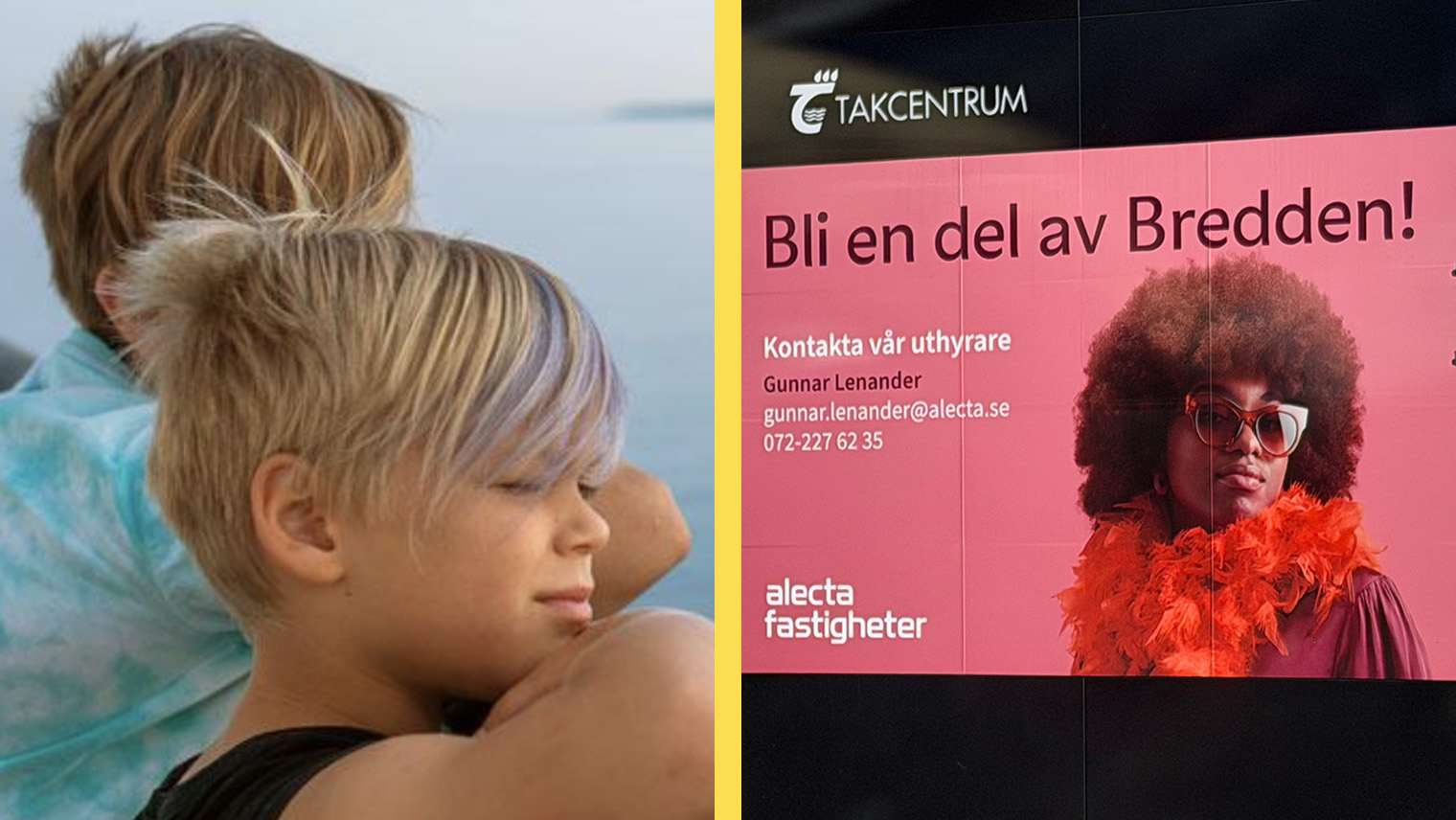
We bring up as an example that Alecta Real Estate and Bredden Industrial Area in Upplands Väsby are currently advertising for new tenants with an image of a young African woman in hippie and disco clothes with pink glasses. We ask Magnus Fermin how one could analyze this. Does it match the target audience?
– No, of course it does not, is his short answer.
At the same time, there are some actors in business who express a more business-focused view of advertising’s role. Åhléns principal owner Ayad Al-Saffar has in interviews criticized what he describes as overly “woke” advertising and argued that, in some cases, campaigns have gone so far that customers no longer recognize themselves in them.
READ ALSO: Åhléns Criticized for Ad in Afghan Dialect
He has instead emphasized that advertising should mirror the people who actually shop in the stores. The point, according to him, is not symbolic representation but identification—the customer should be able to see themselves in the brand and feel that the communication is relevant.
Kakan Hermansson has become a recurrent example in the Swedish advertising debate of how core values can backfire. Especially notable was when Audi in 2016 canceled a collaboration after a storm of criticism over her previous statements about the police, including where she wrote “ACAB” [All Cops Are Bastards, Ed.] and “there’s so much ranting about Malexander – can’t stand when the cops feel sorry for themselves.”
Magnus Fermin, media producer in the advertising industry
This points to a clear fault line in the industry—between advertising as a tool for signaling values and advertising as a strictly business-driven instrument. In this tension, the question raised by Magnus Fermin returns—should advertising primarily reflect reality, or try to change it?
– That was a business decision for Åhléns but, of course, it led to an outcry among the Woke ideologues. He continues, laughing:
– It’s also telling that it was an immigrant who’d finally had enough of the Woke nonsense there. Had it been a “Lars Karlsson,” he would have been forced to resign or been canceled. This time, they couldn’t play the race card. Maybe he was called an Uncle Tom or a house slave, but that was probably the extent of it.
The Leftist Profile Kakan Hermansson and Advertising
Fermin also refers to several high-profile campaigns, both in Sweden and internationally, as examples of what he believes are the consequences of this development. He mentions, among others, Gillette, whose advertising drew strong reactions, as well as the controversies surrounding Kakan Hermansson in Sweden.
Kakan Hermansson has become a recurring example in Swedish advertising debate of how core values can backfire. Most notably was when Audi in 2016 canceled a partnership after fierce criticism regarding her previous statements about the police, where she wrote “ACAB” [All Cops Are Bastards, Ed.] and “there’s so much ranting about Malexander – can’t stand when the cops feel sorry for themselves.”

Malexander refers to the police killings in 1999, when two police officers were shot dead while pursuing three bank robbers who had earlier the same day robbed a bank in Kisa. When the police officers stopped the robbers on a country road in Malexander, they were shot at close range with their own service weapons, in what has been described as an execution. The event shocked Sweden and became one of the country’s most notorious violent crimes in modern times.
The campaign was withdrawn and the company distanced itself from the statements. The case is often used as an example of how political positioning in advertising can trigger strong opinion—and, in some cases, force companies to backtrack.
READ ALSO: Cop-hating “Kakan” Got Ebba Busch Banned from Elle Gala
Brands such as Jaguar are also mentioned as examples of how campaigns sometimes get a big impact—but not always for the reasons intended by the companies. According to Fermin, the recurring pattern is that the message is perceived as contrived or ideological, rather than relevant for the target group, which in turn risks backfiring on the brand.

In Magnus Fermin’s view, the advertising industry has moved from market to morals—from selling products to signaling values. At the same time, examples such as Åhléns show that business logic is still alive—but that it challenges the established system.
The consequence, according to Fermin, is an industry that has lost its way.
– Either it becomes ridiculous. Or it just becomes empty, he concludes.
Do You Appreciate Samnytt’s Journalism?
Hundreds of thousands read Samnytt every week—but only 1 in 100 contribute. Help us continue to deliver in-depth reviews and investigative reporting that shows more of reality.
Without your support, there is no Samnytt.
Support us by becoming a subscriber and help enable independent journalism that keeps scrutinizing society.
123 083 33 50
Swish any amount
Thank you for reading and supporting Samnytt