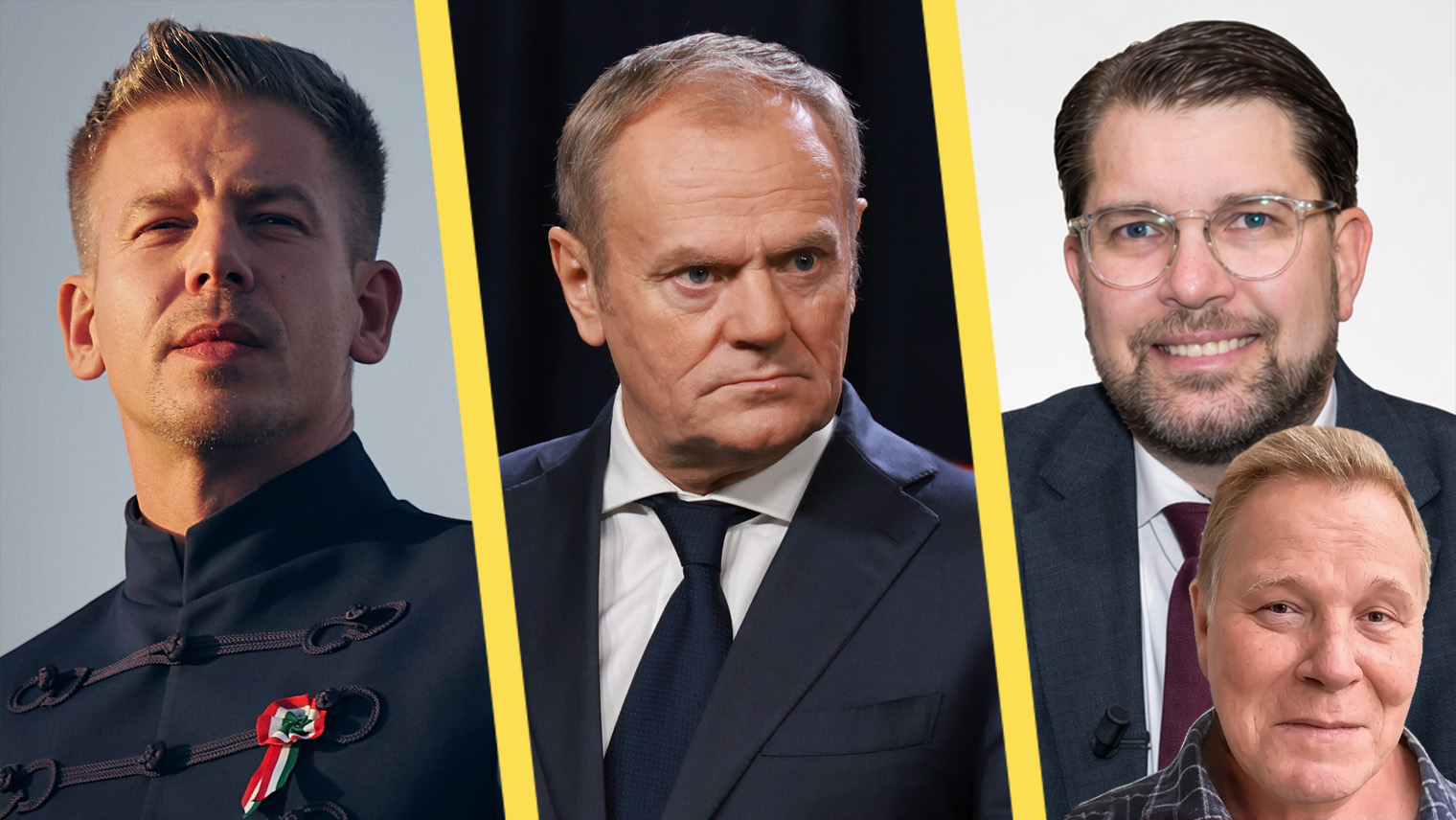
When conservative governments have ruled in Hungary and Poland, Swedish media and politicians have spent years raising alarms about threats to democracy and press freedom. But when new, EU-friendly governments come to power and start purging public service with hardline rhetoric and an iron fist—removing key personnel and talking about ‘restoring impartiality’—it is suddenly met with understanding, silence, or even applause. Double standards have rarely been so clear.
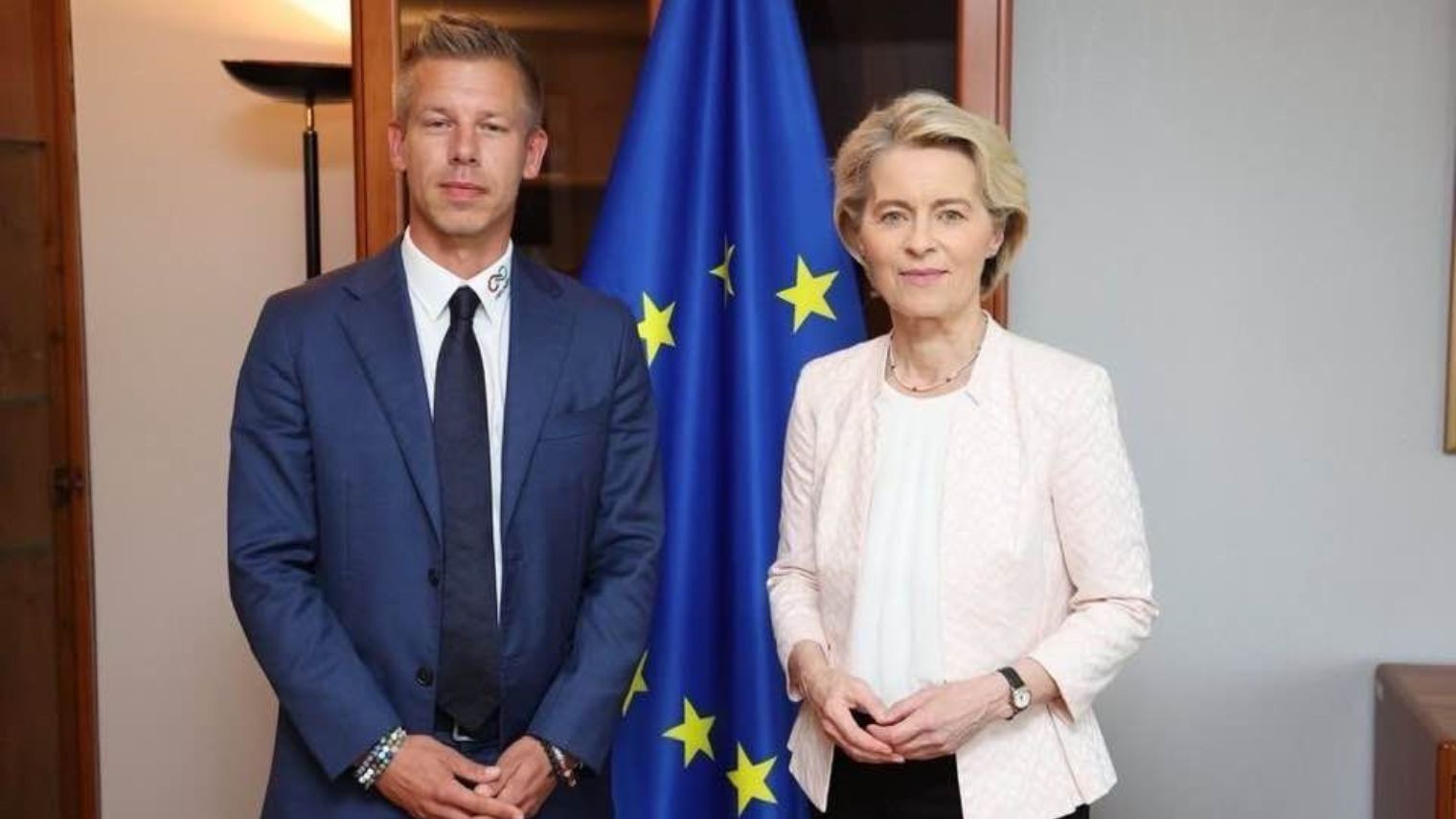
In Hungary, incoming Prime Minister Péter Magyar has declared that the state media’s news operations will be halted until they are considered to meet requirements for objectivity—his requirements, his definition of objectivity. He describes public service as a propaganda machine comparable to Nazi Germany’s Goebbels, claims that every word spoken and written in these media over the last 16 years has been a lie, and talks about tearing everything down and building anew.
Imagine a similar scenario in Sweden: Jimmie Åkesson wins the autumn election, stands before the cameras, and announces with equally harsh rhetoric that SVT and Swedish Radio will be stopped until ‘impartiality’ is guaranteed.
This would not be described as reform. It would be described as an attack on democracy. Emergency editions. War headlines. Petitions from Reporters Without Borders, Swedish PEN, the Journalists’ Union, and every cultural editorial office in the country. The entire political opposition and the entire media establishment would be raging.
But when the ‘right side’ does this in Central Europe, the tone is noticeably milder. In Poland, we saw the same pattern when Donald Tusk took power. Managers in state media were dismissed, operations overhauled, and the opposition talked about pure power grabs. In Swedish media, this was often described as necessary steps to restore order.
When conservatives rule, change to Public Service is a democratic threat. When liberals do it, it is called cleansing.
Swedish Public Service is Not Neutral Ground
All of this would be less interesting if Swedish Public Service truly enjoyed unquestioned trust across the entire political spectrum. That is not the case.
In recent years, several surveys have shown significant differences in trust between left- and right-leaning voters. Among those firmly on the right, trust in SVT has fallen markedly, while trust remains much higher on the left.
SEE ALSO: SVT’s Language Use: Right-wing Extremist Mentioned 79 Times More Often Than Left-wing Extremist
This is routinely dismissed as the right ‘distrusting institutions.’ An alternative explanation is more rarely discussed—that large groups actually experience the reporting as biased.
And it is not made up. Journalism professor Kent Asp has previously shown a strong left-wing dominance within the journalist corps in his mapping studies.
This doesn’t mean every journalist writes in a partisan way. But it’s naïve to believe that an almost ideologically homogeneous profession doesn’t affect selection, tone, angles, and perspectives.
In what other power center would such one-sidedness be accepted without question? And when the Journalists’ Union blocks an updated survey of journalists’ political sympathies, it’s hard not to see that as due to the discomfort the results might bring.
The Issues Where the Bias Is Most Evident
The criticism of public service rarely concerns newsreaders openly campaigning for a party. It’s about something more subtle—but often more significant.
Migration
During the most decisive years of Swedish migration policy, reporting was often marked by moralism, emotionalism, and an unwillingness to scrutinize costs, integration problems, and crime linked to failed policy.
SEE ALSO: SVT did as the BBC—Video of Trump’s Speech Manipulated
What has since become routine public debate was long dismissed as suspect. Anecdotal sob stories followed one after another. No balance was provided with examples of clear abuse of the Swedes’ hospitality.
Climate
Climate issues are routinely presented in a narrative with the enlightened on one side and deniers on the other. That these ‘enlightened’ are often alarmists and extremists and that the ‘deniers’ are just as often realists with relevant criticism is not communicated to readers, viewers, or listeners.
The scope for discussion of costs, target conflicts, and efficiency is narrower to non-existent compared to other policy areas where more than one opinion is allowed.
Identity Politics and Gender
Perspectives drawn from activist academic environments have long been given normal status, while criticism is treated as deviant or reactionary. We are expected to silently watch as men dressed as caricatures of women with pornographic names read radically sexualized tales to children.
SEE ALSO: SR Profile Helene Bergman: ‘It’s Not Me Who Left Democracy – It’s Public Service That Did’
The same applies when the rainbow movement sinks its claws into minors with neuropsychiatric disorders and deceives them into believing they were born in the wrong gender, pushing them to undergo puberty-blocking hormone treatments that ruin their bodies for life. The media do not scrutinize the abuse and profiteering, but instead expose the critics.
The Nation-State and Conservatism
Conservative values—tradition, national belonging, cultural continuity—are often treated as something suspicious or extreme that must be explained, excused, or viewed with suspicion—even though conservatism is a wholly legitimate political viewpoint, and recently has proven to have better solutions to societal problems than left-liberals in several areas.
SEE ALSO: Janne Josefsson: Public Service Is Full of Greens and Leftists
SEE ALSO: SVT Stopped Josefsson’s Debate Between Paludan and Islamists
This is especially noticeable in how the Sweden Democrats are covered and described compared to other parties. Since 2010, parliamentary democracy in Sweden has become a circus where the main—and only—priority is ensuring that SD voters do not see their ballots reflected in policy outcomes.

During the current parliamentary term, the situation has improved, and it looks like the next term will take another step back toward parliamentary principles. But still not fully so, as SD must promise away the prime minister’s office and the role of government former, no matter how large their voter support becomes.
The Arrogance Created by Tax Funding
When people voluntarily choose to opt out of a product, the producer is forced to change. When funding is instead guaranteed by tax, that pressure disappears.
That’s the core of the problem. SVT, SR, and UR do not need to win the audience every day. Revenues still come in through a misuse of well-established tax rights in a free democracy.
SEE ALSO: SVT on public service critical demonstration: ‘They want to overthrow democracy’
This creates a culture of arrogance toward media consumers, where criticism can be dismissed condescendingly as ignorance, where the viewers’ distrust becomes the audience’s problem rather than the editorial team’s, and where internal self-examination is replaced by self-righteousness.
When management also reacts forcefully to every political objection, it reinforces the image of institutions that happily scrutinize others—but are reluctant to be scrutinized. The ‘princess and the pea’ mentality is a recurring theme—either they’ve taken too much for granted for too long, or the indignation is theater.
Critics Have Long Warned
It’s not only ‘angry comment sections’ that have criticized. SVT icon Janne Josefsson has repeatedly warned of opinion corridors and herd mentality in Swedish journalism.
Prominent debater Henrik Jönsson has pointed to a lack of accountability and how public service increasingly sees itself as educators rather than servants of the public.
SEE ALSO: Public Service Pointed Out as the Biggest Threat to Swedish Democracy
Another prominent debater who has driven criticism of ideological uniformity and state-funded narratives in Public Service is Aron Flam, who has also had several assignments for SVT.
Several former employees of established media have described the same thing—it’s not traditional censorship, but rather social conformity, abuse of the journalistic role, or a lack of backbone. Everyone knows roughly what can be said without getting into trouble, which angles to emphasize if they want to avoid problems, and which questions create a bad atmosphere.
What Should Be Done in Sweden?
Personally, I think SVT should be turned into pay-TV. It would likely continue to be one of the country’s largest media players with half of the Swedish population as subscribers. The rest wouldn’t have to pay for content they do not wish to consume. If SVT wants to win them back, they’ll have to improve.
This feels like a given in a free democratic society but would be portrayed as something unimaginable and unthinkable if seriously proposed by a government or even as a concrete bill from a parliamentary party.
What is happening now in Hungary, and relatively recently in Poland, would be completely unthinkable in Sweden. The strange thing is that Swedish journalists and politicians do not realize that it is just as remarkable there as here, regardless of which side is doing it.
SEE ALSO: Aron Flam on State Media: ‘A Catastrophe for Culture and Democracy’
The solution for Sweden is not to do as Hungary or Poland and conduct political purges after election night. But the solution is also not the status quo.
Reasonable reforms would include, for example, as mentioned, abolishing tax funding. As long as it remains, the work needs to be streamlined into a narrower and clearer core mission—no unfair competition with commercial entertainment. It also needs to be clarified that the parliamentary democracy has the right to influence how taxpayers’ money is used, even when it comes to media funding.
There also needs to be an external and truly independent review of impartiality and broader ideological diversity in recruitment. When mistakes are made, corrections must not be hidden away but given the same prominence in broadcast and text as the items and articles where the errors occurred.
None of this is extremism. It is normal democratic accountability. What is happening now in Hungary, and recently in Poland, is on the other hand extreme, authoritarian, and largely unfounded, and should be strongly criticized.
A more accurate description of what the Fidesz government in Hungary has done is to normalize and pluralize a left-dominated media landscape that was a leftover from communist times. This is the development Magyar seems intent on undoing. That is worrying.
So he is doing exactly what he and the outside world have wrongly—or at least greatly exaggeratedly—criticized the Fidesz government for. And he is doing it with considerably more brutal methods.
The Real Scandal Is the Hypocrisy
The most revealing thing is not that governments want to influence the media. Rulers have always wanted that. The revealing thing is who is condemned—and who is excused. The double standards.
When conservatives try to change media structures, it’s called authoritarian. When liberals do the same, it is dressed in Newspeak. When Sweden Democrats criticize Public Service, even ever so gently, there are warnings about dictatorship. When Central European governments intervene against Public Service with a sledgehammer, it is praised.
SEE ALSO: SVT Journalist’s Career Ended When He Began Questioning Immigration
SEE ALSO: Former SVT Reporter: ‘SVT Is a Megaphone for Multiculturalism and Mass Immigration’
This double standard erodes trust—both in the media and in institutions that claim to defend democracy. Public Service must tolerate criticism and accept scrutiny. Especially when it is funded by the people through taxes. If you want to be free, you have to operate on the free media market—you cannot have your cake and eat it too.
If one principle applies to Hungary and Poland and another to Sweden, then it is not a principle. Nor if the rules are different for conservatives and left-liberals. In that case, the problem is greater than Public Service. Then the problem is the very concept of democracy itself—and unfortunately, there is much to suggest that is the case.