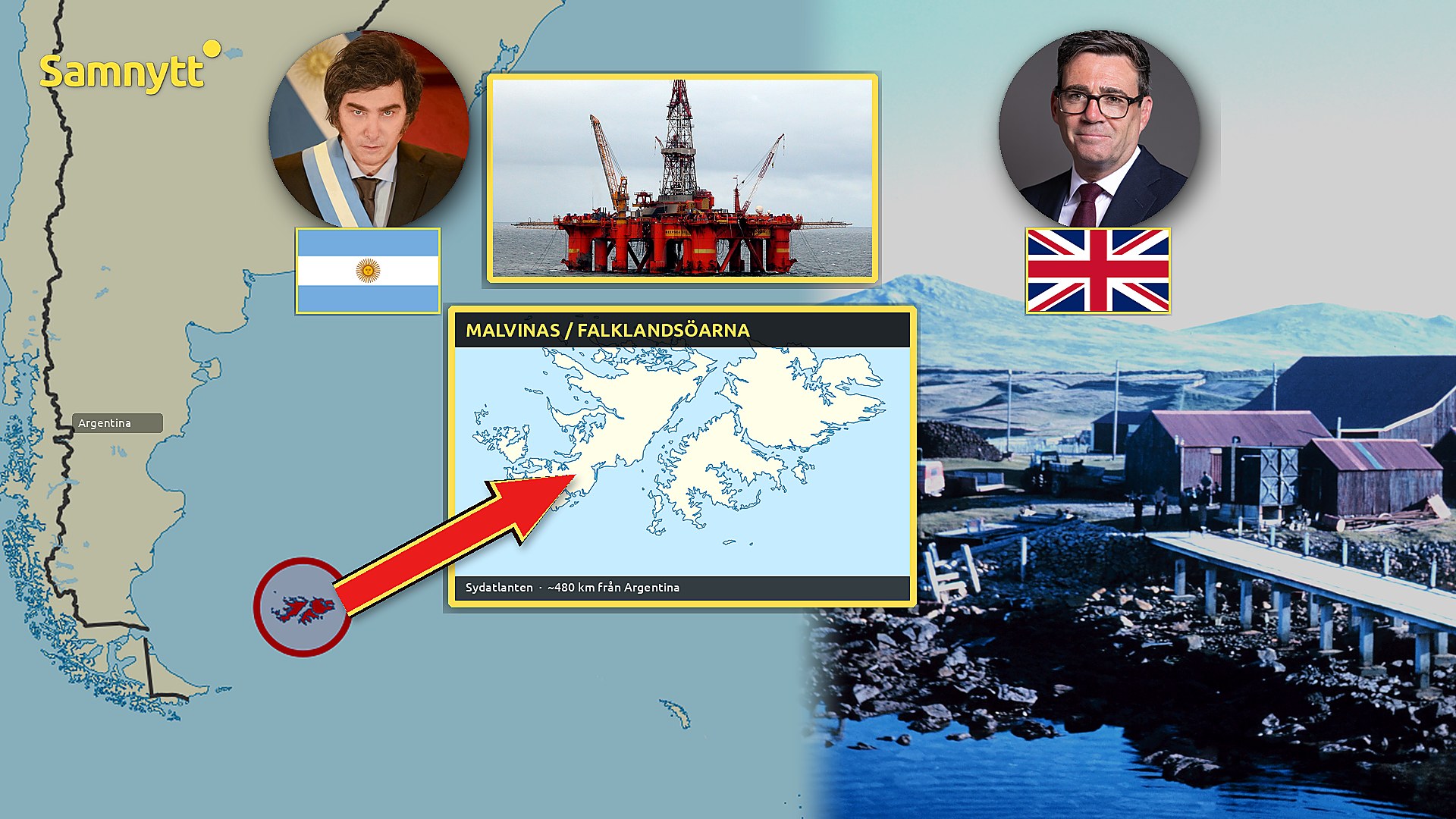
The conflict between Argentina and the UK over the islands in the South Atlantic has flared up again. Argentina’s President Javier Milei is threatening sanctions and an international legal process against the planned oil drilling. The UK, under Prime Minister Andy Burnham, maintains that the islanders—whom Argentina claims were planted on its territory—should control their own resources. In the British media, the same policy is called climate hypocrisy. At home, new oil drilling is blocked due to climate reasons. Thousands of kilometers away, at the Falkland Islands, drilling gets the green light.
The archipelago is located about 480 kilometers from the Argentine coast but nearly 13,000 kilometers from the UK. The geographical distance stands in stark contrast to the political and historical ties to Britain.
For Argentina’s government, the issue is far from peripheral—a core matter of sovereignty, access to natural resources on and around the islands, and national identity.
Argentina refers to the islands as Islas Malvinas and has never recognized British control, which London dates back to 1833. The demand for their return is written into the Argentine constitution, and the issue recurs in textbooks, diplomacy, and election campaigns, generation after generation. The UK and the islanders themselves use the name the Falkland Islands.
The UK administers the islands as an overseas territory. The British government points to the islanders’ right to self-determination and to a 2013 referendum in which an overwhelming majority voted to remain British.
SEE ALSO: Argentina revives claims on the Falkland Islands
Argentina responds that the population was illegally planted and that the referendum lacks international recognition. The war in 1982, when Argentina invaded and the UK retook the islands, cost hundreds of lives on both sides. It resolved military control, but not the diplomatic dispute.
Oil Stirs Anger
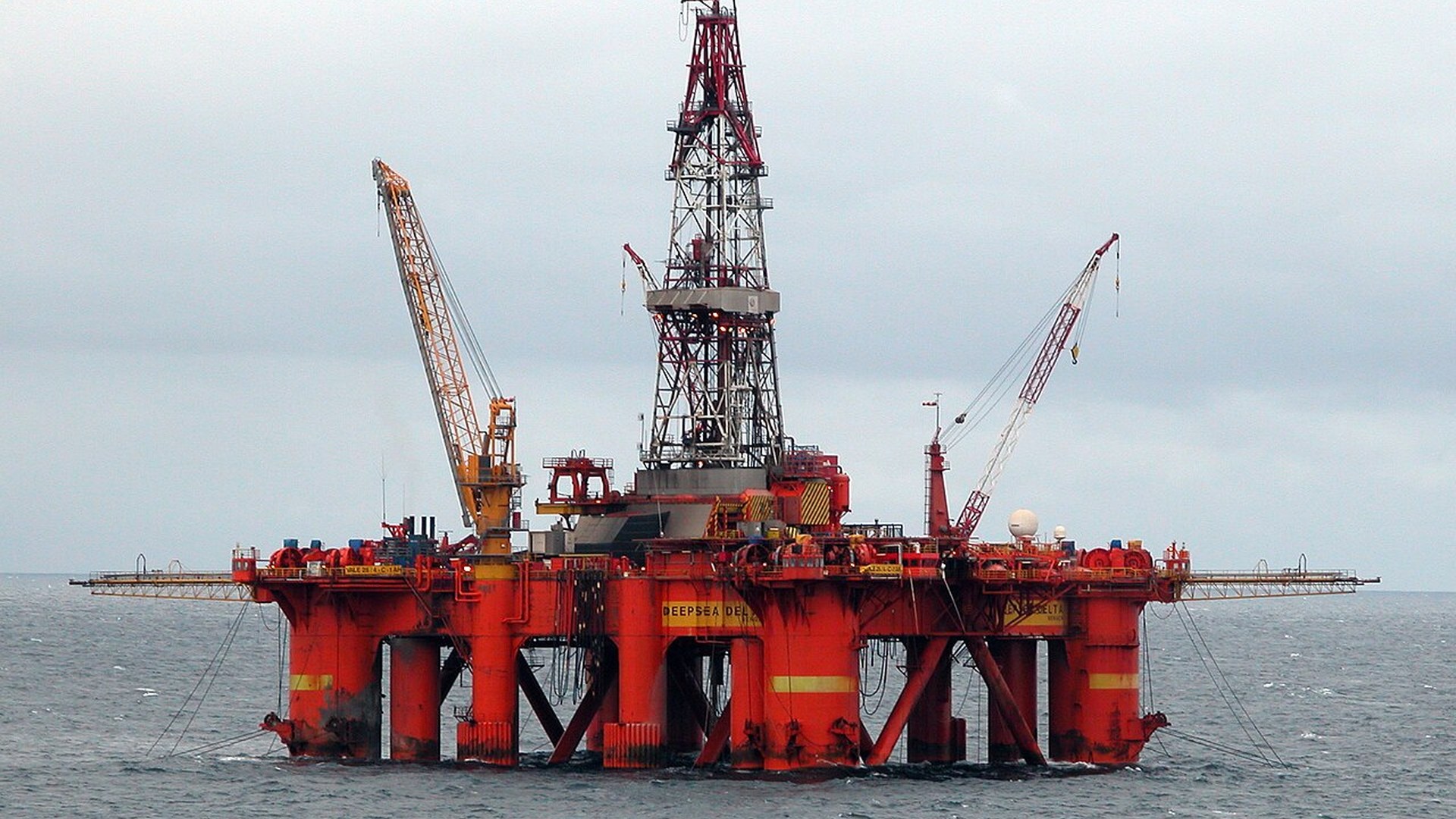
Now oil is raising temperatures. The Sea Lion project in the basin north of the islands is owned by Israeli Navitas Petroleum and Britain’s Rockhopper Exploration.
The field is estimated to hold hundreds of millions of barrels and got the green light from the Falkland Islands government in late 2025. First oil is targeted for 2028. For Argentina’s government, this is the “illegal plundering” of resources on the Argentine continental shelf.
Milei has ramped up tensions this autumn. In early September, he announced stricter sanctions on companies participating in the extraction. On September 28, his office gave the UK two weeks to halt Sea Lion.
Otherwise, an arbitration process under the UN Convention on the Law of the Sea and a request for provisional measures at the International Tribunal for the Law of the Sea in Hamburg await. An Argentine court has also ordered a halt pending environmental review, though international enforcement remains uncertain.
Climate Freeze at Home – Drilling Near Argentina
Meanwhile, the British Labour government has refrained from issuing new licenses for oil and gas drilling in the North Sea, citing climate and net zero goals. Energy Minister Ed Miliband has kept large projects like Rosebank and Jackdaw in limbo. Existing fields may continue, but no new licenses have been issued.
In mid-April 2026, the Daily Express and The Sun reported that Sea Lion was approved while the North Sea is being throttled. They called it hypocrisy.
Shadow Energy Minister Claire Coutinho stated that Labour is happy to approve new drilling “8,000 miles away” but that Miliband won’t sign off on ready-to-go projects at home.
In May 2026, the House of Commons also voted down an opposition demand to approve Rosebank and Jackdaw, cementing the stance against new North Sea projects.
The Foreign Office in London replied that the natural resources belong to the overseas territory. The decision on Sea Lion, they said, is up to the Falkland Islands government and the companies.
The criticism remains, nonetheless. The same London that blocks new oil drilling in its own waters on climate grounds backs the right of its overseas citizens to proceed with drilling in the South Atlantic—far from British voters, but right in the middle of a sovereignty dispute that the UN General Assembly has long urged the parties to resolve peacefully.
Why Argentina Won’t Let Go of Malvinas
For Argentina, Malvinas is about more than prestige. The islands and the surrounding sea are seen as a natural extension of the Argentine shelf, holding fish, potential minerals, and now confirmed oil reserves.
To give up the claim would be seen as ceding territory and future prosperity. It’s also one of few foreign policy themes that enjoys broad cross-party support—even as Milei otherwise breaks with previous governments’ policies.
The UK, for its part, treats the Falkland Islands as a strategic outpost in the South Atlantic and as a promise to the islanders. Prime Minister Andy Burnham, who took office in July 2026, has not signaled any change in approach. On the contrary, he has emphasized that the UK stands firm on the islanders’ right to self-determination.
The British government has also reiterated support for companies operating around the islands. That has been reported by, among others, Al Jazeera and Reuters following Milei’s ultimatum.
What we are seeing now are two courses of action intersecting. Argentina pursues sovereignty and legal action against what it calls unilateral resource extraction on Malvinas. The UK sticks to the islanders and the companies’ licenses at the Falklands—while its own climate policy has blocked new oil drilling licenses in the North Sea.
For critics, it’s hard to see anything but double standards. Oil drilling is wrong when it’s nearby and must be stopped for climate reasons, but acceptable when it’s far away and someone else pays the diplomatic price.
SEE ALSO: The World Cup’s Hottest Match? More Than Football in Focus When Argentina Faces England