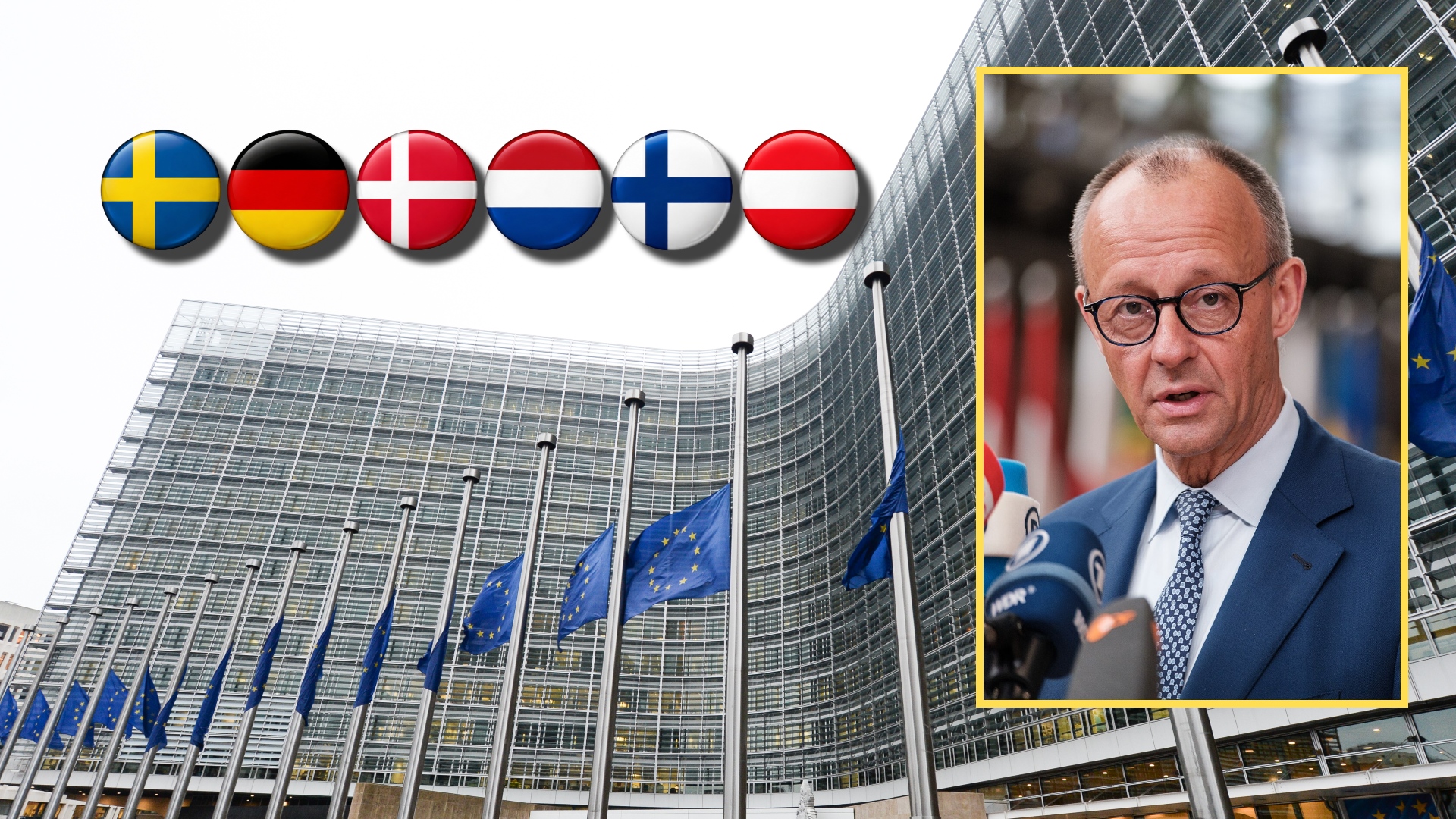
Sweden and five other net-contributing EU countries are threatening to block the union’s next long-term budget unless it is significantly reduced. The countries are demanding cuts amounting to hundreds of billions of euros and, at the same time, wish to shift money from traditional subsidies to areas such as defense, security, and innovation.
Germany, Sweden, Denmark, the Netherlands, Finland, and Austria have jointly toughened their stance ahead of negotiations on the EU’s long-term budget for the years 2028–2034. Together, these countries account for about 40 percent of the EU budget’s financing, according to the Financial Times.
In a joint letter, the leaders of these nations write that “the EU budget must be fundamentally reformed” and that the union faces critical decisions ahead. Their message is that no agreement will be accepted if the proposed spending framework of nearly two trillion euros largely remains intact.
Seeking to Slash Hundreds of Billions
The European Commission’s proposal covers almost 2,000 billion euros for the seven-year period from 2028 to 2034. This represents about 1.26 percent of the EU countries’ combined gross national income, according to the European Commission.
Germany’s Chancellor Friedrich Merz has already previously demanded that the proposal be reduced by hundreds of billions of euros. A level under discussion from the German side is about 400 billion euros in cuts. Germany has also called the European Commission’s proposed increase over the current long-term budget unrealistic.
The six countries also want to reprioritize the spending. More should go to areas such as defense, competitiveness, innovation, and migration management, while traditionally large spending items should be trimmed.
This primarily means that agricultural aid and the EU’s so-called cohesion policy—funds that go to poorer countries and regions—are under pressure.
The Commission’s current proposal allocates 865 billion euros to the part of the budget that includes regional policy and agriculture, for example. At the same time, 409 billion euros are proposed for competitiveness, research, and security.
Deep Rifts Between EU Countries
The demand has created a clear conflict, especially between richer net contributors in Northern Europe and several of the countries that receive large sums from the EU’s agricultural and regional funds.
Countries such as Italy, Spain, and Poland have opposed major cuts to traditional subsidies. Several countries instead want to find new sources of revenue for the EU budget to fund both existing and new expenses.
Another contentious issue is joint borrowing. Germany and its allies have opposed the EU solving financing problems through new joint loans, while other member states have been more open to that model.
The Commission has meanwhile proposed several new so-called own resources—EU-wide sources of income—to reduce reliance on direct payments from member states. Among the proposals are fees linked to large companies and other EU-wide revenues.
Sweden Could Block the Budget
The six countries have a powerful bargaining chip. The EU’s long-term budget must be unanimously approved by all 27 member states before it can be adopted. Sweden or any other member state can, in practice, block the entire deal. After that, approval by the European Parliament is also required.
The Irish presidency is now working on a new compromise proposal that will be on the table when EU heads of state and government meet on October 15. Ireland has been tasked with moving the negotiations forward after earlier compromise proposals failed to bridge the differences among member states.
The goal is to reach a political agreement before the end of the year. According to the EU Council, this is necessary so that detailed legislation can be passed during 2027 and the new budget can take effect on January 1, 2028.
If the conflict over the budget’s size cannot be resolved, however, positions remain far apart. The six net-contributing countries insist that the EU must first decide what its priorities actually are—and only then adjust the size of the budget accordingly.