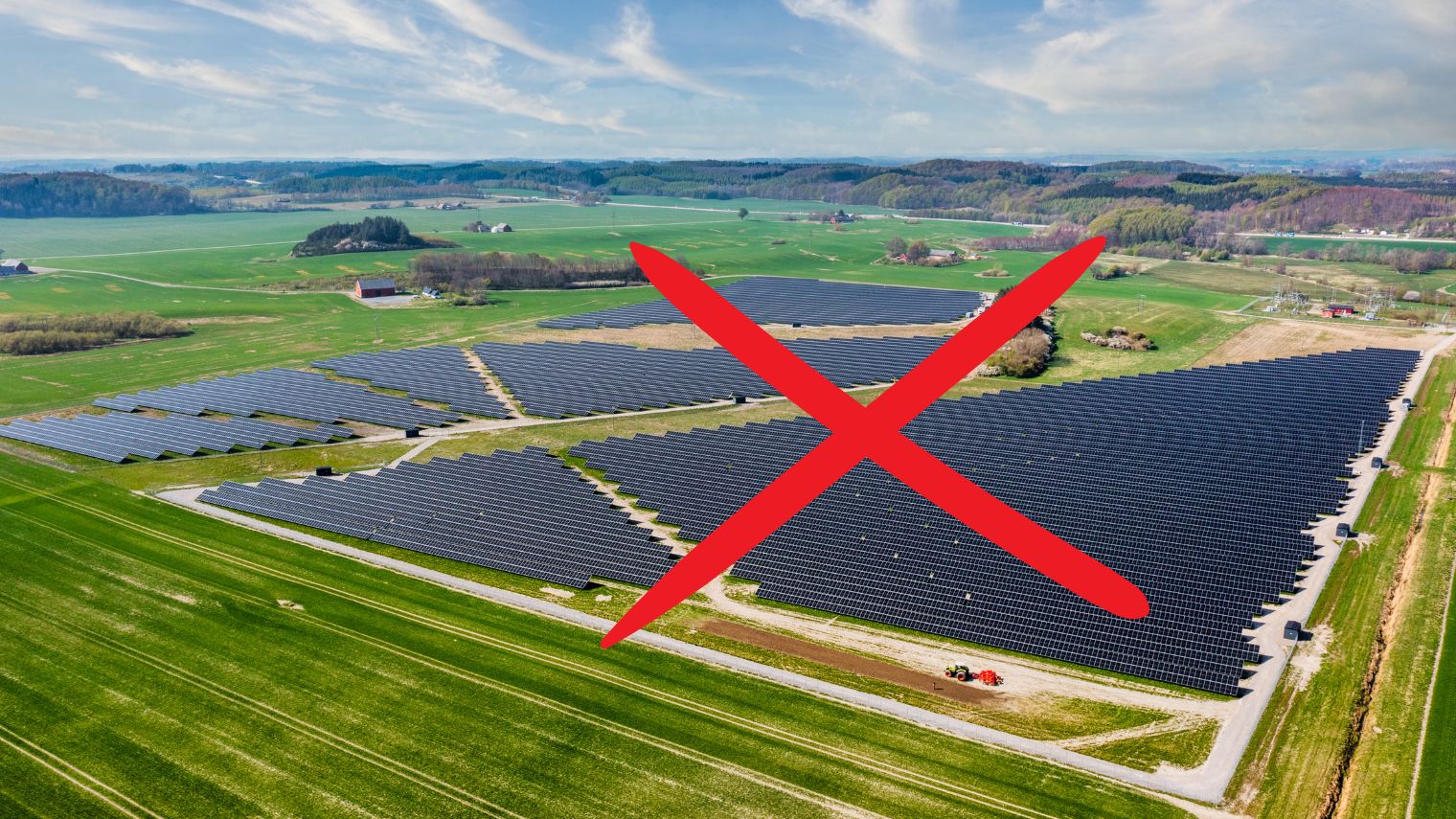
One of Europe’s largest players in solar power has become insolvent. German company Enerparc, with hundreds of solar parks and several gigawatts of installed capacity, has filed for insolvency. At the same time, the problems grow for an industry pressured by low electricity prices, grid constraints, and high debt levels.
Hamburg-based Enerparc has around 5.5 gigawatts of installed solar capacity, of which about 3.8 gigawatts are connected to the grid. The company operates more than 500 solar parks and has expanded rapidly for many years.
Now, the company’s debts and other financial obligations amount to roughly three billion euros, equivalent to about 33 billion SEK. The largest portion consists of project financing linked to the company’s solar parks.
READ ALSO: Municipality Blocks Solar Parks: “Completely Out of Control”
The immediate trigger, according to Affärsvärlden, was that a financing arrangement of about 200 million euros could not be completed. Enerparc had previously signed a framework agreement for project financing of up to one billion euros but could not secure the necessary funding.
The company’s operations will continue for now, while the bankruptcy trustee tries to stabilize the business and explores the possibility of finding an investor or buyer. Around 380 employees are affected by the process.

When the Sun Pressures Solar Power
The bankruptcy comes at a time when the economic conditions for solar power in Europe have become more complicated. When large amounts of solar energy are produced simultaneously, a so-called cannibalization problem occurs. The solar parks deliver the most electricity during the same hours, increasing supply and putting pressure on electricity prices. Periods of negative electricity prices have thus become more common.
This problem is compounded by the fact that power grids have not expanded at the same pace as weather-dependent production. When production is high, the grid in some places cannot absorb all the electricity, which can force production curtailments and hence reduce revenues.
In the first half of 2026, weather-dependent energy accounted for around 58 percent of German electricity consumption. At the same time, other companies in the European renewables sector have also run into financial difficulties. For example, German developer SoWiTec has also filed for insolvency after debt levels became too high.
Enerparc’s collapse thus points to a paradox in the European energy transition: the more solar and wind power that is built, the greater the need for power grids, storage, and other solutions to handle production when it comes in large quantities at the same time.
READ ALSO: Sweden Unprepared to Handle Old Solar Panels and Turbine Blades