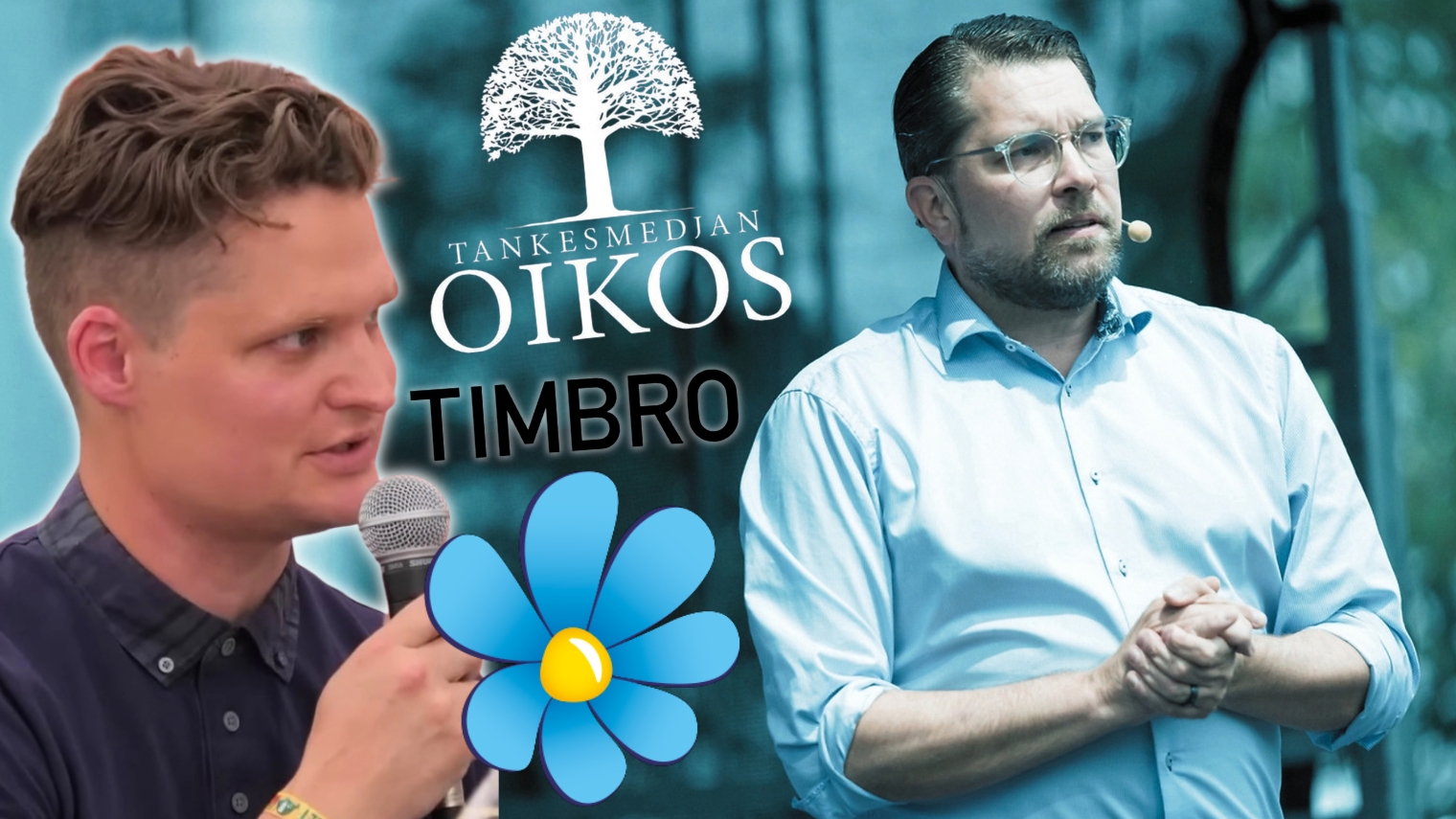
DEBATE • In the parliamentary election, the Sweden Democrats lost ground for the first time. At Friday’s press briefing, Jimmie Åkesson said the party should not be content with being the third largest—and that a post-election analysis has been commissioned from the think tank Oikos to find out what caused the loss of voters.
This is the same Oikos that, in the autumn of 2025, sat down at the table with the market-liberal, business-funded think tank Timbro. On September 23, they released the program Tidö 2.0 – Restart for Sweden. Behind the text were Adam Danieli from Timbro and Arvid Hallén from Oikos. In DN Debatt, they wrote that the marriage of convenience, Tidö, must become true love.
The program is an ideas platform with 176 main proposals that a right-wing government could implement from 2026 to 2030. Timbro would contribute the liberal perspective, Oikos the conservative one. Together, they called the program liberal-conservative.
Just before the election, the newspaper Arbetsvärlden reviewed the parties’ election manifestos point by point against Tidö 2.0. The result showed a liberal dominance among the direct matches.
The Centre Party is closer to Timbro and Oikos’s joint program than the Sweden Democrats. The Moderates have 14 direct matches. The Centre Party has 11. The Liberals 10, the Christian Democrats 8. The Sweden Democrats have 4. The Social Democrats, Left Party and Green Party have zero. The overlap is greatest in economy and business. It is weakest in migration, aid, and family policy.
Hallén called it “exquisite irony.” The real question is something else. That the Centre Party has more direct matches than the party Oikos is closest to raises questions about the think tank’s ideological shift.
Wasn’t this the reason Oikos was founded? The word oikos means home. For Oikos, it’s about loyalty to family, fatherland, civil society, and nation. Mattias Karlsson founded the think tank so that the right would have a voice in cultural issues, not just in Timbro’s market liberalism. With Tidö 2.0, Oikos backed a program where the nation is mostly in the background and the focus is on Timbro’s economic agenda.
This is reflected in the direct matches. The party that for decades has fought against the grain for Sweden and Swedes is the poorest fit among the Tidö parties. The Centre Party does not want to abolish the quota refugee intake or use aid as leverage for deportations. Despite that, they are closer to Timbro and Oikos’s joint proposals.
The same Oikos will now explain why the Sweden Democrats lost ground. Through Tidö 2.0, they have already charted a market-liberal course for the party. We can only hope that the analysis does not become yet another step toward turning the Sweden Democrats into a toothless immigration-critical liberal party.
Andreas Feymark
Think tank Hemir