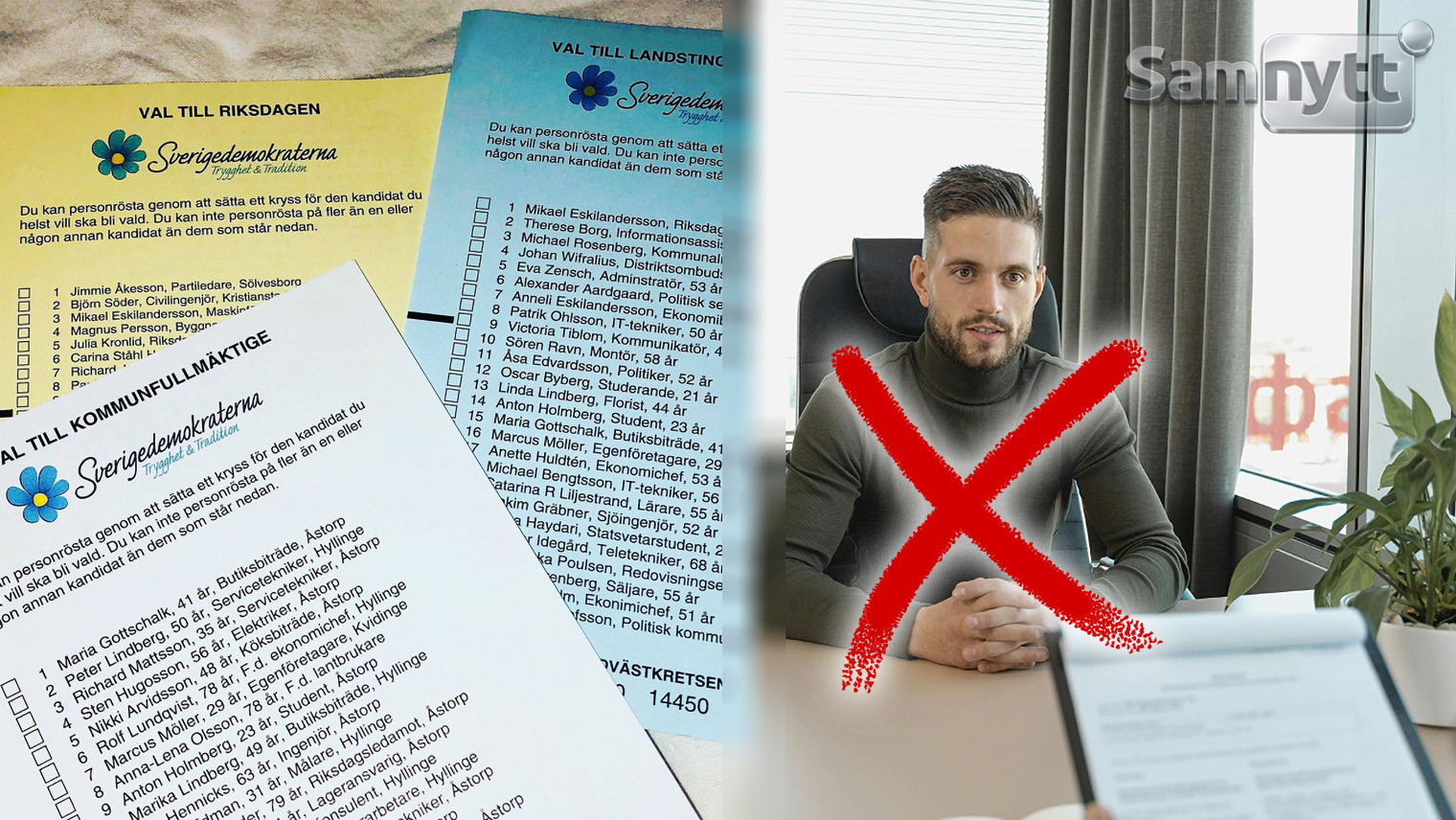
Being open about one’s political engagement can reduce the chances of getting a job in Sweden. This is shown by a new study in which over 11,000 fictitious job applications were sent to employers throughout the country. The resistance was particularly pronounced towards applicants with connections to the Sweden Democrats – despite the fact that the party is now Sweden’s second largest. The results also indicate that people perceived as left-radical or activist also risk being sorted out.
A new Swedish study, published in the journal ‘Political Psychology’, shows that employers were less likely to respond positively to applications where the applicant indicated political activity. In total, 11,461 fictitious applications were sent to employers in a range of professions after the 2022 election.
On average, the probability of receiving a positive response decreased by about two percentage points when political engagement was mentioned. This corresponds to a clear relative setback in the first stage of the recruitment process.
Particularly Harsh Impact on the Sweden Democrats
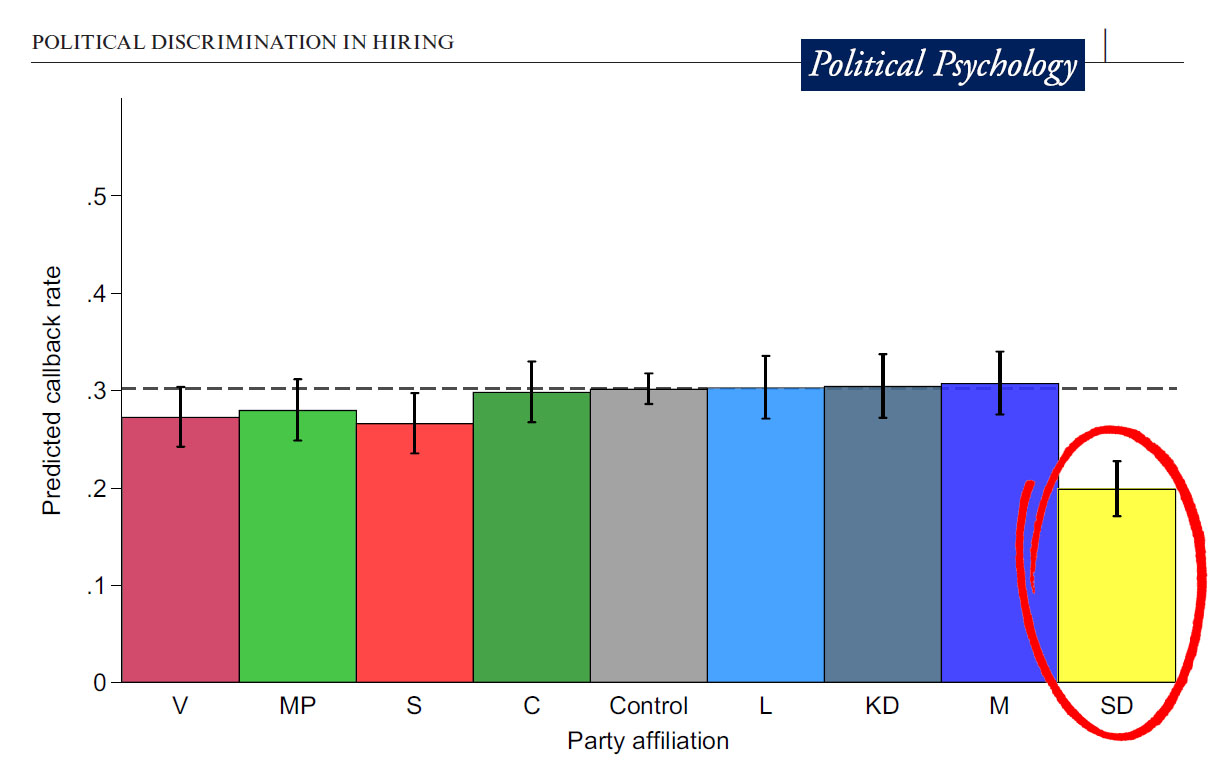
The most pronounced effect applied to applicants who indicated involvement in the Sweden Democrats. According to the study, their chance of a positive response dropped by just over ten percentage points compared to the control group, which did not state any party affiliation. This was the clearly largest negative effect among all the parties.
This is seen as a remarkable result given that SD is now the country’s second largest party and a central power factor in Swedish politics. Despite this, the stigma surrounding the party seems to persist in parts of working life.
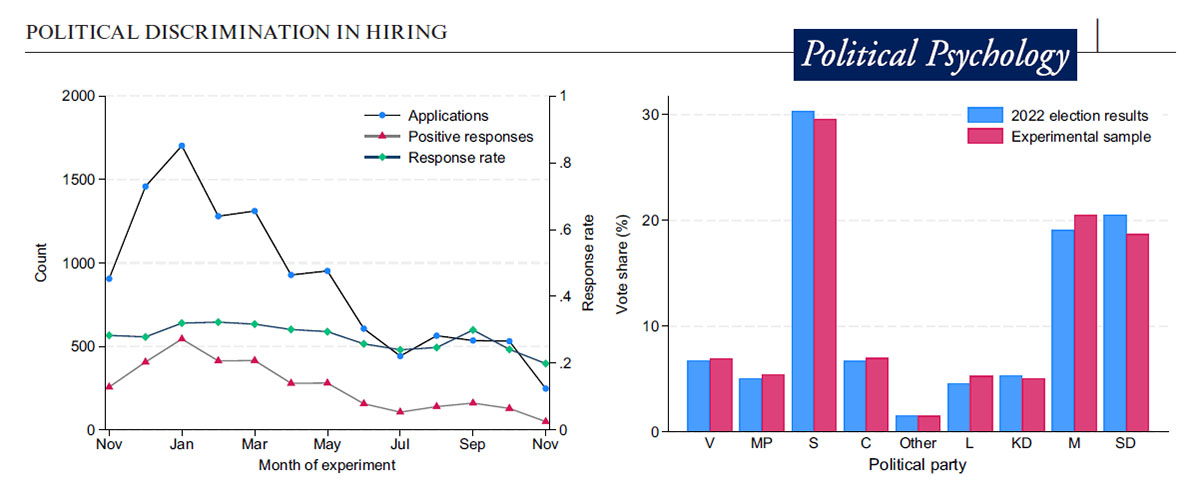
The study also points out that discrimination against right-wing applicants was strongest in areas where the left bloc was strong in the election. This suggests that the assessments of employers may partly be influenced by the local political environment.
Left-Wing Engagement Can Also Be Penalized
At the same time, the picture is broader than just SD. The researchers also found negative effects for several parties on the left side. Social Democratic engagement produced a statistically significant decrease. The Left Party and Green Party also showed negative tendencies.
The researchers note that some employers may perceive clearly left-wing candidates as more conflict-oriented, ideologically driven, or activist. This may involve concerns about internal culture, customer reactions, or workplace cohesion.
This means that both nationalist and radical leftist engagement risks becoming a liability in recruitment contexts. However, the greatest anxiety exists around hiring people with openly Sweden Democrat views.
Greater Tolerance in Rural Areas
The study also reveals a geographic difference. In larger cities and urban areas, political sorting was evident, whereas the researchers found no corresponding effect in rural municipalities.
A possible explanation is that employers in big cities have more applicants to choose from and thus greater room to sort out candidates based on subjective signals. In smaller communities, where skills shortages are common, such considerations may play a lesser role.
Risk of Self-Censorship
The researchers warn that the development could have consequences far beyond the labor market. If people feel that political engagement worsens career opportunities, fewer may want to run for office, take assignments, or be open about their views.
This risks, in the long run, creating a society where political participation comes at a cost – and where people learn to be silent in order to get a job. This is a climate previously associated only with totalitarian regimes and dictatorships.
In theory and officially, citizens in Sweden are encouraged to engage democratically. In practice, many employers still seem to prefer the politically invisible candidate.