
The government is preparing to lower the age of criminal responsibility to 13 years for minors who commit serious gang crimes. Criticism from left-liberal circles has not been long in coming, and there is obstruction from within the Correctional Services. Justice Minister Gunnar Strömmer (M) is now trying to calm public opinion: the prison environment for the youngest ‘child soldiers’ should be as open and child-friendly as possible, with schooling, treatment, and recreational activities – the minister mentions Playstation and football as examples.
The background to the reform is a development that the government describes as alarming. According to Strömmer, there are about 50 individuals in their early teens who are only this year involved in suspicions of murder, attempted murder, or preparations for murder in immigrant criminal gang environments. It is this small but extremely burdened group that is the focus of the legislative change.
Strömmer emphasizes that this is not about a general lowering of the age of criminal responsibility for all crimes, but a narrow exception for the most brutal crimes. He also stresses that the situation itself is a failure for society.
– No thinking person wants to throw children in prison.
At the same time, he argues that the current system no longer manages to break the patterns that these children have already become trapped in. This is part of the recent decades’ immigration-related serious gang crime, where leniency for young criminals serves as an incentive for older criminals to let ‘child soldiers’ commit the most serious crimes, knowing that if caught, they will get away lightly or even completely escape punishment.
Sis, HVB, and municipalities are not deemed sufficient
Already today, 15-17-year-olds are sentenced to closed youth care, in practice through the National Board of Institutional Care (SiS). But according to Strömmer, there are major problems in the current system. He points to relapses, escapes, and deficiencies in controlling communication with the outside world. According to him, the experience is that a large majority of older youths who commit very serious crimes return to gang environments after completing their care.
For the even younger ones, it is often the home municipalities that bear the main responsibility through social services, residential care homes, or placement in foster families – something Strömmer believes creates inequality and inadequate security.
READ ALSO: Tidöregeringen: Next summer, criminal 13-year-olds will be imprisoned
The government’s conclusion is that the Correctional Services, despite objections, must be able to take responsibility for this youngest group in the most serious crimes. The previous ways of handling young offenders are not equipped for today’s situation when it is no longer about shoplifting and smoking marijuana, but about murder.
Correctional Services obstructs – the government stands firm
Resistance to the proposal also comes in the form of institutional activism. The Correctional Services, together with several other heavyweight referral bodies, oppose the lowering and prefer a continued situation as today, with ‘child soldiers’ committing murder in society without punishment.
READ ALSO: Correctional Services: No to imprisoning child soldiers
The authority cites difficulties in rehabilitating such young children in a prison environment and also points to resource shortages in a Sweden where prisons are already overcrowded with serious criminals of immigrant background. The Prosecution Authority threatens wild strikes if the legislative change is passed.
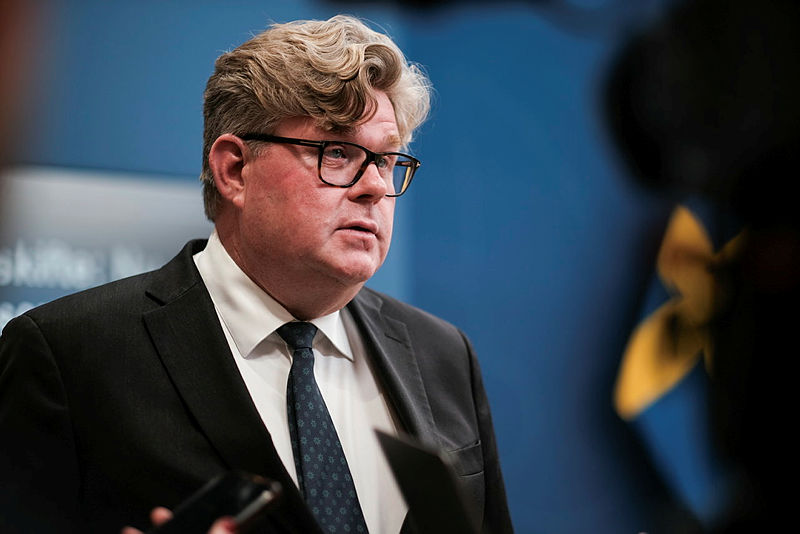
Strömmer says that the criticism is taken seriously and that the referral responses are being carefully analyzed, but he clearly states that politics will not negotiate away its responsibility.
– It’s not a negotiation. Ultimately, politics must both make the decisions and bear the responsibility for the decisions.
He reminds that the Correctional Services have already been tasked with preparing places for 15-17-year-olds from next summer onwards – and that the 13-year-olds will be accommodated within the same system when the reform is implemented.
”As open operations as possible”
One of the most sensitive issues concerns how the daily life of the youngest murderers should look inside the walls. Strömmer repeatedly emphasizes that life in the institutions should be as child-friendly and pleasant as security allows.
Isolation may occur, but only temporarily and in case of acute risks, for example, if the young murderer is deemed to be dangerous to themselves or others. The Minister of Justice emphasizes that the child convention also applies in the institutional environment.
– The starting point is as open operations as possible.
When asked specific questions about the content of daily life, he confirms that nothing will be lacking for the youngest serious gang criminals in terms of toys and recreational activities.
– I think there will be, I mean Playstation and football fields.
At the same time, he emphasizes that the focus should be on schooling, treatment, and structured recreational activities. The units should be specially built for young people, separate from adult inmates.
Temporary solution to an acute problem
The government’s plan is for the lowering to be temporary, for five years. Strömmer describes the reform as an emergency valve in an acute situation, where the Correctional Services should temporarily relieve social services and schools so that preventive work can be strengthened on a broader front.
He admits that there is a risk that the immigration-related serious gang crime will be pushed down further in age, but argues that research points in different directions – and that passivity is no longer an option.
– It’s a completely hair-raising figure, he says about the number of individuals under 15 years old who are in legal proceedings charged with murder and related crimes.
He summarizes the feeling towards the around 50 children who have already been linked to the most serious violent crimes this year. Whether five years of exceptional laws will be enough to solve the problem remains to be seen.
Choice for the rule of law
The debate about 13-year-olds in prison has become one of the most charged legal issues in a long time. The criticism revolves around children’s rights, resources, and the risk of normalizing the incarceration of ever younger individuals.
READ ALSO: The child convention must not become the criminal gangs’ safety net
The government and those supporting the legislative change respond by stating that today’s tools are not sufficient against the gangs’ systematic recruitment of children, and that the victims, their relatives, and the general public’s safety weigh heaviest.