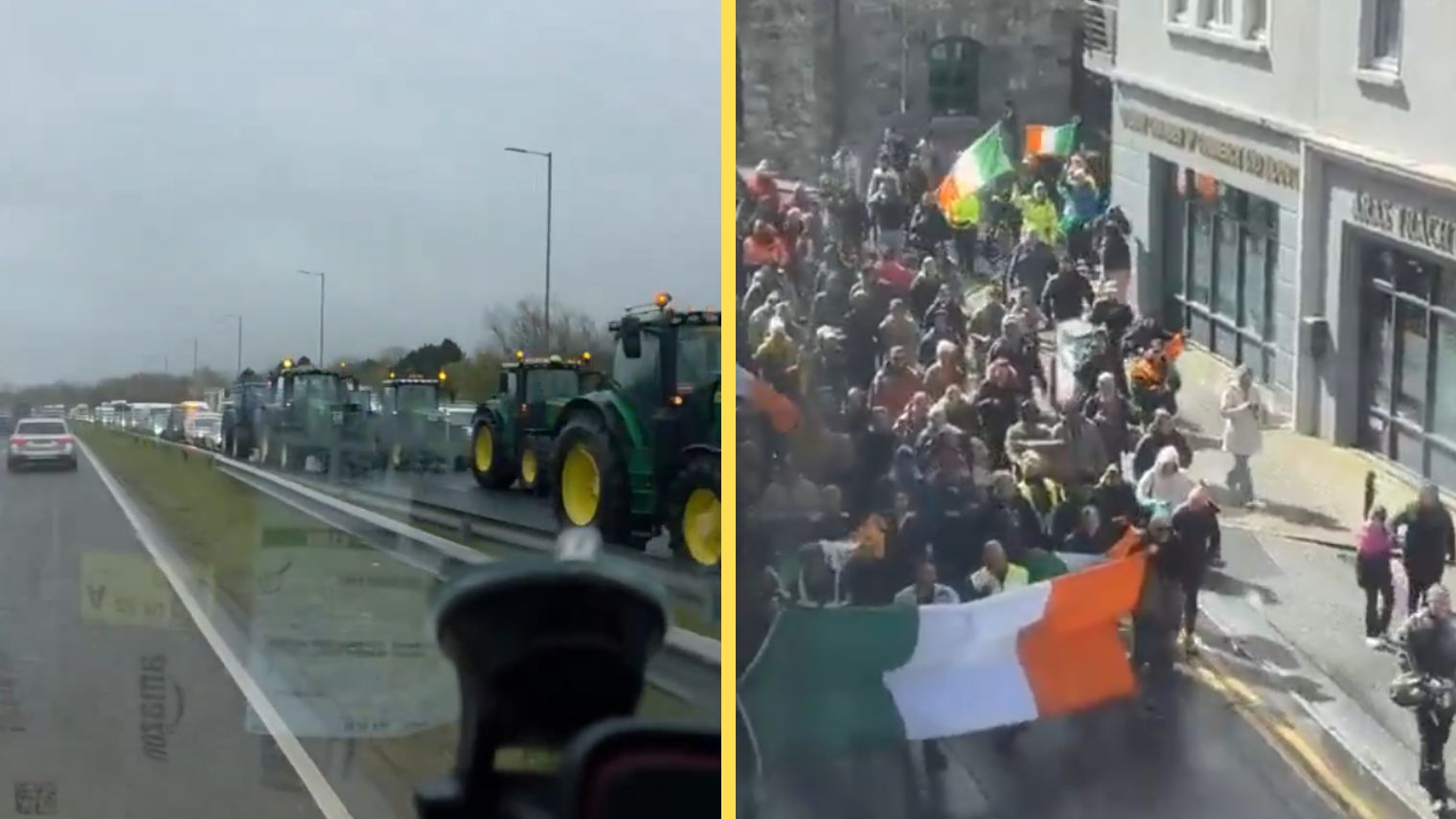
Farmers and haulage company owners have this week paralyzed Ireland with widespread blockades of roads, fuel depots, and central parts of the capital, Dublin, in protest against rapidly rising fuel prices. The demonstrations, now ongoing for several days, have led to fuel shortages, traffic chaos, and the government preparing military support to keep essential services running.
In the wake of US and Israeli attacks on Iran, fuel costs have increased :censored:6:cdd6bbaa89:ly, and in Ireland, people have taken to the streets to protest. The protests began a week ago and continue on Tuesday, with tractors causing disturbances in Belfast.
Northern Ireland’s Health Minister Mike Nesbitt urges demonstrators not to block roads and to allow healthcare professionals to reach their patients.
READ ALSO: Member of Parliament warns: Irish risk becoming a minority in their own country
– Today, just like every day, there will be over 100,000 contacts between the health service and the public, and thousands of them depend on the workforce getting from A to B on time, he says.
– My appeal is to let the health and care system function as it should.
Northern Ireland joins the protests ????
Tractors block roads at Belfast city airport. pic.twitter.com/80YXA4Z6aW
— Tommy Robinson ???????? (@TRobinsonNewEra) April 14, 2026
Stern Police Chief
A few days ago, Prime Minister Michael Martin announced measures to ease the economic pressure. The package, which costs about 505 million euros, includes further reductions in fuel duties and taxes and a postponement of a planned carbon tax increase. The money comes on top of the 250 million euros in measures introduced almost three weeks ago.
Over the weekend, Irish police chief Justin Kelly said that the demonstrators were holding the country hostage and that the blockades were not a legitimate form of protest, adding that they have “resulted in fuel shortages directly affecting emergency services such as hospitals, ambulance care and fire services as well as businesses and the public.”
Chants of “Mícheal Martin has got to go” in Galway as the public join the fuel protests across Ireland ???????? pic.twitter.com/hhsoXIsVX9
— Tommy Robinson ???????? (@TRobinsonNewEra) April 12, 2026
READ ALSO: MMA star wants to become Ireland’s next president