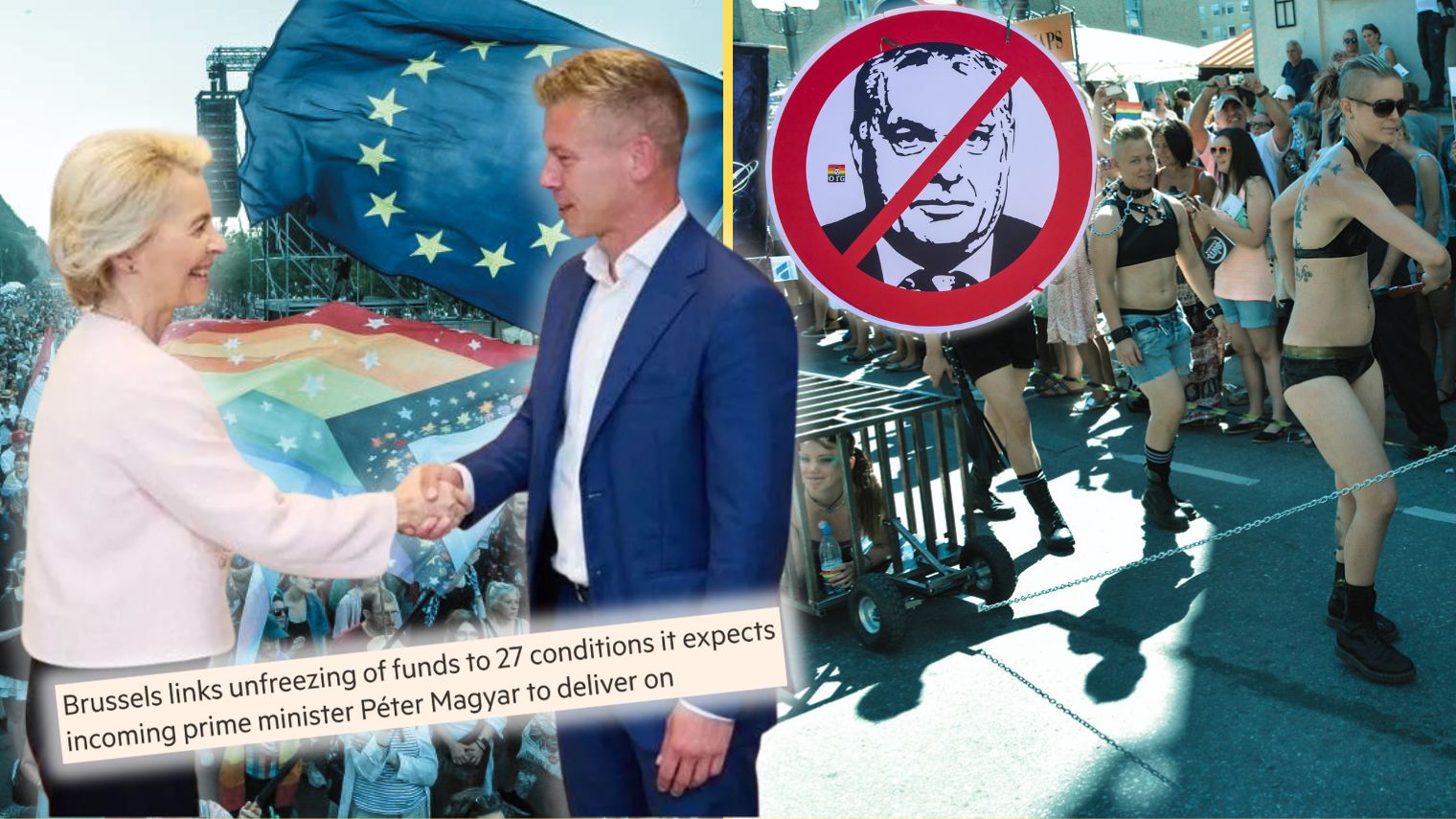
The European Commission has initiated what is described as an “immediate cooperation” with Hungary’s new political leadership following Sunday’s power shift that saw Viktor Orbán lose his majority and control. During the election campaign, Péter Magyar promised to unlock the frozen EU funds amounting to hundreds of billions of kronor—money that the EU has withheld citing deficiencies in the rule of law and political governance. But the price is clear. For the funds to be disbursed, Magyar must comply with the EU’s demands through extensive reforms, including adherence to the Union’s fundamental values, the judiciary, state institutions, and more. Migration policy may also come into focus—as Hungary has refused to comply with anything related to the EU’s mass migration policy and is currently fined around one million euros per day for resisting EU policies.
The new prime minister, Péter Magyar, has quickly become central to the relationship between Budapest and Brussels, with the EU now seeing a possible turning point after years of conflict with Orbán over rule of law principles, migration, institutions, and foreign influence from actors seeking to operate in Hungary, as well as the Union’s foreign policy where Brussels wants to both maximally support Ukraine and integrate it into the EU—something Orbán has opposed.
According to reports in the British business paper Financial Times, citing EU sources, the frozen funds are tied to a total of 27 different conditions that must be fulfilled before any payments can be made. The conditions include, among other things, reforms for the independence of the judiciary, strengthened anti-corruption mechanisms, and changes in how key state institutions and regulatory authorities operate.
The full list of these 27 conditions is not public, relying on information from various sources, which means additional points remain unknown. However, they are likely linked to areas where Viktor Orbán has long clashed with the European Union.
READ ALSO: Elon Musk as Soros Celebrates Orbán’s Fall: “Soros Has Taken Over Hungary”
On Monday, European Commission President Ursula von der Leyen commented on Orbán’s election loss, stating that it now means a return to “fundamental freedoms” in Hungary—a phrase that in itself says much about how developments are interpreted in Brussels. The EU Commission also emphasizes that there will be no automatic release of funds and that every step of the process must be approved and verified.
In total, approximately 35 billion euros—about 400 billion SEK—are currently frozen. Of this, roughly 18 billion euros are cohesion and structural funds blocked due to what the EU describes as shortcomings in rule of law, corruption risks, and problems related to judicial independence. An additional 17 billion euros in loans, tied among other things to defense cooperation, have also been delayed pending political and institutional changes.
READ ALSO: Sweden Democrats Welcome EU-affiliated Party’s Victory in Hungary
In addition, there is an ongoing separate conflict between Brussels and Budapest regarding Hungary’s refusal to comply with certain decisions from the EU Court of Justice, particularly on asylum matters. The EU argues that Hungarian legislation refusing mass immigration in these areas contravenes Union regulations, which has resulted in daily fines of around one million euros. These fines are now said to have accumulated to nearly 900 million euros and are in some cases deducted directly from EU support.
Hungary Must Return to the “EU Path”
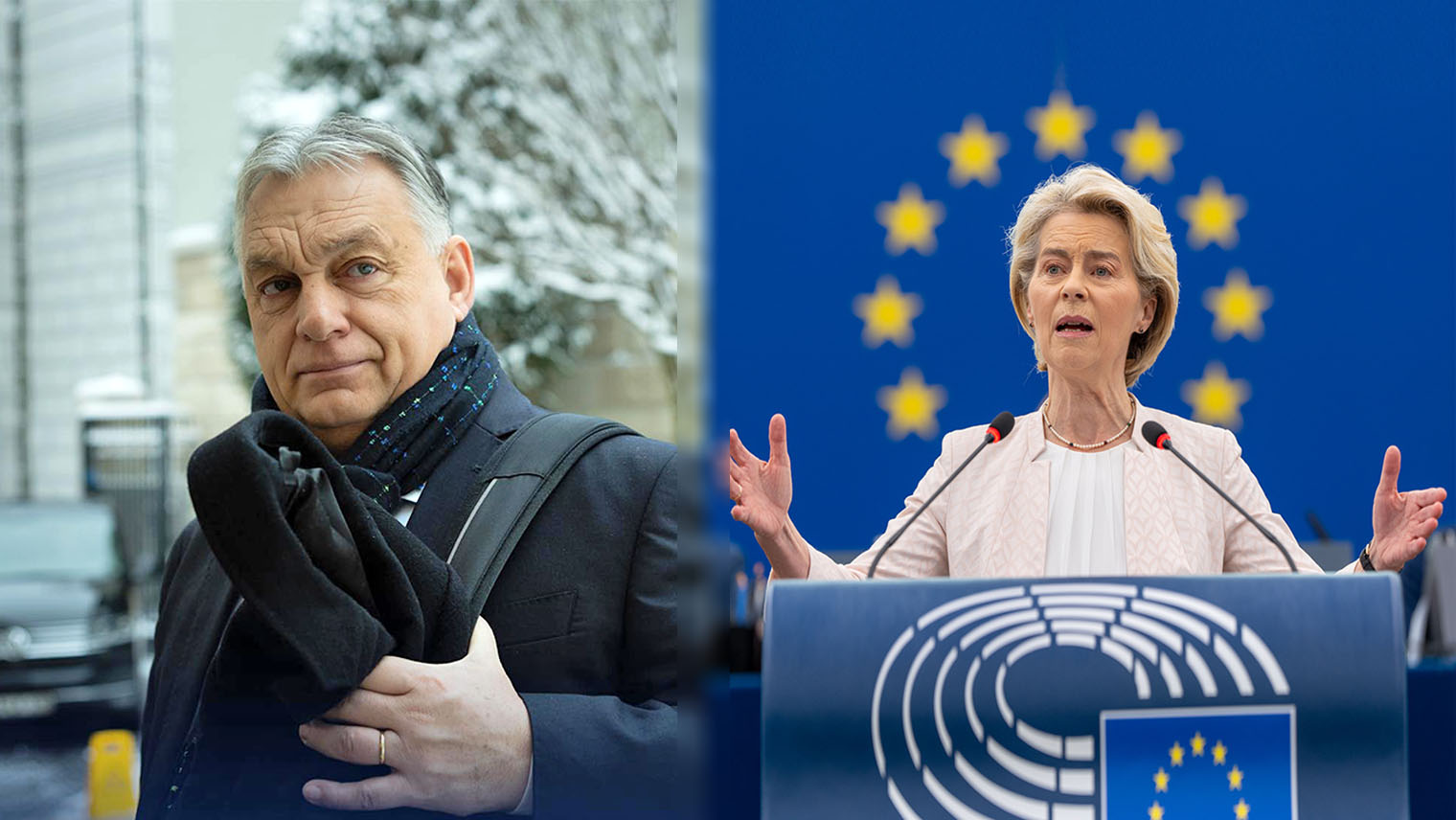
European Commission President Ursula von der Leyen has simultaneously stated that the Commission is ready to work quickly with the new government but emphasizes that Hungary must return to what she describes as the European path. EU officials characterize the new political landscape as a strong mandate for change, but stress that this also brings high expectations for swift and concrete reforms.
READ ALSO: Orbán to EU-critical Parties: “Reform Doesn’t Work—Revolt and Refuse”
Several EU diplomats also point out that developments concern not only the economy and domestic reforms but also foreign policy orientation. In particular, the new government’s position on Ukraine and the EU’s joint stance toward Russia are being monitored closely. Issues regarding support for Ukraine, future sanctions packages, and potential vetoes in EU decisions are seen as important indicators of how the relationship between Brussels and Budapest will evolve.
Meanwhile, discussions are underway on comprehensive reforms to Hungary’s judicial system and state institutions. The EU is highlighting, among other things, the need for a more independent judiciary, changes in security and supervisory authorities, as well as greater transparency in state-owned companies and public institutions. Previous conflicts regarding Hungary’s compliance with decisions from the EU Court of Justice also remain a central issue in the relationship.
The European Commission is said to be cautious in drawing conclusions too quickly, not least in light of previous experiences from other member states, where reform processes took longer than expected or slowed due to political changes. As a result, the process is now described as gradual, with each reform needing to be completed and approved before additional funds can be released.
An additional uncertainty is the Hungarian transitional period, where the president, according to the constitution, has up to 30 days to swear in the new parliament. EU sources express concern that changes may be made during this period that could impact the ability to carry out reforms later, which further complicates the negotiating position between Brussels and Budapest.
Thus, the relationship between the EU and Hungary is entering a new phase, where economic incentives, legal requirements, and political reform expectations are intertwined in an ongoing process that is still far from resolved.
EU Official: “A Victory for Fundamental Freedoms”
Péter Magyar’s election victory has been welcomed by the entire European political spectrum, from the Green Party to the leadership of the Sweden Democrats, the Soros Foundation, and above all, the President of the European Commission, Ursula von der Leyen, who has described the development in positive terms.
READ ALSO: Kvartal Outraged Over JD Vance’s Visit to Hungary—Perception of Foreign Influence Falters
Von der Leyen, who is not directly elected but was appointed to her post as President of the European Commission, has said she celebrates the election result in the member state, thereby marking a clear stance on what is acceptable opinion within the Union.
– It is a victory for fundamental freedoms.
– Yesterday’s election result was exceptional.
– Hungary is on its way back to the European path.
READ ALSO: EU-Liberal Hungary to Stop News Broadcasts—So “Impartial” Content Can Be Ensured
Von der Leyen’s Monday statement did not end there. She now wants to seize this opportunity and rebuild the EU so that no single member state can defy decisions like Orbán has done. But today, the EU leader “celebrates” the election.
– But I also think that we should learn lessons within the EU. For example, I believe that a transition to qualified majority voting in foreign policy is an important way to prevent systematic blockages, as we have seen before, the EU official said, and continued:
– We should use the current momentum to truly move forward. But today is of course a day to celebrate, she concluded, promising that the EU will work with Hungary’s new leadership.