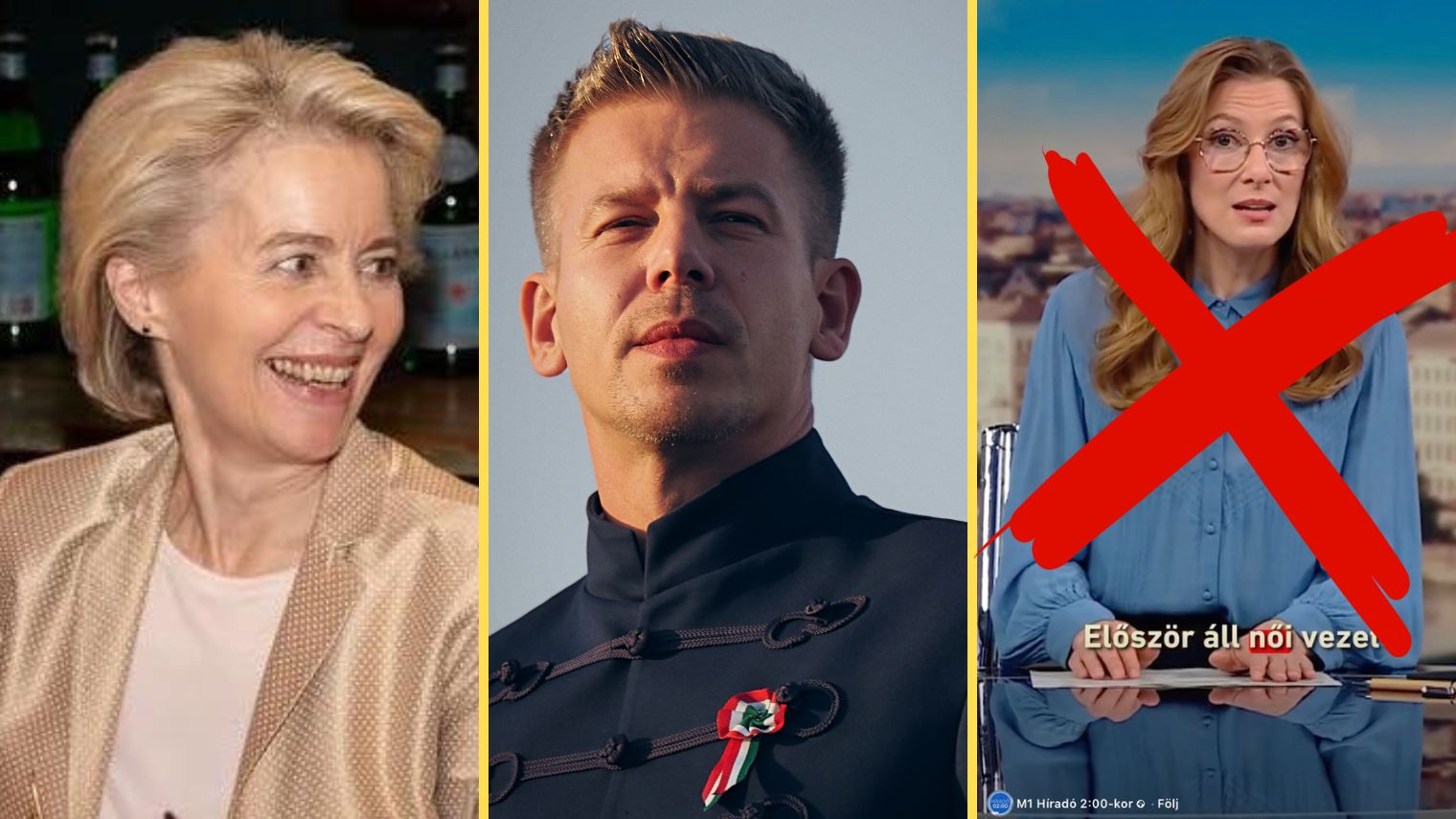
Péter Magyar wants to halt news broadcasts on Hungary’s public service media until, in his view, “impartial news coverage” can be guaranteed. He also announced that the euro will be introduced in Hungary and that one of his first foreign visits will be to Brussels.
During Viktor Orbán’s time in power, Hungary has repeatedly faced criticism from the EU and left-liberal organizations for shortcomings in press freedom.
The criticism has included changes to media legislation after 2010, where the state gained increased influence over regulatory authorities and public service media, as well as a development in which large parts of the media market have come to be owned by individuals with links to pro-government interests.
Fidesz has also been accused of strengthening pro-government media through state advertising and acquisitions, while other newsrooms have faced economic and structural obstacles. Critics argue that this effectively affects competition conditions in the media market.
Thus, the question of press freedom in Hungary has become a clear fault line – with critics describing the development as a gradual politicization and centralization of the media, where Orbán-loyal actors receive advantages.
This gets interesting. Similar arguments are also made in a Swedish context, where some claim that alternative media have a harder time accessing advertising revenue and state support. That ad networks are either unavailable or highly limited and that state support in practice favors mainstream media, while alternative media in some cases experience limited or no access. In addition, the Swedish state has now introduced a “democracy condition” where organizations must comply with certain values in order to possibly qualify for state support.
READ ALSO: New Media Support – But with a “Democracy Condition”
Meanwhile, established media receive state funds to a greater extent. The Swedish state also requires that recipients of media support meet the so-called “democracy condition,” which means that actors granted support must live up to fundamental principles linked to democratic values and regulations. According to critics, this too can sometimes be used as a tool to exclude certain media.
READ ALSO: The Government’s “Democracy Condition” Is Growing – A Control Tool to Silence Dissent
Viktor Orbán and Fidesz have faced criticism for a media system that, according to critics, favors media seen as pro-government. At the same time, they reject accusations that they control media or dictate content. They argue that Hungary enjoys a media landscape where various voices are heard. The government has defended its reforms by saying they are in line with other European countries’ laws and that they aim to create order, balance, and national control over the media sector. In other words, much like Sweden.
“Stop News Broadcasts”
At a press briefing on Monday, Hungary’s incoming Prime Minister Péter Magyar announced that parts of the state media apparatus have functioned as what he described as Viktor Orbán’s “political propaganda machine.”
He therefore intends to halt news broadcasts until, in his view, they meet the requirements for impartiality and independence.
– One of the first measures will be to stop news broadcasts on public service TV and radio. We want a board that can ensure independence in the state media.
READ ALSO: Elon Musk as Soros Celebrates Orbán’s Fall: “Soros Has Taken Over Hungary”
The proposal means public service news broadcasts will be temporarily paused and will be resumed only once the operations have been reformed according to requests from the EU-friendly Tisza Party.
A similar development has taken place in Poland after the 2023 election, when the liberal government under the EU-friendly Prime Minister Donald Tusk began changes to the state media sector, including reorganizations and personnel changes within public service.
This is an issue often raised in debates about media independence in Europe, where there are at times warnings that national conservative power shifts threaten public service. Now, however, it is two EU-friendly governments that are clearing out in public service after coming to power.
READ ALSO: Poland’s Liberal Government Dismantles Public Service: “Dictatorship”
At Monday’s press briefing, Péter Magyar also announced that Hungary will introduce the euro, and that one of his first trips abroad will be to Brussels and to meet the EU-friendly Donald Tusk in Poland. Tusk went viral on social media on Sunday when he congratulated Magyar and said he was happier about the victory over Orbán than Magyar himself.
READ ALSO: Sweden Democrats Welcome EU Party’s Victory in Hungary
Watch the full press conference with Hungary’s incoming Prime Minister Péter Magyar here: