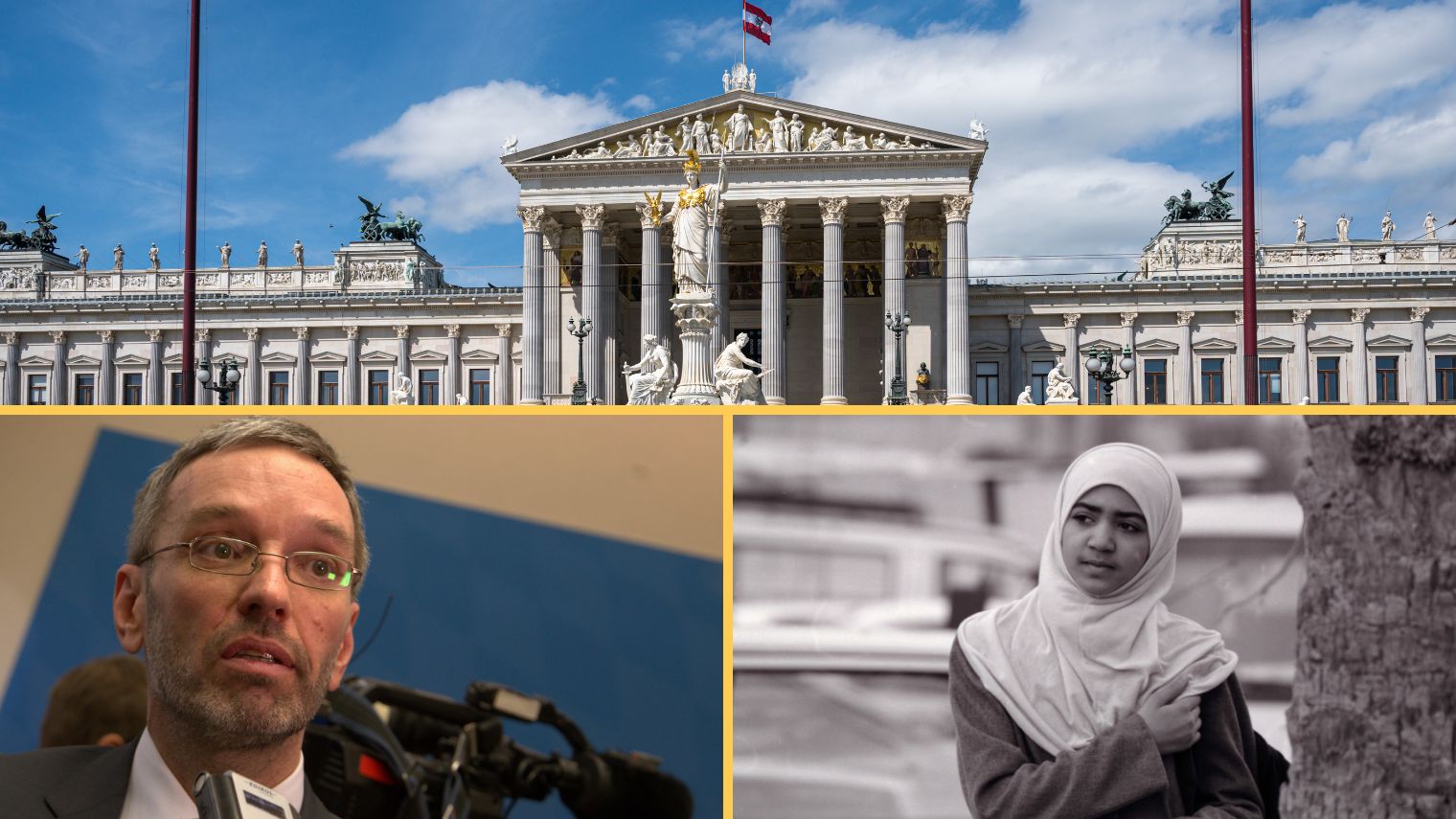
On Thursday, Austrian lawmakers voted with a large majority in favor of a law banning headscarves for girls under 14 in the country’s schools. Human rights groups argue that it is discriminatory and fear that it will lead to deepened social divisions.
A ban on headscarves in primary schools was already introduced in 2019 but was subsequently overturned by the constitutional court. Despite protests claiming that the law could be seen as discrimination against a specific religion and that it risks putting children in an uncomfortable position, the conservative government insists this time that the law is constitutional.
The government has been under pressure from the public and proposed the ban earlier this year, citing that it would protect girls from oppression. The law prohibits girls under 14 from wearing headscarves that “cover the head in accordance with Islamic traditions” in all schools.
Prior to the vote, Yannick Shetty from the liberal NEOS stated that the headscarf “is not just a piece of clothing” but also “sexualizes girls”. Integration Minister Claudia Plakolm also expressed a similar view.
READ ALSO: 7 out of 10 want a ban on headscarves
– When a girl … is told that she must hide her body … to protect herself from men’s gazes, it is not a religious ritual, but oppression, she said when presenting the bill.
The ban applies to all forms of Islamic headscarves, including the hijab and burqa, and will come into effect at the start of the new school year in September. In the vote, only the Green Party voted against. According to the government, around 12,000 girls will be affected by the new law. Parents whose daughters repeatedly violate the rules risk fines of up to 800 euros.
Prejudice and racism
In the national conservative FPÖ, they would have preferred an even stricter law and for the ban to apply to all students, teachers, and other staff.
Among the critics are organizations such as Amnesty International Austria, where they argue that the law ”constitutes clear discrimination against Muslim girls” and describe it as an ”expression of anti-Muslim racism”. They also claim that the law risks ”fueling existing prejudices and stereotypes against Muslims”.
Even at IGGOe, the body officially recognized as representative of the country’s Muslim community, they are dissatisfied. They argue that the ban ”jeopardizes social cohesion” and that ”instead of empowering children, they are stigmatized and marginalized”.
READ ALSO: Authority stops using images of children with hijab