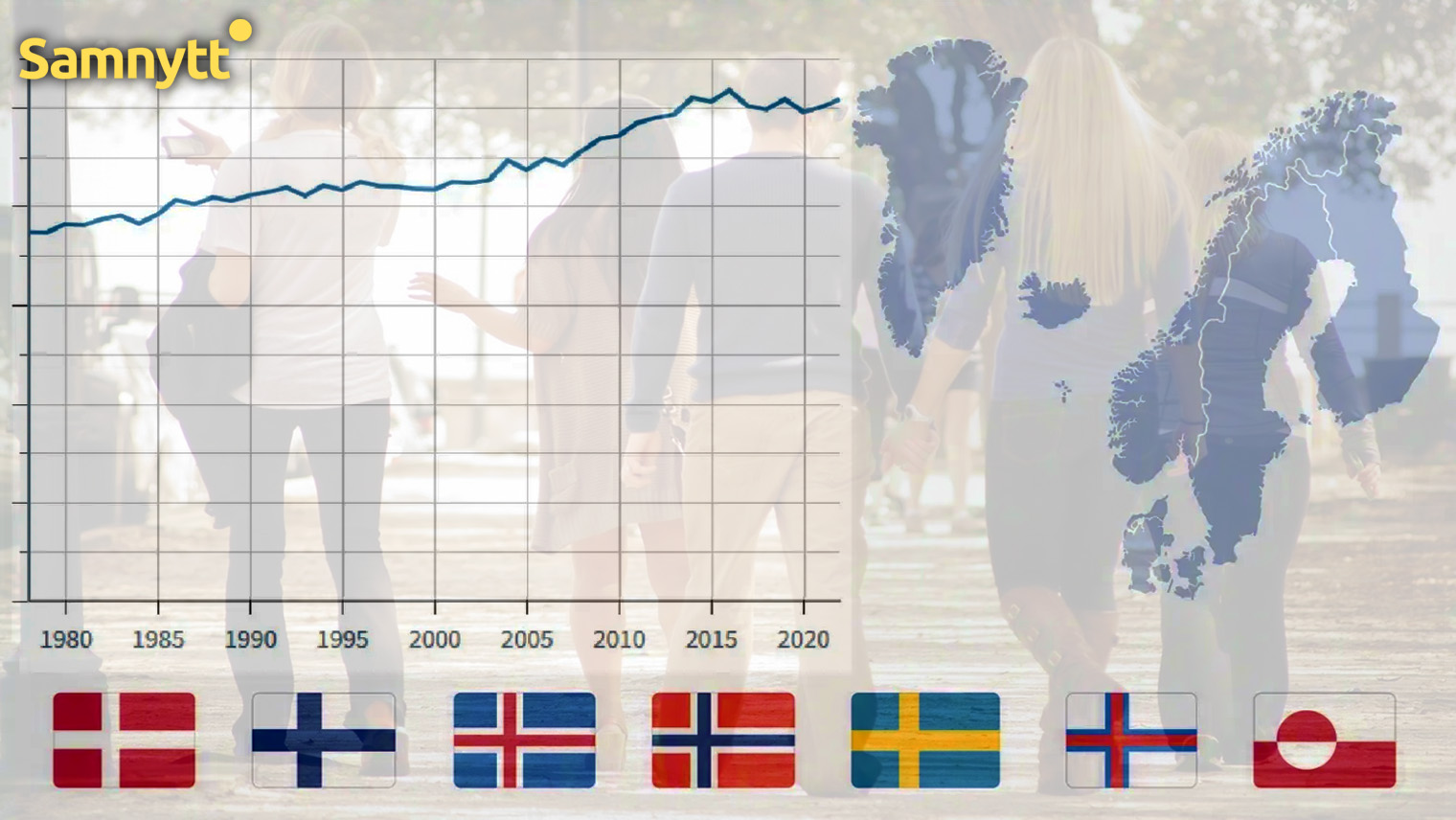
Cancer is still significantly less common in people under 50 compared to older individuals. However, a comprehensive Nordic study shows a clear negative trend. The incidence increased for 12 out of 18 examined cancer types between 2003 and 2022—and for several diagnoses, the increase is greatest among the very youngest adults.
Researchers at, among others, Karolinska Institutet have analyzed just over 2.2 million cancer cases in Sweden, Denmark, Finland, Norway, Iceland, the Faroe Islands, and Greenland. The study includes people aged 20 to 84 and is based on the Nordic countries’ cancer registries. The main aim was to investigate trends in so-called early-onset cancer, which refers to cancer diagnosed before the age of 50.
The results show that the age-standardized incidence increased statistically significantly for 12 out of the 18 examined cancer types between 2003 and 2022. The most notable increases among 20–49-year-olds were seen for cancer of the colon, kidney, and thyroid.
Colon Cancer Increasing Particularly Rapidly
For colon and kidney cancer, the incidence increased by an average of 2.7 percent per year among people under 50. The corresponding increase among 50–84-year-olds was significantly smaller: 0.4 and 1.2 percent per year, respectively.
Thyroid cancer increased even more rapidly, by 3.8 percent per year among the younger group. However, the rate was almost as high among older people—4.0 percent annually—which, according to the researchers, may at least partly be due to improved and more intensively used diagnostic methods.
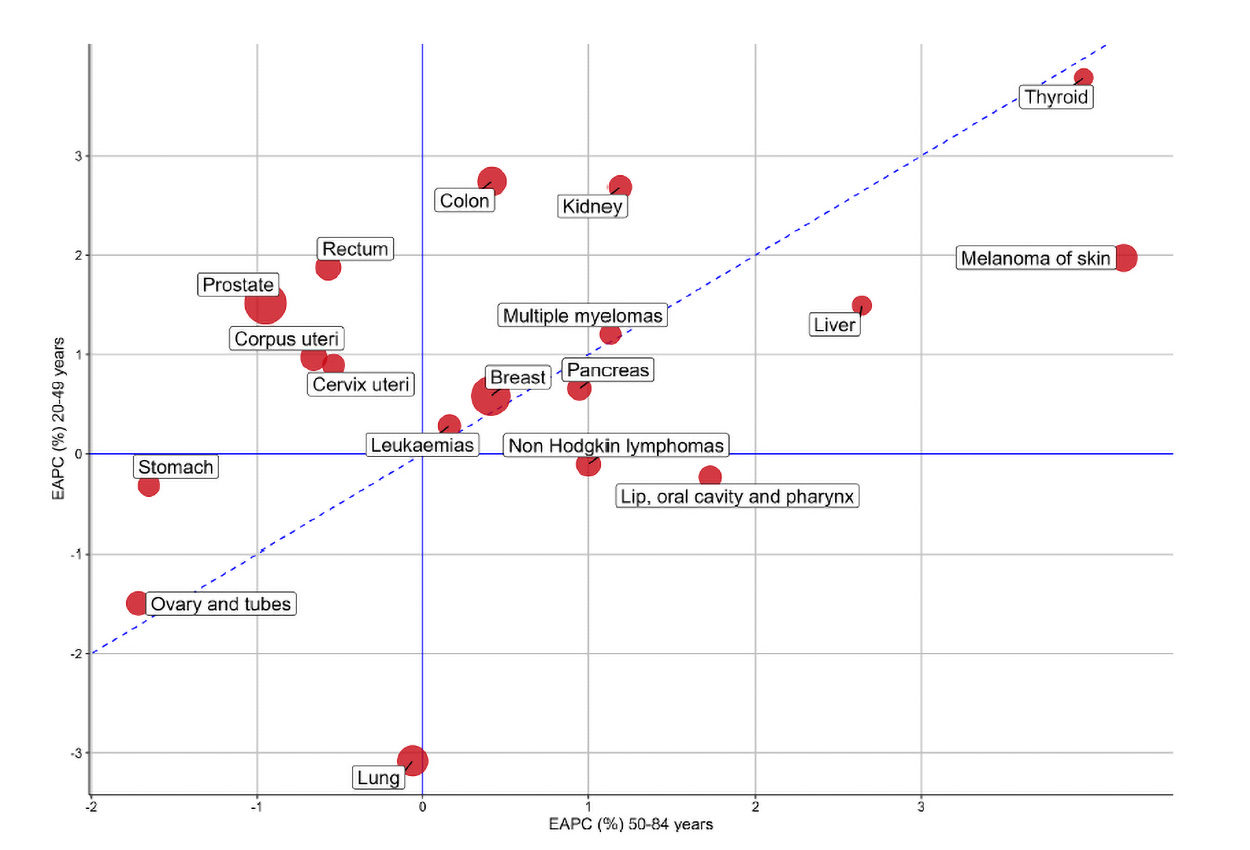
Rectal, liver, and prostate cancer, skin melanoma, and multiple myeloma also showed increases of around one percent or more per year in the overall analysis.
At the same time, there are cancer types developing in the opposite direction. Lung cancer among people under 50 decreased by an average of 3.1 percent per year, and ovarian cancer by 1.5 percent. The researchers link the decline in lung cancer to reduced smoking in younger generations.
Over 9,000 Additional Cancer Cases
The study also quantifies what these changes mean in absolute numbers. In the five-year period 2003–2007, 47,491 cancer cases were registered among 20–49-year-olds. During 2018–2022, the number had risen to 56,665—an increase of 9,174 cases.
The largest increase was seen in skin melanoma, with 2,918 more cases. This was followed by thyroid cancer with 1,800 more cases, breast cancer with 1,641, colon cancer with 1,298, and kidney cancer with 650 more cases.
READ ALSO: Soft drinks may be linked to more than double the risk of stomach cancer
Part of the increase in the number of cases can of course be affected by population changes, which is one reason why the researchers also analyzed age-standardized incidence. Even with that method, the increase remains for the majority of the examined cancer types.
The Youngest Stand Out for Certain Cancer Types
One of the study’s more concerning results is that the trend cannot simply be explained by people closer to 50 being more frequently affected.
When the researchers divided the group into five-year age intervals, they found the largest increases among those under 35 for colon, pancreatic, breast, and kidney cancers. For rectal, liver, thyroid cancers, and melanoma, however, the greatest increases were between ages 35 and 49.
The pattern is particularly clear for colon cancer. Incidence among those under 40 has been increasing since the 1990s, while it has declined in older age groups over the past decade. Breast cancer among women under 50 has also steadily increased since the early 1990s.
Younger Generations Appear to Carry Higher Risk
The researchers also followed the development according to birth year. Here, a so-called cohort pattern emerges—successive generations born from around 1960 onward have had higher incidence of colon cancer than previous generations. Similar tendencies are seen for rectal, pancreatic, breast, and kidney cancers among more recently born generations.
This development is seen by the researchers as particularly important since a higher risk in younger generations may follow them as they grow older, thereby eventually increasing the overall cancer burden.
READ ALSO: Artificial sweeteners may cause cancer, lead to heart attack—and make you demented
– Our results show a clear pattern of increasing cancer incidence among young adults. Even though the cancer risk among younger people is much lower compared to the older population, these increases are concerning since the causes behind these patterns are still largely unknown, says Anna Johansson, cancer epidemiologist and associate professor at Karolinska Institutet.
Causes Still Unclear
The study cannot determine why cancer is increasing among younger people. The material consists of registry data and does not include individual information about, for example, body weight, diet, alcohol habits, or physical activity.
However, the researchers point to several possible factors. Obesity has been highlighted in previous research as one possible explanation, but also physical inactivity, changes in eating habits, alcohol and smoking, reproductive patterns, UV exposure, and genetic predisposition may play different roles depending on the cancer type. At the same time, improved diagnostics could mean more tumors are now being detected than before.
– Since our data are observational and lack individual-level information about risk factors, we can only speculate about the underlying causes for these patterns, Johansson says.
The research group is now moving forward with more detailed studies to try to identify groups with particularly high risk and possible preventive measures.
The study is a collaboration between researchers at, among others, Karolinska Institutet, the Nordic cancer registries, and the WHO’s cancer research organization IARC. It has been funded by the Swedish Research Council and the Swedish Cancer Society.