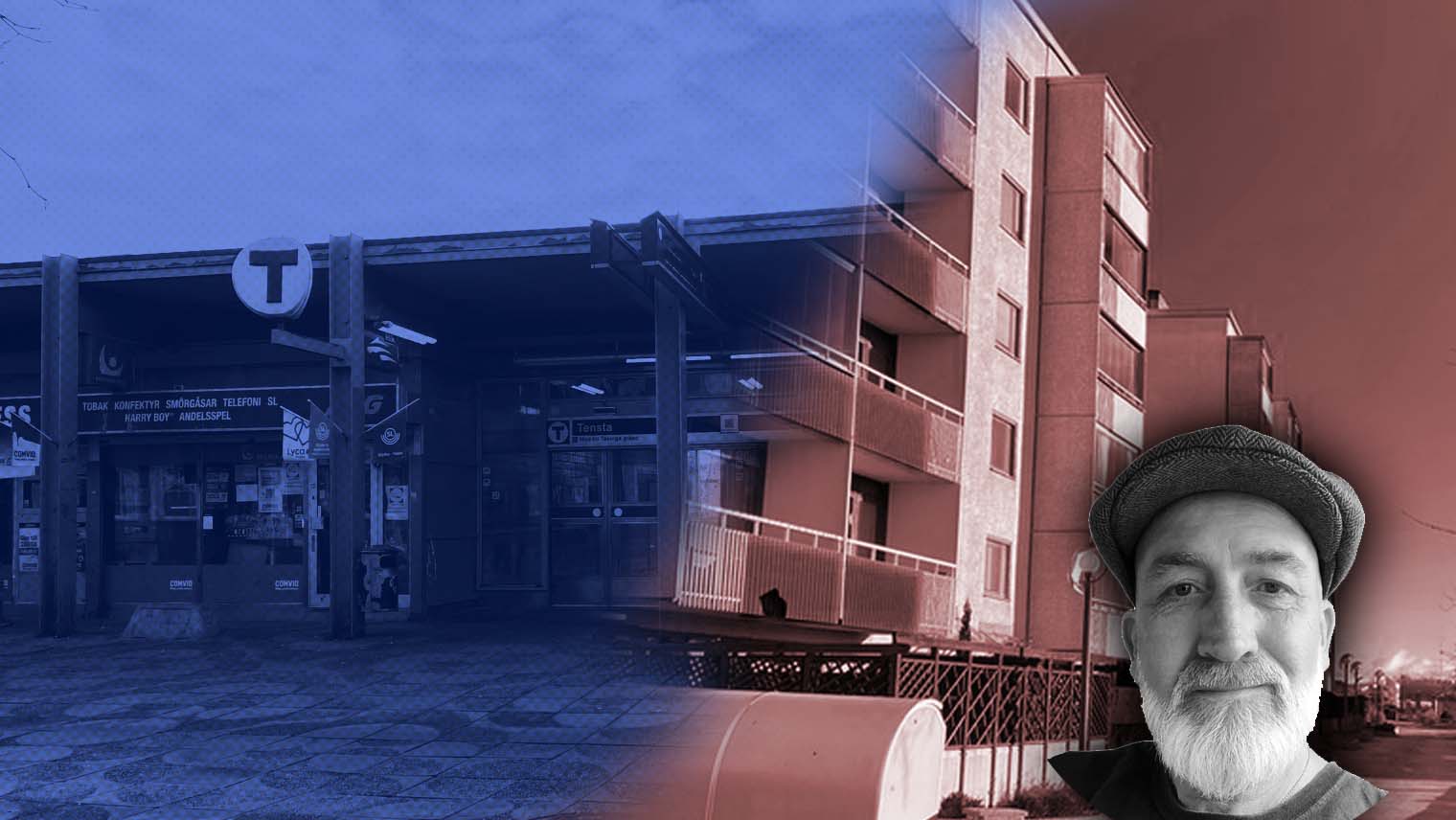
NYHETSKRÖNIKA • Tensta and Rinkeby are more than just suburbs in Stockholm. They have become symbols of a societal construction that began with welfare ambitions but ended in denial and decay. Anyone stepping off the subway immediately notices it: the air is different, the environment bears traces of a country that has lost its direction. Here, in the midst of the brutal architecture of the Million Programme and decades of political illusions, the cracks in Sweden become clearer than anywhere else. What was supposed to be the future’s welfare state instead became a reminder of how far the consequences of a failed societal project can reach.
Sometimes, you step off the subway in a place in Sweden and feel that the air is different. Not because it’s dangerous on every street corner, but because something in the environment reveals a societal construction gone awry. Tensta and Rinkeby are such places. They are areas that for decades have symbolized what we prefer not to talk about – and the consequences of decades of political denial.
When I traveled there, I already knew what to expect. Not in the form of any dramatic scene, but in the feeling of a long-standing political failure. These are neighborhoods created by a kind of welfare optimism that long ago turned into cynicism.
READ ALSO: Kista: Here, Sweden was supposed to build the future – now companies and Swedes are fleeing
Careless decision-makers, ideologically blinded journalists, and officials who believed that ambitions could replace consequence analysis have together shaped places that are neither human in their architecture nor safe in their function. The result was ghettos in modern attire: brutal, monotonous, and eventually characterized by a demography that no longer dares to be openly discussed.
It is no coincidence that it turned out this way. Areas like these were doomed even before the first spade was struck. No human thrives in environments that reduce life to corridors, walkways, and concrete hills.
To tear apart a country
For decades, Social Democratic politicians traveled around the country and tore down what people thrived in: small town centers, farms, wooden house areas, market squares, winding streets, and the small-scale that carried culture forward without anyone needing to make a big fuss. The welfare state was not perfect, but it was alive. And it was ours.
And when all of this had already shaken the foundations of society, they chose, as a grand finale, a mass immigration policy of a magnitude that no country in the world had previously tried. The integration idea collapsed long before the word became worn out. And at the same time, the Swedes were expected to accept the idea that all criticism was an expression of moral deficiency rather than a concern for their own society.
Jonas Andersson
Instead, everything was to be rationalized, modernized, made more efficient. What was considered fine was deemed outdated. What was traditional was seen as an obstacle. What was Swedish gradually became something one preferred not to mention. In their place emerged the large-scale Million Programme areas – a new kind of slum, taller and wider than the old, with more concrete, more anonymity, and even less dignity.
In the sixteen years I have lived and traveled in Europe, I have never seen anything like it: a country that treats its own population with such strange indifference. Cities deliberately made uglier. Neighborhoods deprived of their history. A culture that was first questioned, then relativized, then denied.
It ended with the Swedish people in practice being urged not to believe that the country was theirs to carry forward. Not even the fragmented Berlin of the 20th century did this after the war. Yes, in the GDR, it should be added. The tyrannical state that many Social Democrats saw as a socialist role model, not least the indoctrinating and political school policy (is there any Swedish primary school teacher who did not have to travel to the GDR in the 1970s to “learn”?).
And when all of this had already shaken the foundations of society, they chose, as a grand finale, a mass immigration policy of a magnitude that no country in the world had previously tried. The integration idea collapsed long before the word became worn out. And the Swedes were expected to accept the idea that all criticism was an expression of moral deficiency rather than a concern for their own society.
Sometimes I wonder if civilizations always reach a point where self-annihilation is confused with goodness. Values are inverted: the beautiful is ridiculed, the vulgar is elevated; men are suspected, women are encouraged to despise; traditions are dismissed as reactionary; freedom and pride are called populism. In the end, one is left with a country that no longer remembers why it once functioned.
Such thoughts accompany me through Tensta and Rinkeby. Not as nostalgic sighs, but as questions without answers. What happens to a country that forgets where it comes from? How long can one dismantle an identity before people start seeking security in completely different communities than the national ones? And what remains when what once held us together has been declared uninteresting?
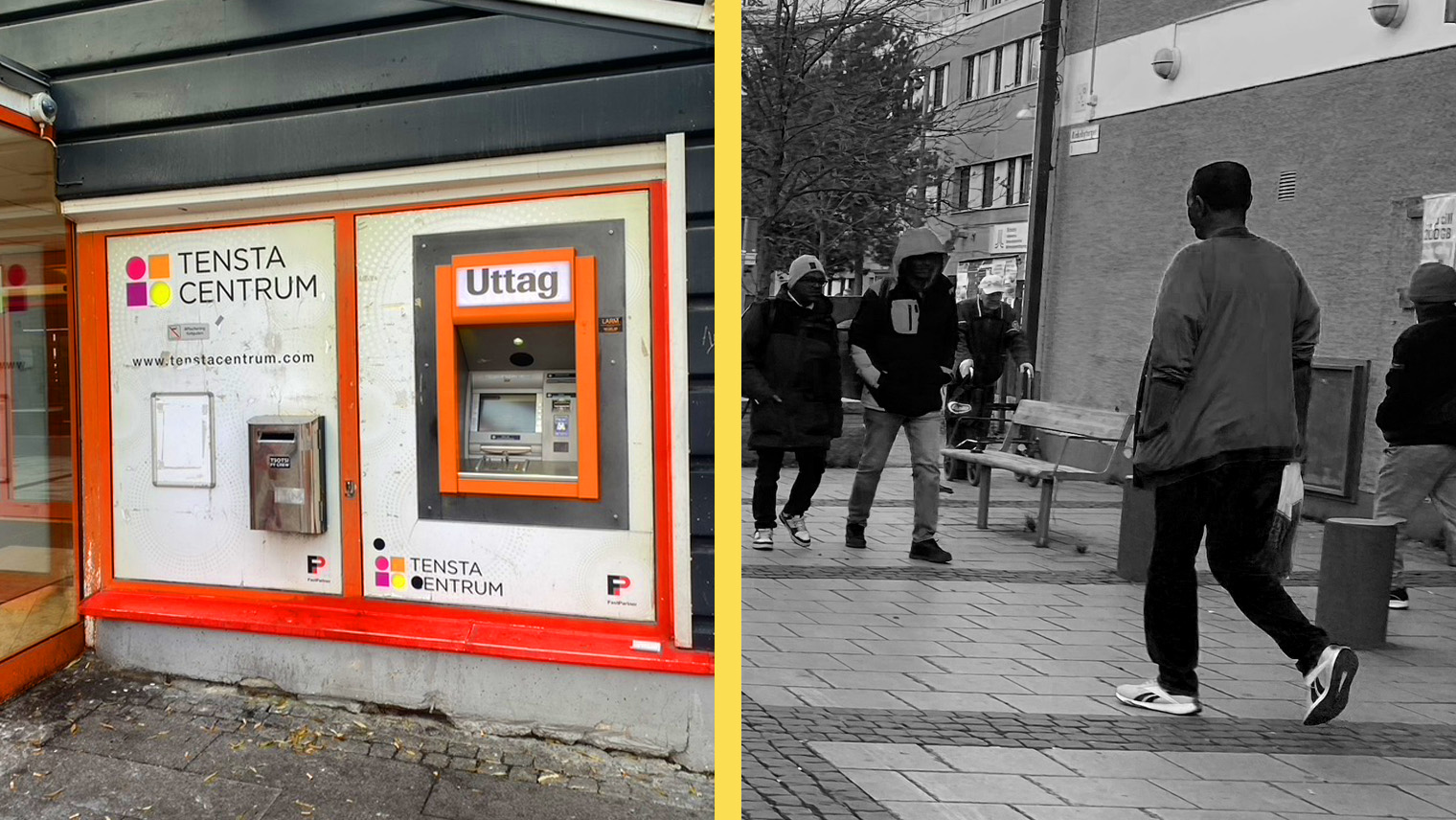
It is not stones and concrete that worry me the most when I walk through these neighborhoods. It is the idea of a Sweden that, with open eyes, chose to initiate self-harm, on steroids.
“You shouldn’t have to experience that on the way home”
A friend who lived in Tensta in the early 1990s recently described how he “lost patience” as early as 1992 – and when he tells the story, you can hear how the change began long before the rest of the country even realized what was coming.
When he moved there in 1990, Tensta was still “a decent area,” as he put it. Mixed, lively, affordable. His apartment was spacious, well-planned, with both a bathroom, separate toilet – even a bidet. In the center, you could buy curry that actually tasted like something and ten-kilo bags of rice that felt exotic in a Sweden that was still homogeneous. “Fun food and lots of spices are never wrong,” he wrote.
But then the small signs began to accumulate.
I talk to people who move around the area, and even if it’s in the middle of the day and the criminal gangs are still asleep, there is a feeling of threat in the air. Asking the wrong person something can be misunderstood, taking out the camera (in a public place) is a big risk. The glances are there. Who are you to come here, you who are Swedish? You hear the whispers: this is our area now.
Jonas Andersson
In the swimming pool, youths suddenly appeared who refused to take off their underwear and did not shower before going into the water. He stopped swimming there. “It was a bit too disgusting for my taste.”
One day, he saw a Muslim-dressed woman and a man trying to get through the subway turnstile. The woman slipped through, the ticket inspector reacted – and the man exploded in anger. The point was clear: no man addresses his woman. Everything should go through him. Whether it was about payment or “honor” mattered less. It was the view of the woman as property that stuck with my friend.
At the same time, thefts in laundry rooms increased. Fires in garages. The unrest grew, but never really so big that the media cared. It was as if a temperature rose slowly, quietly.
But what made him move was the evening when 15-20 youths blocked the doors of the subway exit. He immediately saw what they were after – someone to rob, someone to beat. He also understood that running was more dangerous than continuing straight ahead.
READ ALSO: Over 67,000 people linked to gang crime in Sweden – government: “Serious situation”
“I thought a bit foolishly: I’ll just walk through them,” he told me. And he did. The boys became unsure, glanced at the leader who shook his head. A passage opened up. My friend walked home in silence.
The next day, he packed. “You shouldn’t have to experience that on the way home,” he wrote to me. And in hindsight, he dryly noted: “By today’s standards, this was probably a trifle. Everything has gotten worse. It’s not me who has changed. It’s society.”
If you walk through Tensta center today, it almost feels absurd how normalized desolation and insecurity have become. And entering a café at Rinkeby square is – just as the Finnish elderly ladies I talked to described – like being in Mogadishu. Nearly a hundred African men sit and talk to each other in a language I don’t understand – and look at me with suspicion and barely concealed anger.
When I take the subway back to the center, it strikes me that Tensta and Rinkeby are not lost places. But they are trials – and the trial is national. They show where Sweden is heading if the course is not changed. It is not these neighborhoods that stand at a crossroads. It is the whole country. Our beloved Sweden.
Jonas Andersson
I talk to people who move around the area, and even if it’s in the middle of the day and the criminal gangs are still asleep, there is a feeling of threat in the air. Asking the wrong person something can be misunderstood, taking out the camera (in a public place) is a big risk. The glances are there. Who are you to come here, you who are Swedish? You hear the whispers: this is our area now.
Everyone knows what has happened. Everyone knows someone who has been affected. Everyone has heard the shots – or turned around at the same moment the sirens came rushing. The question that now echoes clearer than ever is simple: How could we let it go this far?
READ ALSO: 10 years after the report: Celebrated Sandviken is pointed out as the “new Rinkeby”
It is not the residents who have failed Sweden. It is Sweden that has failed them. Or more accurately; it is the politicians and journalists who have failed the Swedish people. But also the law-abiding immigrants who came here to become part of Swedish society.
If I knew where they lived, I would send a bunch of roses and a Dala horse
My encounter with the Somali youth and his Arab friend at Rinkeby square stayed in my thoughts. I saw in their eyes that they wanted to fight, for their own survival and success but also for the well-being of Sweden. The young man was born here in Sweden – and I can understand how far he is at the same time from Sweden. And we Swedes from him.
Yet the glow and warmth were there in his eyes. He wanted to be a part of the country he was born in. When he tells me that it is often the parents who fail in their responsibility, I think of his parents, whom I have never met, of course. But they are somewhere, in one of the concrete buildings in the area.
A mother and a father who came here from Somalia believing that this would be better for them and their children. And who have done the right thing with their son and taught him that this is his new country and that he – if he wants to – can become a part of this new one. Become a part of Sweden.
We must stop pretending. Stop denying. Stop letting ideology come before reality. What is needed now is maturity, responsibility, and rebuilding. And repatriation, on a large scale. Because the cracks are not only visible in the asphalt in Rinkeby. They are beginning to show in ourselves.
Jonas Andersson
Such parents should be celebrated. If I knew where they lived, I would send a bunch of roses and a Dala horse.
For decades, politicians have promised efforts, investments, comprehensive approaches, and new models. But those who live here know the truth: they were left. In the vacuum, other forces took over. Gangs became the societal structure. Violence became the norm. Fear became the currency. As if history had not taught them anything, as if every mistake had to be repeated on a larger scale.
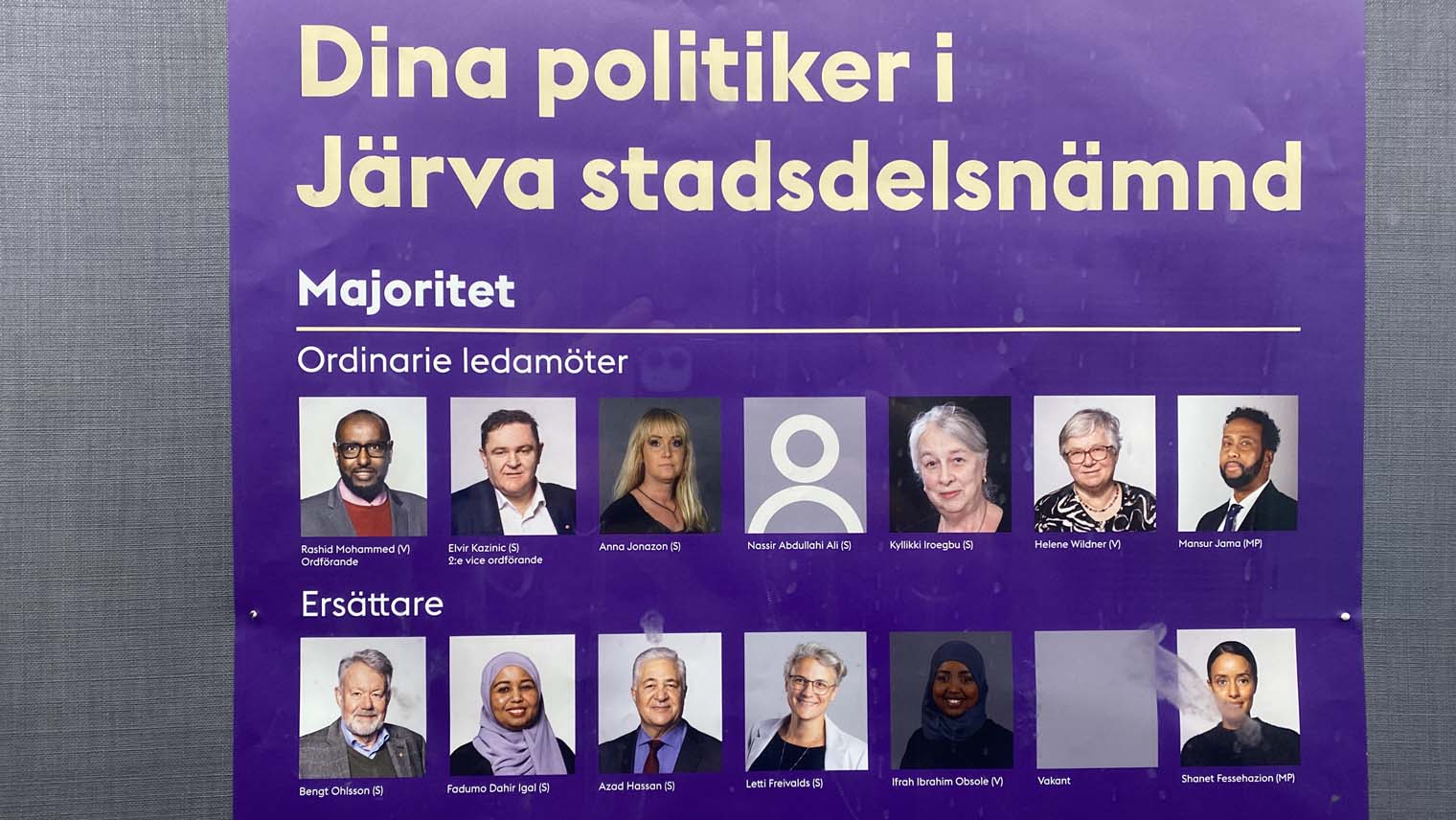
Yes, as yet another misguided missile from the careless Social Democratic politicians, forced mixing now looms on the horizon. It was not enough that they tore down and destroyed Sweden’s small towns, built inhumane GDR complexes, and tried to fit citizens into small concrete boxes – and brought in millions of people from the Middle East and Africa, people who often do not even have an ambition to become part of Sweden.
Now they intend to destroy the remaining parts of Sweden that are still Swedish and where children can still play safely outside in the evenings.
Everyone should feel as bad as those who feel compelled to live in Rinkeby or Tensta. One should “dilute,” as if people and their lives are building blocks in a Social Democratic experiment. Which, note well, does not include the Social Democratic politicians themselves. They have given themselves so many benefits and such high salaries that they can well sit – and settle – above the despised Swedish people.
READ MORE: The elite hides behind walls – the people pay the price for their multiculturalism
When I take the subway back to the center, it strikes me that Tensta and Rinkeby are not lost places. But they are trials – and the trial is national. They show where Sweden is heading if the course is not changed. It is not these neighborhoods that stand at a crossroads. It is the whole country. Our beloved Sweden.
We must stop pretending. Stop denying. Stop letting ideology come before reality. What is needed now is maturity, responsibility, and rebuilding. And repatriation, on a large scale. Because the cracks are not only visible in the asphalt in Rinkeby. They are beginning to show in ourselves.
READ ALSO: The Grief