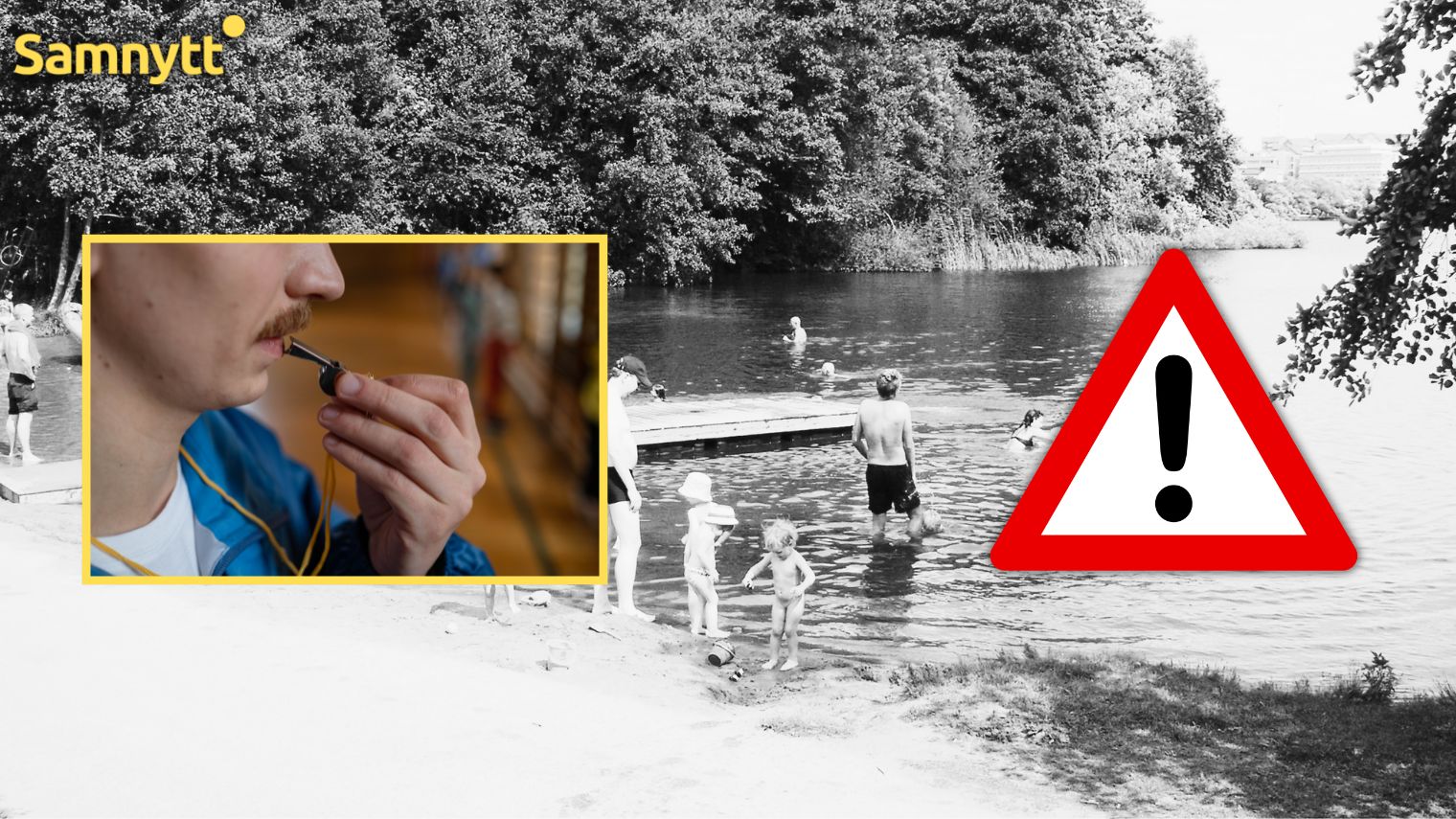
A beach in the German city of Halle has become the center of an intense debate after introducing a rule that prevents people who are not considered to understand enough German from entering.
The controversial measure has been introduced at the popular Heidebad beach in the state of Saxony-Anhalt. According to the beach’s manager, Mathias Nobel, the aim is not to exclude foreigners or tourists, but to ensure that visitors understand safety rules and instructions from lifeguards.
– We must be sure that visitors understand our bathing rules and be consistent in order to guarantee the safety of our guests, Nobel told the German news agency DPA.
READ ALSO: Mustafa and Ali have lived for many years in Sweden – speak no Swedish and have never worked
According to Nobel, staff make individual assessments at the entrance if communication problems arise. The focus is on whether visitors can understand instructions about how to behave safely at and in the water. A small number of people have reportedly already been denied entry since the rule was introduced.
Rescue Operation Was the Decisive Factor
The background to the decision is an incident during a hot summer weekend when Nobel, who is also a trained lifeguard, was forced to rescue a small child from water that was far too deep. Heidebad is located by a lake that in some places is up to 13 meters deep.
Nobel argues that safety risks increase on warm days when many people visit the beach simultaneously. According to him, signs and warning information have not always been sufficient to prevent dangerous situations. Lifeguards must also be able to communicate quickly with bathers in emergency situations.
He has also pointed out that staff have previously ended up in discussions with visitors wanting rules and instructions translated on site, something he says has become difficult to manage when the beach is crowded.

Criticism Mounts
The decision has simultaneously met sharp criticism from various quarters. Critics argue that the language requirement risks being perceived as discriminatory and that people are being excluded from public spaces due to language skills rather than actual safety.
The city’s administration in Halle has also responded and urged the beach’s management to withdraw the rule. According to the city, there is a risk the measure will be seen as xenophobic and harm the city’s reputation. The municipality has instead suggested solutions such as multilingual information, pictograms, and QR codes to reduce language barriers without turning visitors away.
Migrant organizations and political representatives have also questioned whether the language requirement is compatible with the principle of equal treatment and argue that safety information should be made available in several languages rather than being used as a condition of entry.
Seeking Compromise
Following the extensive attention, talks have begun between Heidebad and city authorities to find a solution that both upholds safety and avoids people feeling excluded. Nobel has emphasized that the issue, in his view, is not about nationality or origin but about preventing accidents.
The debate has become national in Germany and raises questions about where the line should be drawn between safety requirements and the risk of discrimination in an increasingly multilingual society.
READ ALSO: Seinab and Amoun still don’t speak the language despite decades in Sweden