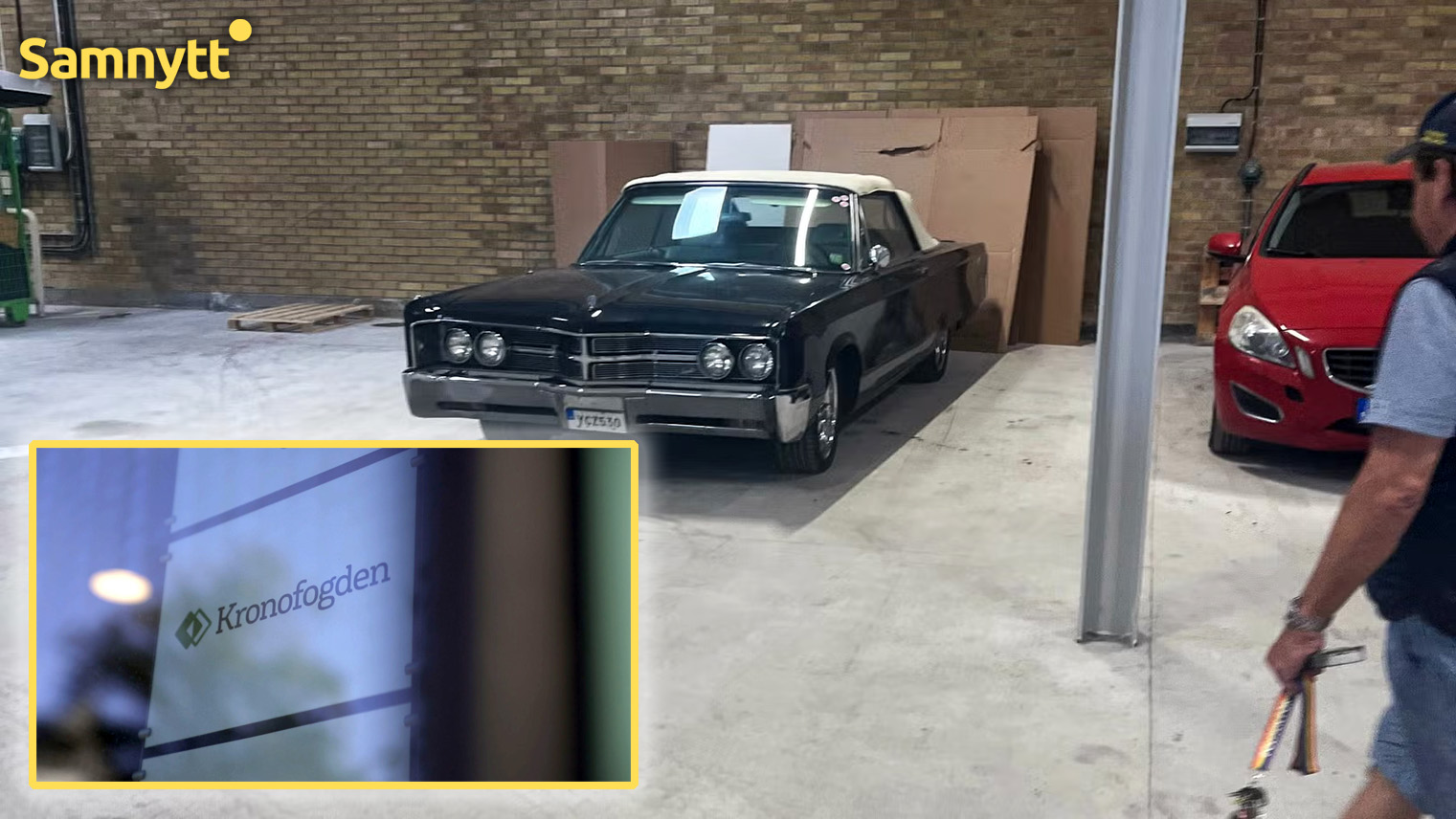
Mårten Larsson lost his classic car right in the middle of the cruising event in Ystad when the Swedish Enforcement Authority (Kronofogden) seized it due to the driver’s debts. Mårten himself had no debts and could prove that the car was his. After a court process, he got the car back – but by then it was no longer drivable.
Mårten Larsson had planned to drive his 1967 Chrysler 300 through central Ystad together with his partner Jenny Rosvall-Olsson and some friends. During the cruising, however, a friend was behind the wheel, something the couple says is common at these types of events.
When the police stopped the car for a sobriety check, it turned out that the driver had debts with the Enforcement Authority. The authority was on-site and decided to seize the car, even though, according to Mårten and Jenny, it belonged to Mårten.
Mårten told Ystads Allehanda that his first reaction was that the authorities surely must know what they are doing. He therefore thought he simply had to accept the situation and get another car.
READ ALSO: Pensioner lent his car to someone in debt – then the Enforcement Authority took it
Jenny reacted differently. She wanted to know what legal basis and case law Kronofogden cited for the decision. The couple had also drawn up a contract showing that the friend was only driving the car and did not own it.
The seizure raised questions among acquaintances
The car was seized near Ystad station in front of many people. Since Mårten and the car were well known among acquaintances, the incident quickly had consequences.
Jenny recounts that several people called Mårten and wondered if he was having financial problems. Some even offered to lend him money because they thought the Enforcement Authority’s action meant he was in debt himself.
The very next day, Jenny began working on appealing the seizure. She estimates she spent at least 40 hours studying the regulations and understanding what documentation was required.
The couple submitted several documents to prove Mårten’s ownership and also requested a suspension, which prevented the Enforcement Authority from, for example, selling the car before the dispute was resolved.
In the end, the district court ruled in favor of the couple: the seizure of the car had been incorrect.
Kronofogden: Decisions made based on the situation on the ground
In 2025, the Enforcement Authority made 3,190 decisions to seize cars. Of these, 250 were appealed, and in 34 cases the complainant won in court.
Henrik Eriksson, development coordinator at Kronofogden, explains that the authority must make decisions based on the information available at the time of the seizure. Documents, text messages, and payment transactions that can be later presented in court are not necessarily available during the intervention.
According to him, an agreement about who owns or may use the car is not in itself definitive protection against seizure. A document alone is not absolute proof of ownership.
The fact that Mårten had temporarily left to go to the restroom may also have played a part. Kronofogden bases its decision, among other things, on who has possession of the car at the time.
Eriksson also regrets the attention the intervention caused. He notes that Kronofogden’s work sometimes must be conducted in ways that attract attention, but in such cases the authority should try to minimize the negative consequences as much as possible.
Got the car back – but it wasn’t drivable
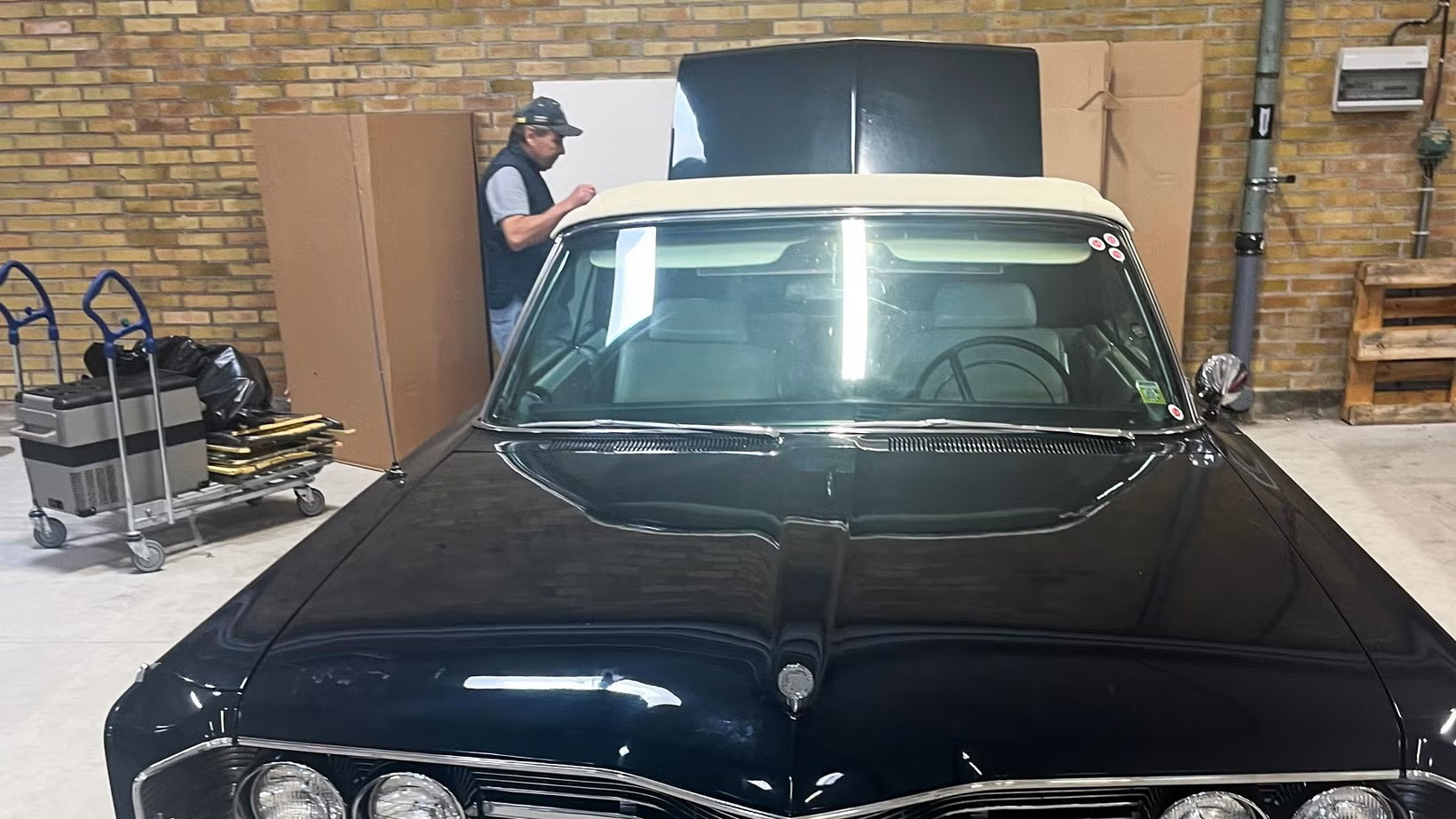
At the beginning of August, Mårten and Jenny were able to collect the car from Kronofogden’s storage in Kristianstad after about two months. But another setback awaited. The car could not be driven and had to be towed to a workshop.
Jenny says that it was only then that Mårten truly lost his patience. Until that point, he had understood why the rules governing seizures exist. But he is very careful with his classic cars and was now met with a car that had been standing for a long time, was covered in dust, and moreover did not function.
Compensation possible
The couple can claim compensation for any damage that occurred while the car was in Kronofogden’s custody. According to Henrik Eriksson, it does happen that the authority has to pay damages.
Jenny estimates that the incident has so far cost them between 40,000 and 60,000 kronor, including lost income and legal fees. In addition, there’s all the time she herself spent understanding the regulations and pursuing the process.
According to her, the biggest consequence is still the lost confidence in the authorities. She describes the handling by Kronofogden as both incompetent and legally uncertain, and finds it hard to understand how the family can teach their children the importance of following society’s rules when they feel the state itself does not.
The children were also affected. Jenny says that they struggled to understand how Kronofogden could take the family’s car if the parents had actually paid their bills. The eldest child even began to wonder if the family had financial problems the parents were trying to hide.