Wind Dies and Northern Sweden's Power Price Nearly Triples Overnight
As wind output collapses in the cold, the average power price in northern Sweden jumps 175 percent overnight to almost three kronor per kilowatt hour. The Nordic system price hits its highest level since the 2022 energy crisis.

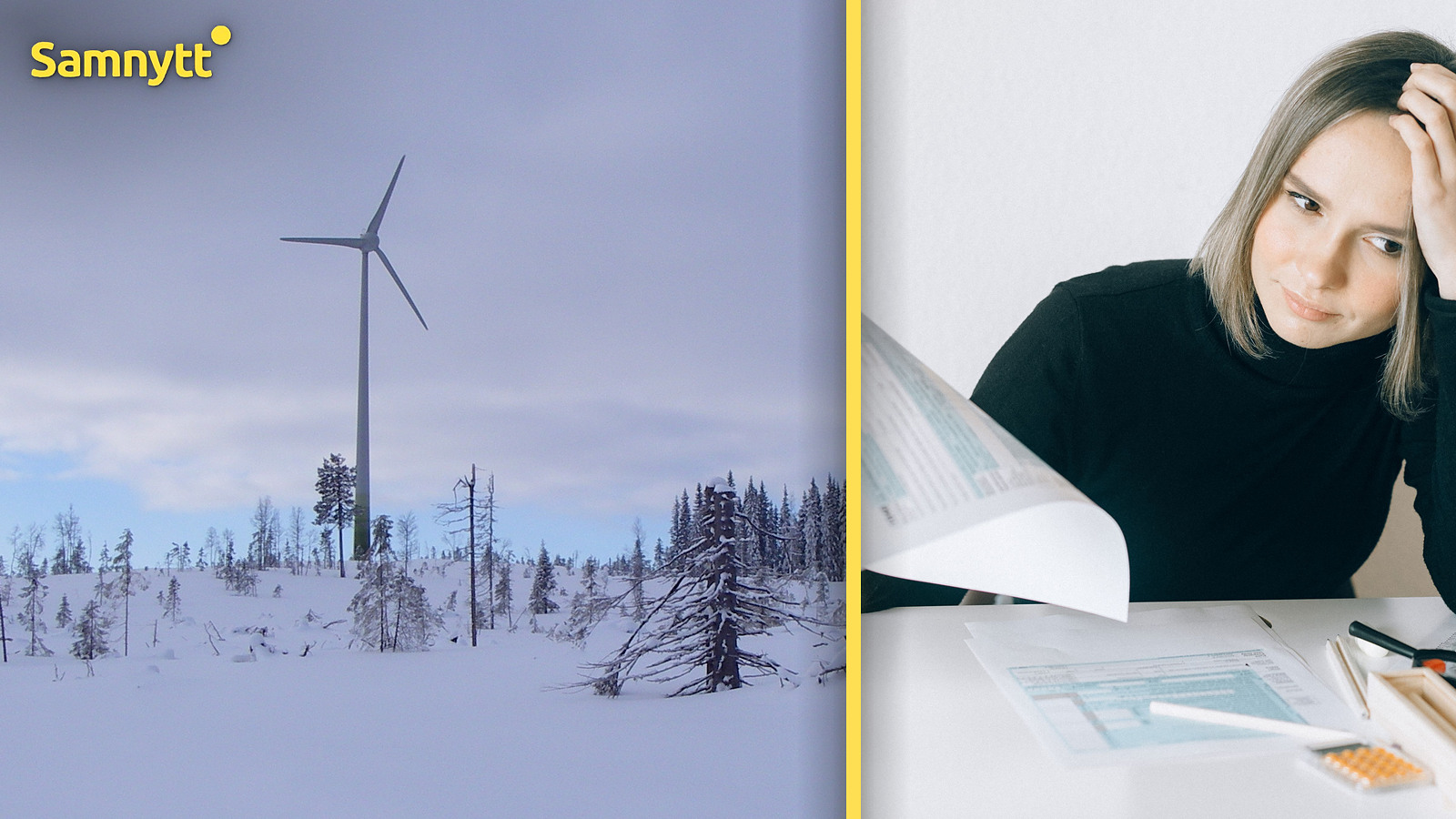
LULEÅ - The price shock hits all of Sweden on Thursday, including the far north where power is normally cheapest. As wind output collapses, the daily average price in northern Sweden jumps to almost three kronor per kilowatt hour, nearly three times Wednesday's level.
According to Nord Pool, the Nordic power exchange, the average price in the northernmost price zone rises from 1.08 kronor on Wednesday to 2.98 kronor on Thursday. That is a 175 percent increase overnight, with peaks of 3.96 kronor during the day.
The picture is almost identical in the zone covering southern Norrland, where the average climbs 178 percent to 2.97 kronor. These are exchange prices before VAT, energy tax and grid fees, so households on variable contracts will pay a lot more.
Southern and central Sweden get even more expensive power, from an already high level. The average reaches 3.18 kronor in the Stockholm zone and 3.34 kronor in the far south, with peaks close to 4.43 kronor. The Nordic system price lands at 3.19 kronor, which the news agency TT says is the highest level since the energy crisis in December 2022.
Wind fades as the cold sets in
Behind the jump is a familiar combination: the wind drops just as a cold high-pressure system drives up demand for heating. Figures from the national grid operator show how fast weather-dependent production disappears.
On Monday Swedish wind power was expected to deliver between 9,300 and 12,800 megawatts. For Thursday the forecast shrinks to between 500 and 2,900 megawatts for the whole country, while peak consumption is expected to hit 21,500 megawatts.
When the wind dies in the north, so does the surplus that usually keeps prices down there and feeds southern Sweden. Friday looks just as calm, with a forecast of 1,300 to 3,100 megawatts, before the wind is expected to pick up again towards Sunday.
Nuclear outages squeeze the system
The situation shows how exposed the grid is when it leans on weather-dependent wind while nuclear output is limited. The grid operator's head of operations points to reduced nuclear power, low European gas stocks and below-normal reservoirs in southern Norway as reasons for the high prices.
The Ringhals 3 reactor remains shut for maintenance and is not expected back until 20 December, while Forsmark 1 is running on just one generator until the second is reconnected on 27 November.
Ringhals 4 is running at roughly half capacity until Thursday evening, and in Finland the Nordic region's largest reactor, Olkiluoto 3, is being taken offline from Wednesday night because of a valve fault. A 330-megawatt strategic reserve at the oil-fired Karlshamn plant stands ready until March if the power balance requires it.
Mats Dagerlind · Senior Political Columnist
Mats Dagerlind is Senior Political Columnist at Samnytt and Samnytt News. A veteran Swedish political commentator and essayist, he covers Swedish domestic politics, free speech, cultural identity, and media accountability.
Follow @SamnyttNews on 𝕏 ↗