Denmark's Frederiksen Refuses to Back Down Over Population Replacement Remark
Danish Prime Minister Mette Frederiksen says she will not be lumped in with extremists after saying she opposes a large population replacement. The row has now reached her own Social Democrat group in the European Parliament.
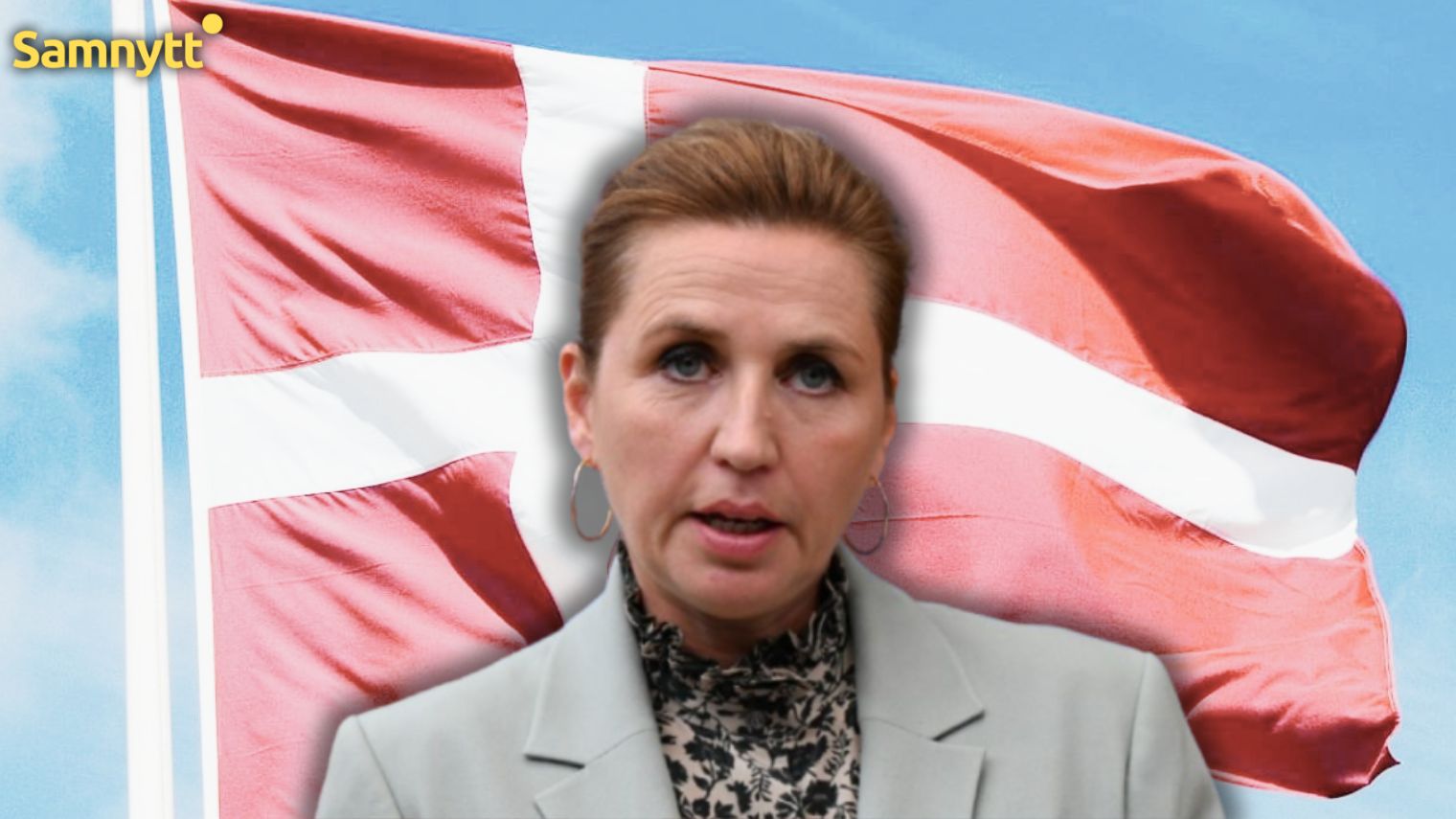
COPENHAGEN - Danish Prime Minister Mette Frederiksen, a Social Democrat, is refusing to back down after saying she opposes a "large population replacement". Left-wing parties in Denmark accuse her of spreading a far-right conspiracy theory. Now she has hit back, while the row has reached her own party group in the European Parliament.
"I would ask not to be put in the same box as conspiracy theorists, extremists on the far right or fascist movements," Frederiksen wrote on Facebook.
The comment came on 17 November in a podcast from the Danish tabloid B.T., when she was asked what she meant by wanting a Denmark that is Danish. When she spoke of a strong majority culture, host Joachim B. Olsen asked whether she meant ethnic Danes.
Frederiksen replied that the country's original population is ethnically Danish and that society changes when new people arrive. Then she used the word that has dominated the fallout.
"I am not a supporter of a large population replacement either. I believe there should be a strong majority culture."
In her reply to the critics she addressed immigrants directly, saying many have become Danes' friends, family members, colleagues and neighbours, and thanking them for adapting and contributing. At the same time she pointed to widespread immigrant crime, radicalisation and what she called a culture of dominance. Anyone who comes to Denmark must know which values apply and what kind of society they are joining, she said.
Left-wing leader never wants to hear the word again
Pelle Dragsted, leader of the Red-Green Alliance, says he has long disagreed with Frederiksen on immigration, but this time his objection is the choice of word. He does not think she knew of its links to the far right and hopes never to hear her use it again.
The migration spokesperson for The Alternative, Elise Sydendal, called it worrying to hear a prime minister use an expression with that history. In the Danish daily Politiken, Norwegian Social Democrat Tarjei Jensen Bech, who survived Breivik's attack on Utøya in 2011, invoked the massacre to accuse her of ignoring how her words would land with those who lost friends there.
Row reaches the European Parliament
At a meeting in Strasbourg on Monday, Portuguese and German members of the Socialists and Democrats group raised her remarks. They also objected to Denmark's plans, together with four other EU countries, to set up a return centre in Rwanda for migrants with deportation orders. In Sweden the Sweden Democrats back joining the initiative but have not won over their partners in the government.
According to Politico, which spoke to four people familiar with the discussion, more members wanted to speak, and group leader Iratxe García proposed giving the issue its own debate at a later meeting. Danish delegation leader Christel Schaldemose told the paper she welcomes the chance to discuss migration policy with her party colleagues.
What the numbers say
The Local wrote that the population replacement theory has repeatedly been debunked. Politico was more precise, saying the claim it means is that a political elite coordinated immigration to change the ethnic make-up of the population. Frederiksen pointed to no such plan in her argument about Danish majority culture.
In Sweden the term is also used to describe how the population has actually changed. At the end of 2025 almost 2.94 million people in Sweden had a foreign background, 28 percent of the population, according to Statistics Sweden. In Södertälje the share was 60.5 percent and in Malmö 49.5 percent.
At neighbourhood level the gaps are even bigger. A government inquiry into parallel societies found that only 4.7 percent of residents in northern Herrgården in Malmö had a Swedish background in 2020. In Hovsjö in Södertälje the figure was 7.2 percent and in Rinkeby in Stockholm 7.6 percent.
It is not the first time Danish Social Democrats have stirred controversy over migration. Before the 2015 election the party put up posters of then leader Helle Thorning-Schmidt with the messages "If you come to Denmark, you must work" and "Tighter asylum rules and more demands on immigrants". Swedish Social Democrats accused them of fishing in xenophobic waters, while the Danish People's Party said the promise of tighter rules was a lie.
Mats Dagerlind · Senior Political Columnist
Mats Dagerlind is Senior Political Columnist at Samnytt and Samnytt News. A veteran Swedish political commentator and essayist, he covers Swedish domestic politics, free speech, cultural identity, and media accountability.
Follow @SamnyttNews on 𝕏 ↗