Sweden's Central Bank Wants to Ban Cash Purchases Over 900 Dollars
The Riksbank wants a cash cap of 10,000 kronor in shops - eleven times stricter than the EU's own limit - while Swedes are told to keep cash at home for war.

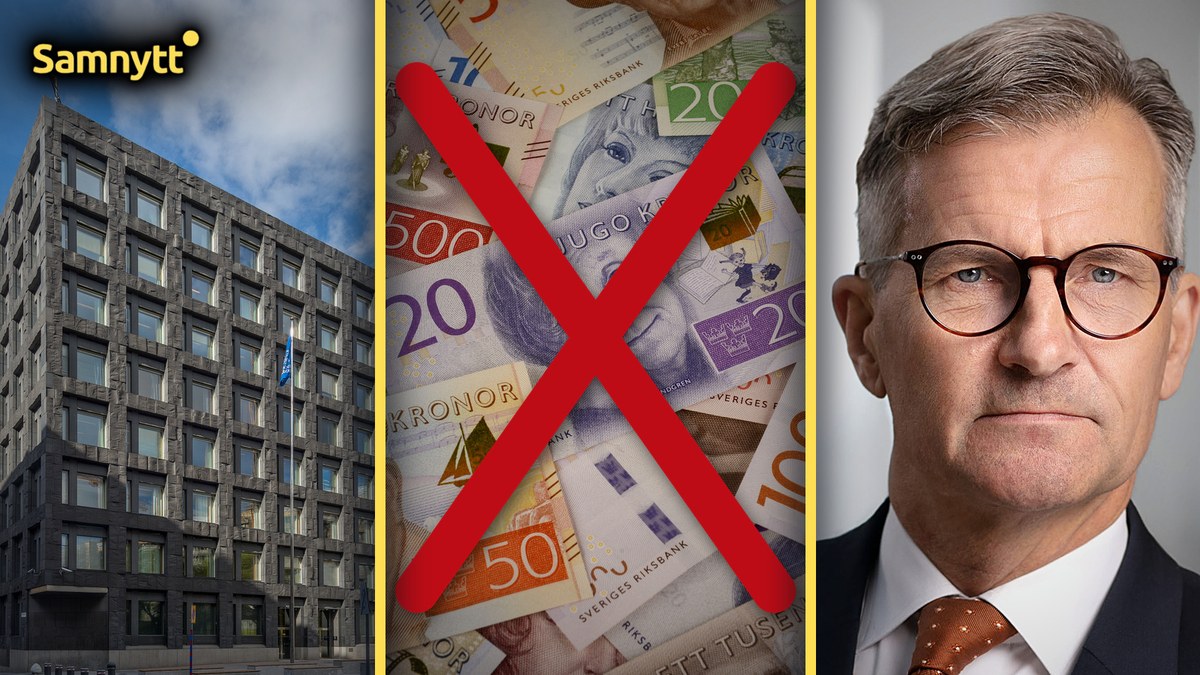
STOCKHOLM - Sweden's central bank wants to make it illegal to pay cash for anything over 10,000 kronor, roughly 900 dollars, in a shop. That limit is about eleven times stricter than the one the EU will impose from summer 2027 - and it comes while Swedes are being told to keep banknotes at home in case of war or crisis.
The demand appears in the Riksbank's formal response to a government memorandum on the EU's new anti-money-laundering package. EU rules set a ceiling of 10,000 euros, just under 110,000 kronor, on cash payments to businesses. The Ministry of Finance does not want to go any lower than that.
The central bank rejects that line. In its response, signed by governor Erik Thedéen, the bank writes that an appropriate level for Sweden is 10,000 kronor. Such a cap would make money laundering and tax fraud harder, the bank argues, and would have little practical effect in a country where almost everything is already paid digitally.
According to the bank, the limit strikes "a well-judged balance between crime prevention and the need to protect the role of cash in the payment system".
Cash at home - but not in the shop
As a comparison, the Riksbank points to Denmark, where the limit is 15,000 Danish kroner, a little over 20,000 Swedish kronor. Card purchases above 10,000 kronor make up well under one percent of all retail purchases, the bank says.
At the same time, the authorities are urging Swedes to keep cash at home. The website of the Swedish Agency for Civil Defence, formerly the Civil Contingencies Agency (MSB), says the Riksbank recommends that every household keep 1,000 kronor in cash per adult - enough to buy a week's worth of essentials in a crisis or war.
The response is not a decision, and it is the government that will decide where the limit ends up. The Riksbank also backs the proposal that the government should be able to lift the cap temporarily in a crisis where cash is the only way to pay.
Samnytt News Desk · Stockholm Newsroom
The Samnytt Newsroom in Stockholm reports on Swedish courts, migration, energy policy, and Nordic affairs under Responsible Publisher Simon Kristoffersson, Senior Columnist Mats Dagerlind, and Executive Director Kent Ekeroth.
Follow @SamnyttNews on 𝕏 ↗