Sweden Scrapped Its Blasphemy Law - Now the Fear Is Back
A disabled pensioner had his phone seized and his DNA taken over one Facebook post on Islam. A 73-year-old had to go to the appeal court to be cleared. Jonas Andersson asks what is happening to free speech in Sweden.


COLUMN • A disabled pensioner has his phone seized and a DNA swab taken over a Facebook post criticising Islam. A 73-year-old woman has to go all the way to the court of appeal to be cleared after criticising an LGBT lobby group. Meanwhile, activists comb the internet for opinions and feed the police with complaints. After looking into case after case of hate speech prosecutions, I keep asking myself the same question: what is happening to free speech in Sweden?
There is something almost absurd about our times. We live in a country that sees itself as one of the most enlightened and democratic on earth.
We celebrate free speech, the Enlightenment and the liberation of man from religious dogma, at least on paper. Yet an elderly person can get the police at the door for sharing something on Facebook.
It doesn't even have to involve threats, violence or calls to harm anyone. It can be enough that the words are judged to express contempt.
That word is at the heart of Sweden's hate speech law, known as "agitation against a population group". And it creates a democratic dilemma: who decides when contempt for a religion turns into criminal contempt for the people who follow it?
And how much state power are we prepared to use to draw that line?
One Facebook post - and the full weight of the justice system
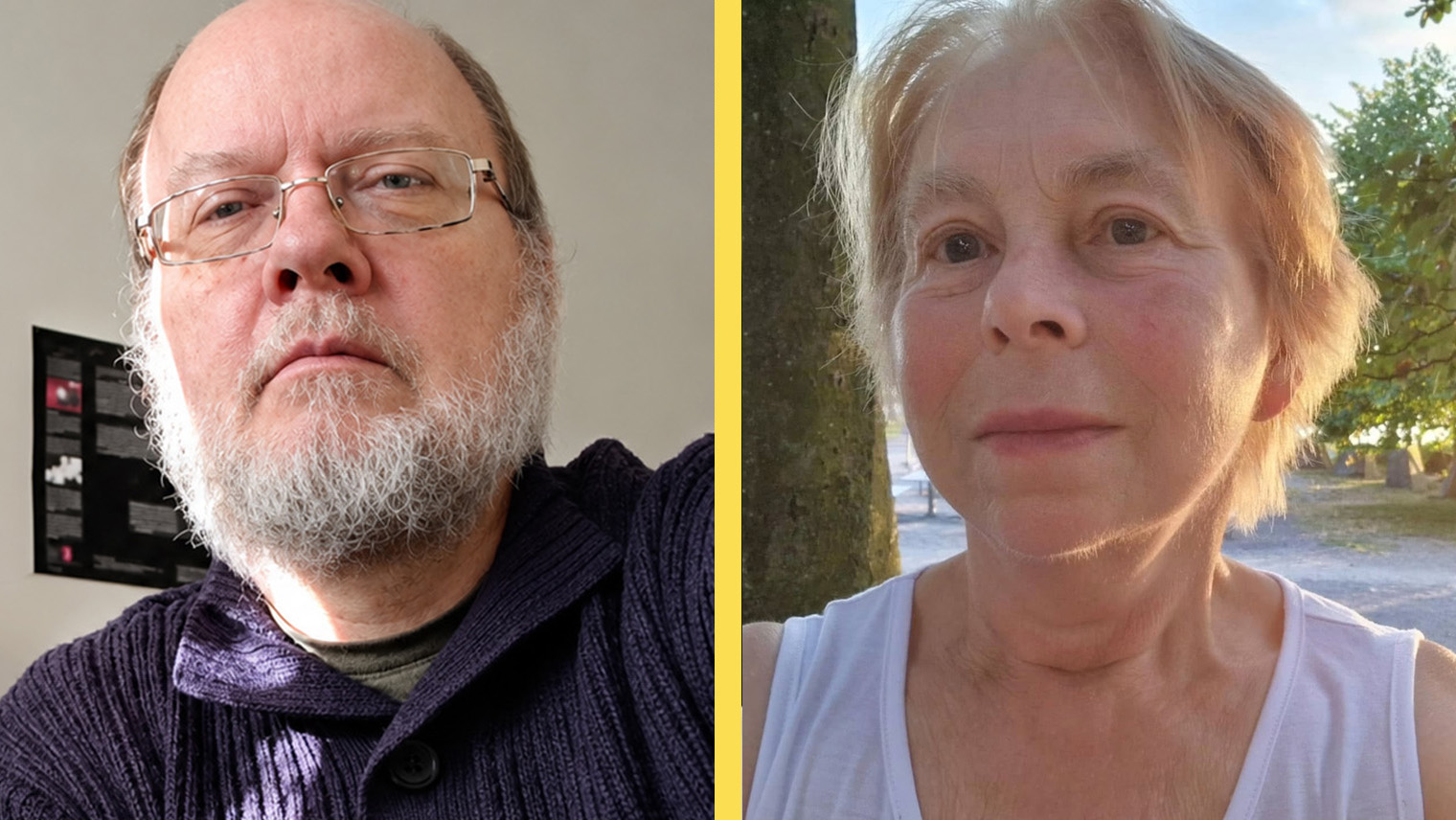
I have recently gone through several cases where people ended up in court for what they said. One of them concerns Lars-Ivar Carlsen, a disabled pensioner from Vaxjo, who was recently convicted of hate speech over a Facebook post critical of Islam.
He got a suspended sentence and a fine. But perhaps the most startling part is not the verdict, but what came before it.
READ MORE: Swedish Pensioner Convicted for Criticising Islam - Police Took His DNA
Police requested data from Meta, traced digital information, seized his mobile phone and ran technical examinations. He was also swabbed for DNA.
All of this over a Facebook post which, according to the preliminary investigation, had received a single like. How many people actually read it was unknown.
It is hard not to react to the proportions. We are talking about an elderly pensioner, not a violent organisation planning attacks. Yet the heavy machinery of the justice system was set in motion to investigate a few sentences on the internet.
Police also asked him about his political activity and party membership. There may of course be investigative reasons for such questions. But when the case concerns a single statement, we should be able to demand an explanation of why the suspect's political home is relevant.
Otherwise we are approaching something that ought to make every democrat uncomfortable - a state that is not only interested in what a citizen has said, but in what he thinks.
The district court noted that the wording of Lars-Ivar's post was aimed at Islam, but still found that it expressed contempt for Muslims as a group. And that brings us to the crucial question. "Contempt".
If I describe communism as a repugnant ideology, that does not mean I hate all communists. Why shouldn't the same principled distinction matter when it comes to a religion and ideology such as Islam?
- Jonas Andersson
After Samnytt reported on his case, a reader got in touch and offered to pay Lars-Ivar's fine. But our conversations also revealed something far more troubling.
He had become more careful about what he wrote. And perhaps that is the real consequence of these prosecutions. Not the size of the fine, but the silence that follows. Wasn't that the idea all along?
READ MORE: Reader Pays Swedish Pensioner's Fine for Criticising Islam
Astrid was cleared - but at what cost?
Another case involves 73-year-old Astrid Lofs from Landskrona. She had written two Facebook comments, among them criticism of the LGBT organisation RFSL and of drag queens reading stories to children.
The district court convicted her of hate speech. But on 6 November the court of appeal acquitted her. The court drew an important distinction: criticism of RFSL as an organisation cannot simply be equated with contempt for gay or trans people as a group.
READ MORE: Swedish Pensioner, 73, Cleared of Hate Speech Over Drag Queen Comments
The appeal court also stressed that the hate speech law must be applied restrictively, out of respect for free speech. That ought to be obvious. But for Astrid it took a police interview, a guilty verdict and an appeal before she was proven right.
When I interviewed her, she described the unease of being summoned to the police unit for serious crime, and how the process had made her more cautious about speaking out.
What does it matter that you are finally acquitted, if the process itself has already changed how you behave? Anyone who sees what Astrid and Lars-Ivar went through doesn't need to be charged themselves to start weighing their words. It is enough to think: next time, it might be me.
When informing becomes a business
This is where organisations such as Nathatsgranskaren, the self-styled online hate monitor, come into the picture. The association has drawn attention for scanning the internet for suspected hate crimes and reporting them to the police.
Reporting suspected crimes is of course a legal right. But what happens when people systematically trawl through other people's statements for wording that could be reported to the police?
When opinions and comments become raw material for an organised reporting operation - one that people can even make a living from?
Reporting suspected crimes is of course a legal right. But what happens when opinions and comments become raw material for an organised reporting operation - one that people can even make a living from?
- Jonas Andersson
Then public debate risks changing at its core. Instead of answering arguments with counter-arguments, anyone who dislikes a statement can try to get the justice system to rule on it.
And even a complaint that never leads to a conviction can have far-reaching consequences.
Police interviews. Seizures. Legal fees. Anxiety. Public exposure. And so on.
Here we should demand far more transparency. How many complaints are filed? How many lead to charges and convictions? What resources does the justice system spend, and how do they compare with the seriousness of the offences? That is something I will keep investigating.
These are questions that should be self-evident in a society that values both the rule of law and free speech.
Neither religions nor ideologies have human rights
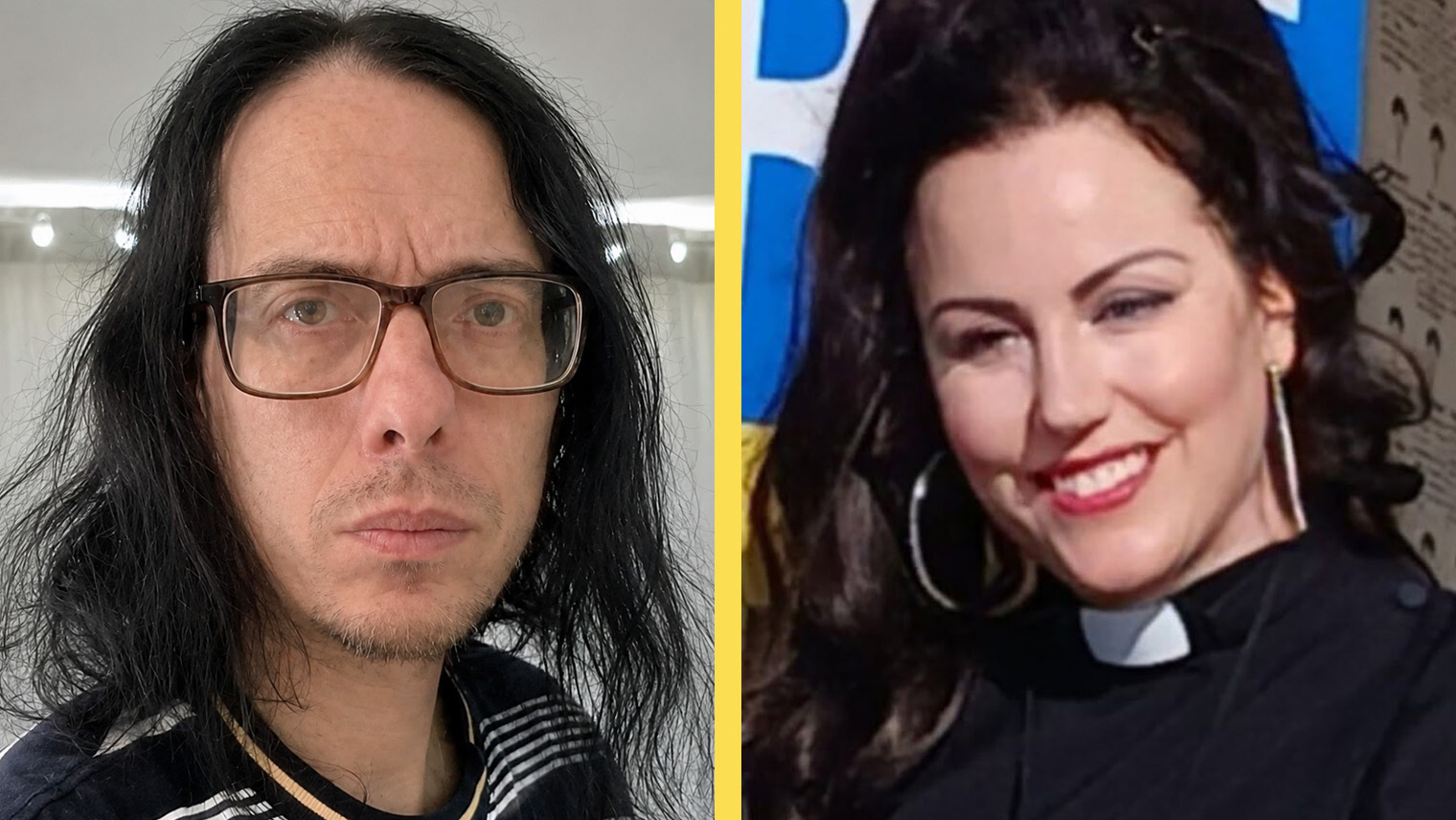
I have also interviewed the artist Dan Park, who has provoked with his images for many years and has repeatedly been convicted of hate speech.
And I have followed the court cases over Koran burnings and the questions raised by, among others, the religion-critical demonstrations of Jade Sandberg. You don't have to like how they express themselves to see the problem of principle. Quite the opposite.
The real value of free speech is not tested when people say things everyone agrees with, but when someone says something others find repulsive.
And when it comes to religion, this should be especially obvious. Islam is not an ethnic group. Christianity is not an ethnic group. Judaism is not an ethnic group.
READ MORE: Swedish Artist Jailed for Islam Posts - "They Can Come and Get Me"
They are religions, belief systems and ideas about the world that must be open to scrutiny, criticism, ridicule and rejection.
The people who follow these religions, on the other hand, have the same basic rights as everyone else. That is the difference between protecting a person and protecting their convictions.
We accept that communism is described as evil, capitalism as inhuman and political parties as despicable. But when someone expresses similar contempt for a religion, there is a risk that it will be read as aimed at the believers. And, as I said, Islam is also an ideology.
Are Social Democrats believers? Are Centre Party members believers? Do we show contempt for party members when we criticise their ideology? Should we be convicted for it?
The line has to be clear and predictable. Otherwise we risk, in practice, restoring protection for religious dogma. Or ideological dogma, as in East Germany and the Soviet Union.
READ MORE: Swedish Priest Convicted Over Koran Burning - Cleared for 'No Muslims' Chant
From Enlightenment to self-censorship
Sweden abolished the crime of violating religious peace in 1970. It was a statement that religious beliefs must be able to withstand even harsh and offensive criticism.
The great achievement of the European Enlightenment was not that people stopped believing in God. It was that people won the right to question God.
And the priests. And the holy scriptures. And every other authority that claimed to hold the truth.
Yet today we see people becoming more careful about what they write, not least about religion and politically charged issues. This is the chilling effect on free speech. You don't have to ban every controversial statement to narrow the debate.
It is enough that people no longer know what might lead to a police interview, a seizure or a prosecution. In the end they start censoring themselves. And there is one aspect of this that rarely gets attention.
In the debate on hate speech, we almost always talk about protecting people from offensive statements. We far more rarely discuss the need to protect people from disproportionate intervention by the state.
- Jonas Andersson
In the debate on hate speech, we almost always talk about protecting people from offensive statements. We far more rarely discuss the need to protect people from disproportionate intervention by the state.
But the state can cause harm too. An elderly disabled pensioner who is swabbed for DNA and has his phone seized over a Facebook post hardly experiences the justice system as some abstract democratic institution.
For him, it is very concrete. And for Astrid Lofs, free speech was not a theoretical debate. It was her own life. That is why we must demand proportionality from the justice system and a restrictive use of laws that limit free expression.
Not because words can never hurt, but because the state's power to punish words can also be pushed far too far. I believe we have underestimated how serious this is.
Because in a society where people start to fear the consequences of their opinions, a change takes place that doesn't always show up in the statistics. Debate becomes poorer. People fall silent. And the limits of what is considered possible to say shift.
We don't have to abolish protection against genuine incitement, whatever that is, to take this seriously. But we must dare to discuss whether the way the law is applied, the methods of the justice system and the organised reporting industry sometimes have consequences that go further than a free society should accept.
We abolished the crime of blasphemy more than half a century ago. It would be a historic irony if we now, without really noticing, created a society where people once again fear the consequences of blasphemy.
Because in a free society, people have the right to their religion or political views. But no religion or ideology has the right not to be held in contempt.
Jonas Andersson · Political Columnist
Jonas Andersson is a political columnist at Samnytt, writing on Swedish politics, the media, and the post-election crisis in Stockholm.
Follow @SamnyttNews on 𝕏 ↗