Danish Social Democrat PM: 'I Want a Denmark That Is Danish'
Denmark's Social Democratic prime minister Mette Frederiksen speaks openly of ethnic Danes as the country's original people, rejects multiculturalism and warns against a large-scale population replacement - while across the water, the Sweden Democrats fight over whether ethnicity matters at all.
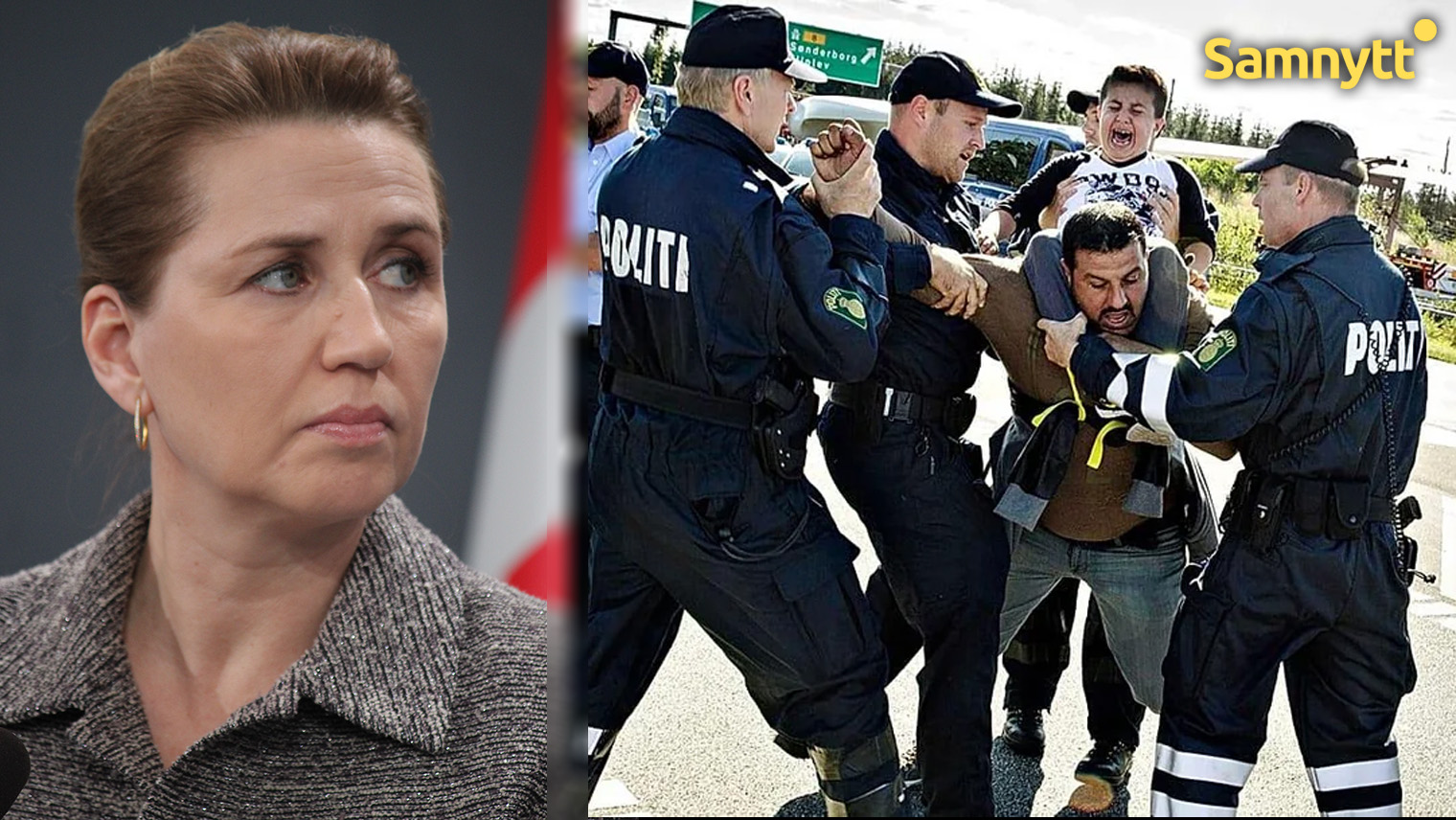
COPENHAGEN - While the Sweden Democrats have been fighting over what role ethnic origin plays in being Swedish, Denmark's Social Democratic prime minister is talking openly about ethnic Danes as the country's original people.
Mette Frederiksen wants Danish culture to remain the majority culture and rejects the idea that all cultures should be treated as equal.
"I want a Denmark that is Danish. And I stand fully behind that," she said in an interview with the Danish newspaper B.T.
When the host, Joachim B. Olsen, asked her to explain what she meant, she said society must have a clear majority culture. "Of ethnic Danes?" he followed up.
"We are a Danish society, and we have an original people who are ethnically Danish. That changes when people come here. But in the future too, there must be a Denmark with a strong majority culture," Frederiksen replied.
"Not a supporter of population replacement"
She described herself as a European, a Dane and a native of Aalborg. In the same breath, she used the contested Danish word befolkningsudskiftning - population replacement.
"Nor am I a supporter of a large-scale population replacement. I believe there should be a strong majority culture."
"I am not a supporter of a multicultural society where cultures are treated as equal," she added.
A different line in Sweden
On the Swedish side of the Oresund strait, the question of people and origin has this autumn split the Sweden Democrats. MP and former party secretary Richard Jomshof argued that historical Swedish descent also matters for belonging, writing on X that the Swedish people must have the right to "exist and make up the majority in their own country - also in the future".
Party leader Jimmie Akesson came down on the other side and held to the party's line of "open Swedishness": anyone who learns the language, adopts the culture and values and identifies as Swedish can become Swedish, regardless of their parents' origin.
In an op-ed on 30 October, he had a blunt message for those who wanted to take the party in another direction: "Otherwise you can step off, or be thrown off."
Jomshof spoke of the future of the Swedish people as a majority. Frederiksen speaks explicitly of the ethnically Danish population - and is even firmer when it comes to the status of Danish culture.
"Dominance culture is dangerous"
Frederiksen pointed in particular to attitudes she links to parts of the immigration from the Middle East, North Africa, Pakistan and Turkey. Too many have come to Denmark, she said, who oppose women's equality, dislike gay people or believe Islam should stand above Danish law.
She stressed that many immigrants have contributed positively. What worries her is what she called an immigrant "dominance culture" and what happens when others are expected to follow its norms.
"That dominance culture is dangerous. And I say that as a Social Democrat, as a woman, as a Dane - but also as prime minister of a country where dominance culture is incompatible with the way we have built our society."
Fewer foreign-born than Sweden
Denmark has a far smaller foreign-born population than Sweden. According to Eurostat, 14.4 percent of Denmark's residents were born abroad on 1 January 2025, compared with 20.8 percent in Sweden - roughly one in seven versus one in five.
Denmark's state list of what used to be openly called "ghettos" - now officially "parallel societies" - contained five housing areas in December 2025, three fewer than the year before.
In Sweden, the police classify 65 areas as vulnerable, 19 of them as especially vulnerable. A broader mapping by Swedish government agencies has identified 167 areas in 60 municipalities with particularly severe problems of exclusion.
Deportation centre in Rwanda
The interview came after Frederiksen on Monday presented plans for a joint return and deportation centre in Rwanda. Denmark is negotiating together with Germany, Austria, the Netherlands and Greece, and the countries hope to sign a deal with Rwanda in early 2027.
Denmark wants first to send adults without children whose asylum applications have been rejected. The centre is initially meant to hold around 100 people at a time from the five countries.
Sweden is not part of the talks. Its government has instead discussed a joint Nordic return centre in a safe third country, while the Sweden Democrats have said they want Sweden to join the Rwanda initiative.
Mats Dagerlind · Senior Political Columnist
Mats Dagerlind is Senior Political Columnist at Samnytt and Samnytt News. A veteran Swedish political commentator and essayist, he covers Swedish domestic politics, free speech, cultural identity, and media accountability.
Follow @SamnyttNews on 𝕏 ↗