Swedes and Christian Immigrants Fear Stockholm Mega-Mosque - "They Are Dangerous"
One of northern Europe's largest mosques is rising in Stockholm's Skärholmen amid questions over funding and Islamist links. Residents, including Christian immigrants, tell Samnytt they are worried.

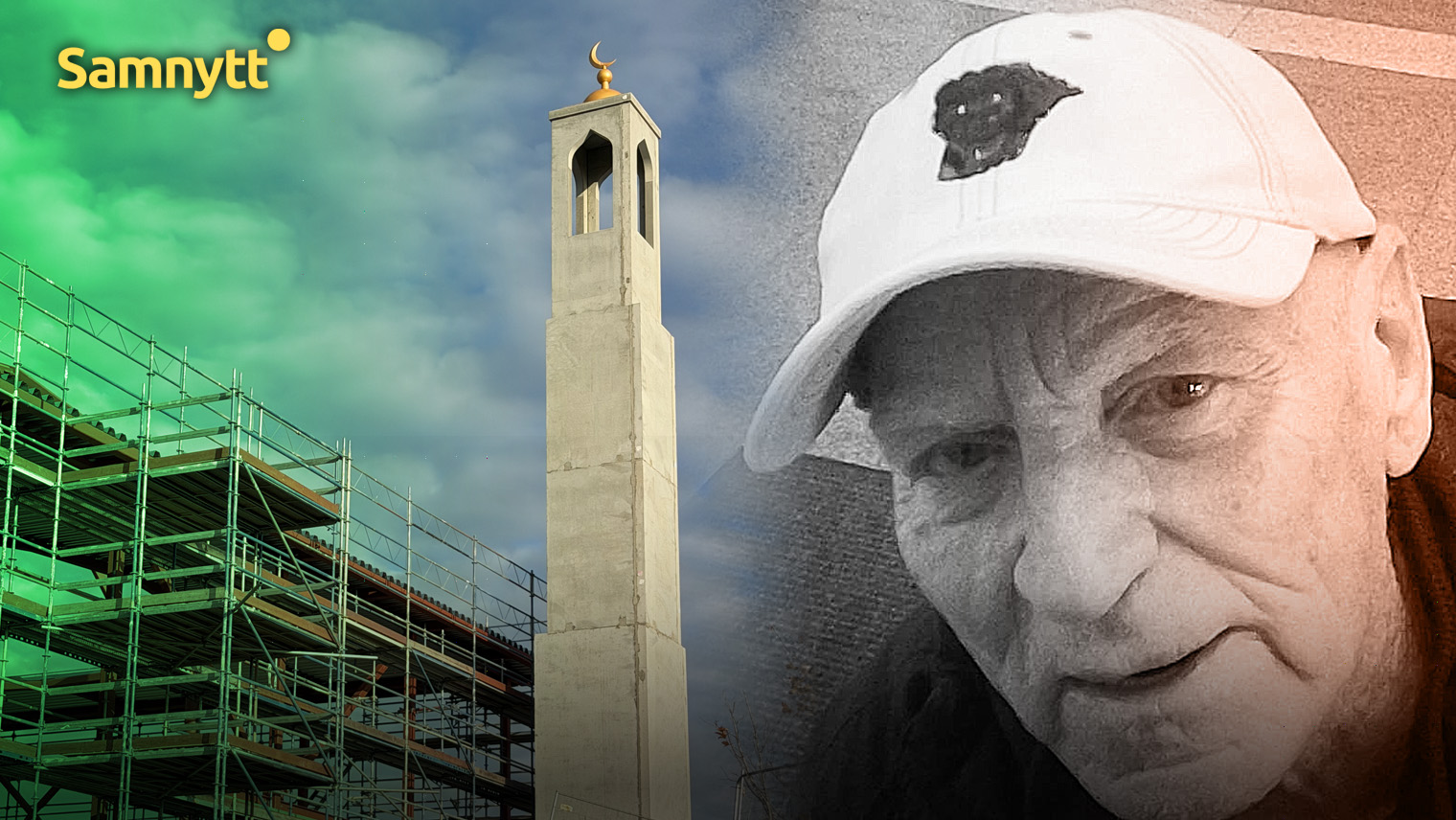
STOCKHOLM - One of the largest mosque projects in northern Europe is rising in Skärholmen, a southern suburb of Stockholm. The building is still unfinished, and questions about who is paying for it and its links to Islamist organisations have dogged the project for years.
When Samnytt returned to the area, both immigrants and native Swedes voiced concern. "They are dangerous," a Christian man from the Middle East said. A Catholic woman had a blunt message for Sweden's politicians: "You have to take care of your own people."
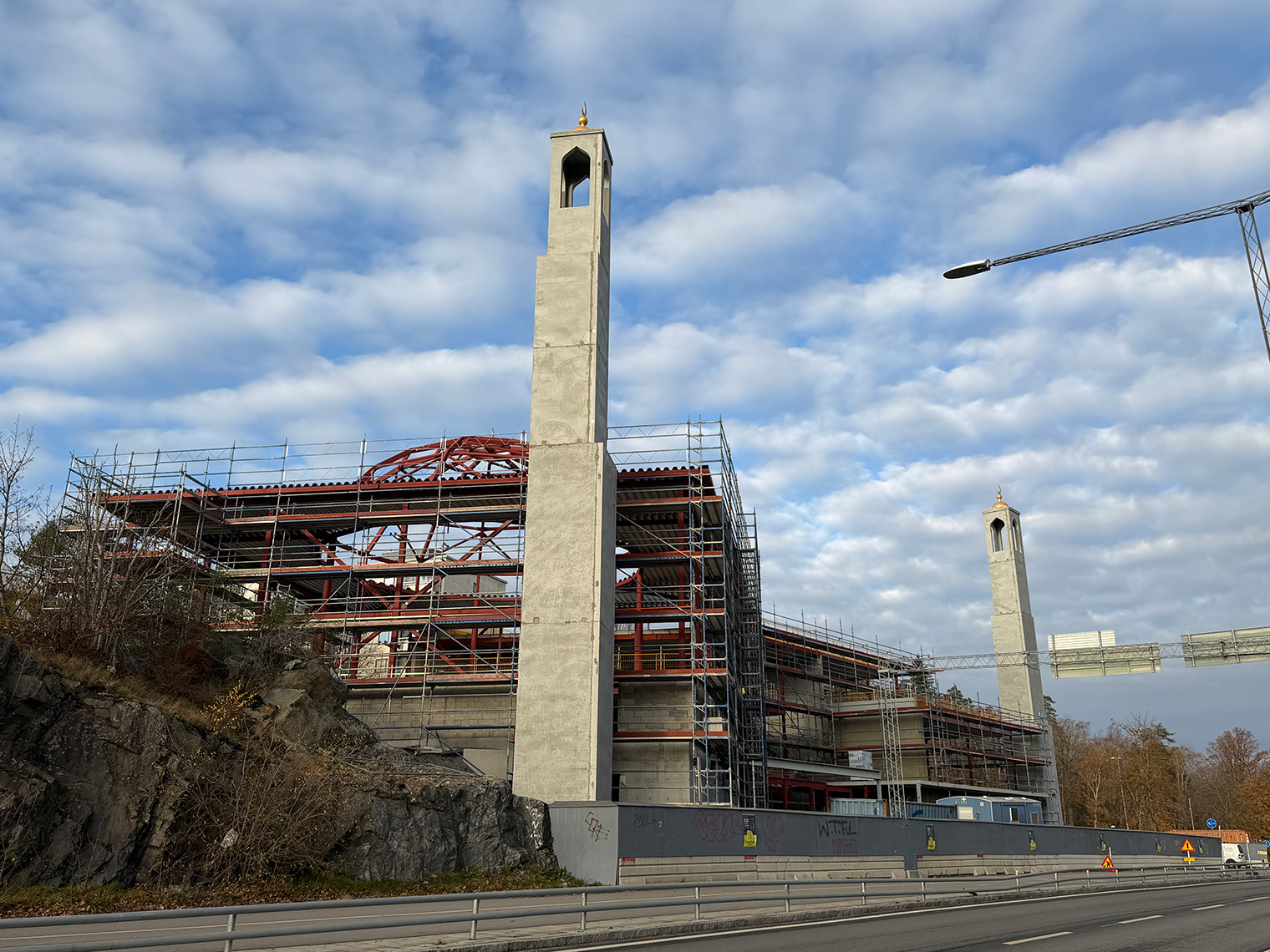
Behind Mikaeli Church on Skärholmsvägen, a complex that looks nothing like the surrounding buildings is taking shape. The Stockholm Mevlana Mosque & Education Centre is planned to hold around 1,200 worshippers.
Alongside the main prayer hall there will be classrooms, a café and other spaces for social and religious activities. The project has been described as one of the largest mosques in the Nordic region.
The zoning plan was approved back in 2014, but years of delays and funding problems followed. Construction only got properly under way in December 2023.
When Samnytt visited in November 2026, the minarets were up, but much of the huge building was still a shell. The Islamic Foundation in Skärholmen, which runs the project, says the final stage covers the interior and is aiming for completion in 2027.
Islamist links and unclear funding
Samnytt has previously reported on the questions surrounding the money behind the project, including reported links to the Turkish Islamist movement Millî Görüş, founded by politician Necmettin Erbakan, which has historically pushed for a society shaped by Islamic values.
In 2022, the local paper Mitt i reported that the Skärholmen mosque was listed as a construction project by EMUG, an organisation tied to the Millî Görüş European network.
Representatives of the foundation deny that it belongs to the movement. Spokesman Talha Okur has said the organisation is ideologically and politically independent.
The City of Stockholm has said it did not know who was actually financing the construction. The foundation describes the funding as donation-based, mainly from private individuals and companies, but also with contributions from other EU countries.
The city has also approved municipal groundwork next to the mosque, including rerouting footpaths, cycle lanes and utility lines, at a cost of around 13.3 million kronor, roughly 1.2 million dollars. The Moderates and the Sweden Democrats have at different times demanded the project be paused or stopped, citing the funding and the risk of Islamist influence.
"They are dangerous"
One of the people Samnytt met in Skärholmen centre is an elderly man born in Syria, with an Armenian family background in Turkey. He has worked as a tailor in Sweden for about 25 years. We call him "Abjerto".
"Sweden is the best," he says. But when the conversation turns to Skärholmen, his tone changes.
"It's not good. But I'm not a racist. I'm not against anyone," he stresses.
He points at women in niqabs and men in traditional Muslim dress walking past, and says such clothing does not belong in Swedish society. "It doesn't fit here in Sweden, or in the rest of Europe."
"This is Sweden. But I don't live in Sweden anymore," he says.
He talks about how earlier generations of his family were forced to leave Turkey and abandon their property, and links that history to the conflicts between Christians and Muslims in the Middle East. He also asks why people from Muslim countries head for Europe rather than wealthy Gulf states such as Saudi Arabia, Qatar or the United Arab Emirates.
"They are against Christians. Absolutely," he says. He ends the conversation in a friendly but firm way: "They are dangerous. They are dangerous. Write, write about this!"
"Take care of your own people"
Mireya, a Catholic with a Latin American background, has lived in Sweden for many years. "It's not the same as when I came to Sweden. A lot of things are not good today," she says.
Asked whether things have got better or worse, she answers without hesitation: "Worse." She says she feels less safe than before, especially at night. She used to go out in the evenings when she was new in Sweden. Now? "No, no. Never."
Asked what she would say directly to Sweden's politicians, she replies: "You have to take care of your own people." On the mosque: "I don't think it's good to build big mosques. It's not good."
An elderly Swedish couple who have lived in Skärholmen for around 30 years are also critical, though less alarmed. "It's nothing positive," one of them says. Their objection is mainly that a large plot is being handed over to a religious building, and that different Muslim groups do not seem to share prayer spaces. "It seems like they avoid each other."
Another elderly Swedish man, asked what he thinks of the mosque, answers in two words - "Total crap" - and walks on.
Questions without answers
For the foundation, the mosque is about a permanent place for prayer, teaching and community, and it argues a visible mosque can build openness and understanding.
For critics, it is about far more than freedom of religion. Who is funding it? What influence do foreign donors have? What values will be taught in the classrooms? And what happens to an already segregated suburb when an institution this big moves in?
Those questions have followed the project for years without full public answers. For several of the people Samnytt met, the change in the area is already plain to see.
Jonas Andersson · Political Columnist
Jonas Andersson is a political columnist at Samnytt, writing on Swedish politics, the media, and the post-election crisis in Stockholm.
Follow @SamnyttNews on 𝕏 ↗