EU Return Hubs a 'Game Changer' - But Sweden Isn't on Board
Five EU countries are preparing to send rejected asylum seekers to a return hub in Rwanda. The Sweden Democrats' migration spokesman Ludvig Aspling tells Samnytt most will choose to go home instead - and explains why Sweden is still standing on the sidelines.

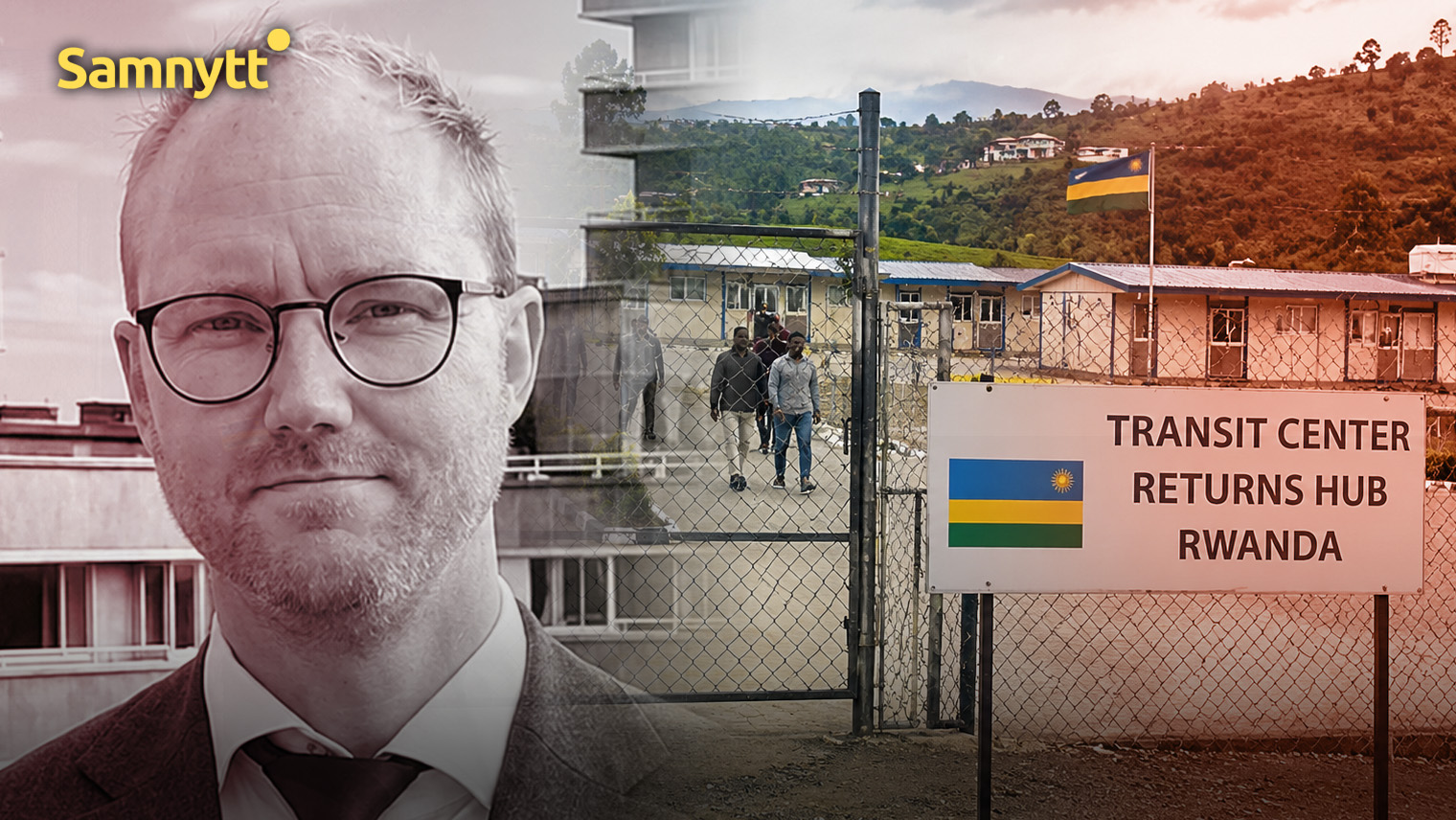
STOCKHOLM - Five EU countries are preparing a pilot scheme to send migrants whose asylum claims have been rejected to Rwanda.
Ludvig Aspling, migration spokesman for the Sweden Democrats, calls the so-called return hubs a breakthrough. In an interview with Samnytt he explains why they could transform deportations - and why Sweden risks being left out.
Austria, Denmark, Greece, the Netherlands and Germany are preparing an agreement to set up a return hub in the African country, Politico reports.
The idea is that people who have been refused asylum and have exhausted every legal avenue to stay in the EU can be transferred to a third country. The project is described as a first step that could later be followed by similar deals with other countries.
Aspling welcomed the news on X.
"You will hear a lot of screaming and crying about this, but the return hubs (negotiated by the Sweden Democrats) are coming and nobody can stop it. This will be a game changer. And yes, it is entirely reasonable to let illegals who refuse to go home sit and obstruct in another country instead," he wrote.
"Our negotiating position becomes much stronger"
Speaking to Samnytt, Aspling says one of the biggest problems with today's return system is that Sweden and other EU countries depend on migrants' home countries agreeing to take their own citizens back.
That hands those countries enormous leverage.
"We often have to negotiate with these third countries that are not very cooperative, and in practice try to get them to accept and take back their own citizens," he says.
Those talks, he says, often end in economic concessions, including foreign aid.
"Since they hold all the cards, they can basically just say 'name your price'."
Return hubs change that, he argues.
"What happens now is that we get the possibility to place these people in more or less any third country. And that makes our negotiating position incredibly much stronger."
If a home country refuses to cooperate, EU states could strike a deal with another country instead.
Rwanda not ideal for Sweden
Aspling notes that Rwanda already has experience of hosting refugees together with the UN refugee agency UNHCR. But he is not convinced it is the best partner for Sweden.
"I don't think it's the optimal partner country for us," he says. Asked which country would be, he answers: "I have my ideas, but I'd rather keep them to myself for now."
"The best of all is if you can place them in a country that borders the one they come from. Then they have a very easy and simple way of going home."
Sweden on the sidelines
Despite the Sweden Democrats claiming a role in the negotiations, Sweden is not one of the five countries behind the pilot scheme.
"It depends entirely on how the government formation goes. Who runs Sweden. If we end up with a snap election and we can get more influence, then this is high on our agenda, of course," Aspling says.
He says the change to the EU Return Directive that makes the hubs possible was negotiated by Sweden Democrat MEP Charlie Weimers and the party's allies in the European Parliament.
He expects it to be harder to get Sweden's other parties to actually put such a system into practice. "It could be harder for the other parties, regardless of who governs."
The EU institutions have to accept the hubs because they rest on a change in the law, he says, but some political parties will put up fierce resistance. He also expects heavy media criticism.
"Of course, for manipulative media it will be very easy to spin this into something terrible."
"Most will choose to go home"
Aspling sees the hubs above all as a means of pressure. The mere prospect of being sent to a third country, he believes, will make many leave Europe voluntarily.
"What will happen in practice is that many of them, when they get the decision to be placed in a return hub, will choose to go home instead," he says.
He describes how he thinks they will reason: "I don't want to go there. I want to live in Europe. If I can't live in Europe, then I'll go home."
By his own estimate there are currently around 12,000 open return cases in Sweden.
"It's not possible to place 12,000 people and find a hub for that many, at least not in the short term. But it won't be needed. They will choose to go home instead."
The conversation also touched on Australia's offshore processing centres in places such as Papua New Guinea, as an example of how such systems can change migration flows.
Aspling says he is not aware of any upper time limit on how long someone could stay in a hub, though he stresses he needs to check that. There are other restrictions, including special rules for children, he adds.
"Saying it is one thing - doing it is another"
So when could the first person who refuses to leave Sweden be put on a plane to a hub in Africa or elsewhere?
"Without a snap election this term, it will be next term," Aspling says. Why so long? "There's too much screaming and crying for the other parties to cope with it."
He adds that the Moderates have backed changes at EU level and that the Swedish government has supported the direction. But he draws a sharp line between backing a change in the law and turning it into policy.
"It's one thing to say this should be legally possible. It's another thing to actually do it."
That leaves the decisive question for Sweden: whether a future government is ready not just to support return hubs in EU rules, but to sign the deals with third countries needed to carry out Swedish deportation orders through them.
Jonas Andersson · Political Columnist
Jonas Andersson is a political columnist at Samnytt, writing on Swedish politics, the media, and the post-election crisis in Stockholm.
Follow @SamnyttNews on 𝕏 ↗