Social Democrat Attacks SD Nationalism - Pushed Kurdish Self-Rule
Social Democrat Lawen Redar attacks SD for ethno-nationalism in Expressen - while she motioned for ethnic Kurdish self-determination and says her parents pushed her Kurdistan activism.
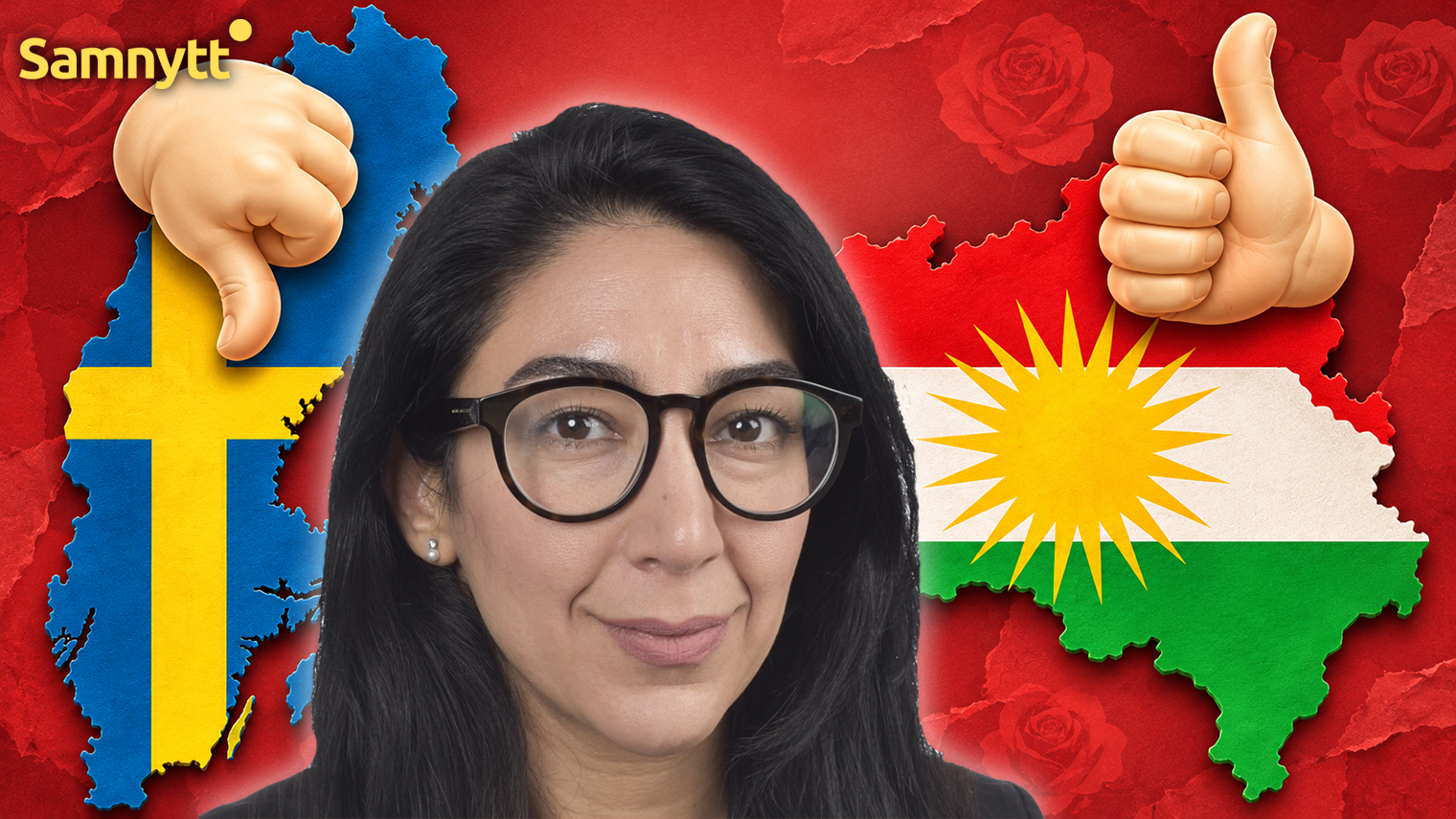
SWEDEN - Social Democrat integration spokesperson Lawen Redar attacks the Sweden Democrats for clinging to an ethnic view of the nation. In Expressen, she says extreme ethno-nationalism still shapes the party's idea of Swedishness.
At the same time, Redar has repeatedly motioned in the Riksdag for the ethnic Kurdish people's right to self-determination. Her parents, she has said, encouraged her to fight for Kurdistan.
The clash comes after SD's leadership said Swedish national identity should rest on culture, language, identity and loyalty - not origin. Redar is not satisfied.
"Rejecting ethnic criteria for Swedishness does not automatically mean abandoning an ethnified view of the nation," she writes.
Open Swedishness called a shield
Redar frames SD's "open Swedishness" as an ideological defense against racism charges. Cultural nationalism, she argues, does not fix the problem.
She also rejects the idea that shared culture and national identity would produce a harmonious society. In her telling, SD's project ignores class and power.
"But in full public view, extreme ethno-nationalism - the idea of a common people with a shared ethnic origin and historical continuity - remains in the party's perspective on Swedishness," she writes.
She cites comments by various Sweden Democrat figures about Zlatan Ibrahimovic, Simona Mohamsson and Yasin Ayari, and concludes that open Swedishness fails if such people are not counted as Swedish - something the party has never actually claimed.
Motions for Kurdish self-rule
While criticizing SD, Redar has long treated the Kurds as a distinct ethnic people with collective national rights - across several states.
Already in her first parliamentary year, 2014/15, she was lead signatory on a motion that Sweden should recognize the ethnic Kurdish people's right to self-determination. Similar demands returned in later years.
A 2019 motion signed by Redar and twelve other Social Democrats describes Kurdish language, history and geographical roots. Kurdistan is called "the land of the Kurds," even as the text admits other ethnic and religious groups live there. Parliament rejected the motion.
The text distinguishes self-determination as political and social rights from full legal independence. It still ascribes national rights to a people on an ethnic basis.
Parents pushed Kurdistan activism
Redar was born in Stockholm. Her father comes from Iraqi Kurdistan; her mother from a Kurdish city in Iran.
In a 2022 KirkukNow account, she said her parents kept her informed about developments across Kurdistan and encouraged her to fight for people's freedom and for Kurdistan. She also described youth-movement work for Kurdish self-determination in areas that today lie within Iraq, Iran, Syria and Turkey.
Support for forces accused of abuses
Her engagement has included support for Kurdish Peshmerga forces in Iraq. Amnesty International and Human Rights Watch have documented destruction of Arab homes and villages in areas retaken from ISIS, with civilians displaced while Kurdish homes in mixed communities were often left intact. Amnesty assessed that some abuses might constitute war crimes.
Redar has also defended contacts with the Syrian Kurdish groups YPG and PYD, highlighting their fight against ISIS. Human Rights Watch has criticized YPG and women's units YPJ for recruiting minors. That does not mean she endorsed the abuses - but her support has covered actors facing far graver human-rights charges than a debate over Swedish national identity.
When Redar attacks SD, Swedishness and historical continuity are the target. In Kurdish areas, forces she has backed have been accused of forcibly changing which groups may remain. How minorities would be protected in a future Kurdistan is a concrete question for anyone pushing Kurdish self-determination.
Mats Dagerlind · Senior Political Columnist
Mats Dagerlind is Senior Political Columnist at Samnytt and Samnytt News. A veteran Swedish political commentator and essayist, he covers Swedish domestic politics, free speech, cultural identity, and media accountability.
Follow @SamnyttNews on 𝕏 ↗