School Diversity Work Deepens Exclusion - Swedish Study Warns
A Linnaeus University dissertation finds intercultural pedagogy at a suburb school with over 90% migrant background can cement immigrant identity and deepen distance from Swedish society.

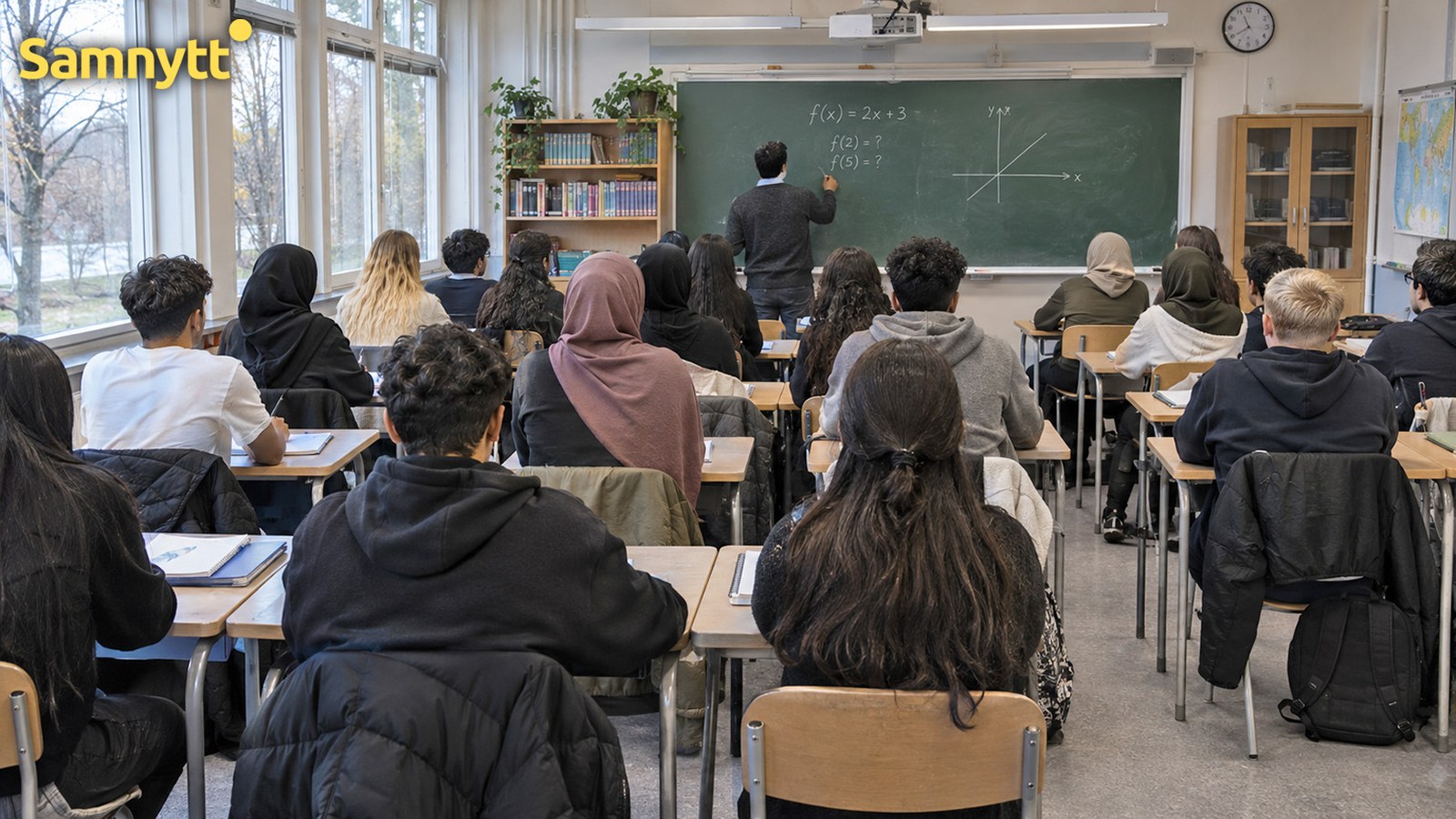
SWEDEN - Schools that try to include immigrant pupils by constantly highlighting their cultural background may achieve the opposite. A new Linnaeus University dissertation finds that the approach can harden the boundary with wider society and cement students' sense of being different.
Researcher Jonna Arenlind followed an eighth-grade class for half a term at a suburban school outside one of Sweden's larger cities. In the thesis the school is given the pseudonym Nova. Over 90 percent of pupils and staff had a migration background - born abroad themselves, or with parents who were.
Nova works actively with so-called intercultural pedagogy. Pupils' different cultural backgrounds are treated as resources that should be made visible.
In the dissertation Harmony and Alienation: School as a Safe Space, Arenlind identifies a contradiction. Practices meant to create safety and community inside the school can instead reinforce distance from society outside.
According to Arenlind, migration background risks becoming something that constantly sets pupils apart, even when the intention is inclusion.
"If the school highlights minority cultures and students' various backgrounds, certain students risk being singled out as different," she writes in the dissertation summary.
Halal food and leave for Islamic holidays
Intercultural pedagogy assumes that teaching shaped by majority-culture norms can disadvantage pupils with other backgrounds. Highlighting minority cultures and adapting school life to pupils' experiences is meant to correct that.
At Nova the approach shapes both teaching and organisation. According to the dissertation, only halal food is served and the school closes for Islamic holidays. Staff speak with pupils and parents in their mother tongues, and the number of languages staff speak is used in marketing.
Ramadan is treated as a normal part of school life. Fasting can even be expected. Pupils are assumed to have a "homeland," and both pupils and staff share holiday plans and clothes ahead of celebrations.
Cultural expressions that are minority phenomena in Swedish society at large have become the local norm - while the divide between the school community and the Swedish majority remains.
READ MORE: Sweden Democrat Veteran Defies Party - Files Seven Motions on Islam
A "we" at school - and a society outside
Arenlind describes how pupils and staff repeatedly separate "here" at school from "there" in the surrounding society. School is framed as a place where people with immigrant backgrounds are safe and can be themselves. The outside world is linked to discrimination and the risk of not being accepted.
That community also brings unspoken pressure to share the group's view of the world. Belonging is tied to a shared story of vulnerability and distance from majority society.
"Students can 'be themselves,' but only within the boundaries set by the collective," she writes.
The supposed safety meant to protect pupils can instead limit their chance to explore other identities. The negative picture of surrounding Swedish society creates fear and insecurity that hinder integration.
Arenlind also notes that pupils' stories shift by setting. In group discussions, events are often cast through a shared frame of exclusion and racism, because that view is expected. In informal one-to-one talks with the researcher, the same stories are often softened or retold without a self-imposed victim role.
Anti-racism lessons can cement vulnerability
A central part of the critique concerns how the school teaches racism and discrimination. The aim is to make injustices visible and help pupils handle them. According to Arenlind, it can also reinforce the idea that people with immigrant backgrounds are inevitably exposed.
"At Nova, discussions about racism and discrimination often lacked nuance," she writes.
Those talks reinforced the view of people with a migration background as inevitably and especially exposed to discrimination. Teaching thus risked narrowing pupils' understanding and room for action.
When vulnerability is repeatedly confirmed as a shared trait, it can become a foundation for group identity - not only as a reaction to real experiences, but as notions formed and reinforced inside the school.
Even pupils without such experiences are shaped
One example is talks about internships, where experiences of racism were expected to surface and be confirmed in the group. That signalled that belonging as an "immigrant" was linked to meeting discrimination.
Even pupils who have not themselves been discriminated against can be drawn into the shared narrative. Views of the outside world travel through everyday school life and the group's way of reading events.
Arenlind also describes hesitation about activities and cooperation with companies outside the school. She links that both to stigma in society and to dynamics inside the school.
The result risks becoming a cycle: new encounters are read through an already fixed expectation of being treated badly - Sweden is racist and Swedes discriminate.
READ MORE: She Left Islam - Then Faced Religious Bullying at Swedish Language School
Immigrant identity can become a limit
Arenlind also warns against romanticising resistance to majority society. If pupils' actions are uncritically confirmed as anti-racist resistance, they risk being reduced to experiences of discrimination - and the idea that people with migration backgrounds are fundamentally different can grow stronger.
Both pupils and staff seem aware of outsiders' real or imagined negative views of the school, she writes, but less aware of their own role in mechanically passing on similar stories.
When immigrant background is stressed as a distinguishing group identity and discrimination sits at the centre of belonging, that can contribute to isolation from society.
The negative views are especially clear among some pupils born in Sweden who have spent a long time in the area. Arenlind reads that as a sign that the meaning of being an "immigrant" is at least partly shaped locally.
Support without making pupils different
The study covers a single school and does not compare pedagogies in general. Nova was also chosen partly for relatively strong results, with a share of pupils eligible for upper secondary school above the national average.
Arenlind's conclusion is not that background should be ignored. Good intentions and a declared diversity agenda are not enough, she argues. Schools must examine how their own routines may cement exclusion.
She highlights teachers who support pupils by knowing them as individuals, without turning them into representatives of a deviant group. In sensitive situations that can mean skipping questions that risk feeling judgmental.
When the school instead keeps stressing a shared immigrant identity and shared vulnerability, inclusion work can cement the very boundaries it was meant to bridge.
"I believe schools need to pay attention to their own everyday practices and relationships to ensure that intercultural initiatives contribute to inclusion rather than reinforcing marginalization."
Samnytt had booked an interview with Arenlind. Shortly before the agreed time she said she no longer wanted to be interviewed by the paper.
Mats Dagerlind · Senior Political Columnist
Mats Dagerlind is Senior Political Columnist at Samnytt and Samnytt News. A veteran Swedish political commentator and essayist, he covers Swedish domestic politics, free speech, cultural identity, and media accountability.
Follow @SamnyttNews on 𝕏 ↗