She Moved Back to the Middle East - Sweden Kept Paying Her Pension
An 80-year-old woman told the Swedish embassy she had moved back to the Middle East in 2019. Authorities kept paying her pension and benefits for years. Now she owes half a million kronor she cannot repay - and has been granted new benefits.

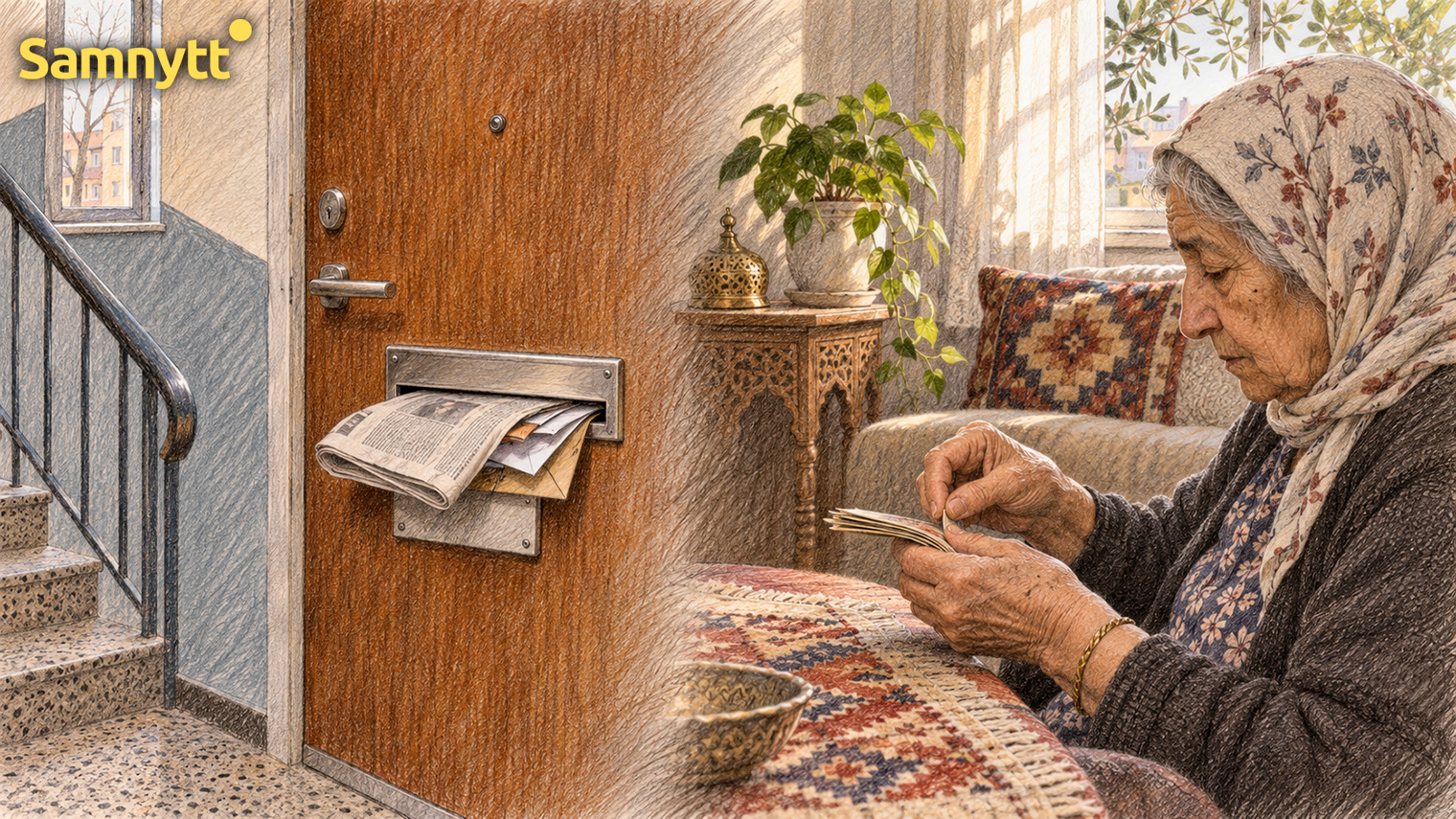
EKERO - The neighbours raised the alarm about the empty council flat. The woman herself told the Swedish embassy that she had moved back to her old homeland. The payments kept coming anyway.
Now the 80-year-old is being asked to repay 556,254 kronor, around 50,000 dollars. Her son says she has no way of paying it back. And after a fresh application, she is once again receiving more than 10,000 kronor a month from Swedish taxpayers.
Told the embassy she had moved
In August 2024 the woman walked into Sweden's embassy in a Middle Eastern country. She said she had moved there in 2019 but was still registered as living in Ekero, just outside Stockholm.
The embassy passed the information on to the Swedish Tax Agency. It would take almost a year and a half before the Swedish Pensions Agency opened the investigation that led to the repayment demand, the tenants' magazine Hem & Hyra revealed.
A year before the embassy visit, two anonymous tipsters had already reported that she was holding on to her municipal rental flat in order to keep claiming Swedish benefits.
Every month she received around 14,000 kronor in guaranteed pension, housing supplement and elderly maintenance support, even though she lived neither in the flat nor in Sweden.
Missing exit stamp - case closed
The Pensions Agency examined her passport. An exit stamp was missing, and investigators could not establish how long she had been away.
So the agency concluded that she lived in Sweden and closed the case without action. The money kept flowing.
Six more reports - checks had to wait
In 2024 and 2025, six more reports reached the Swedish Social Insurance Agency, the Tax Agency and the Pensions Agency. One came from Ekero municipality itself.
According to the tips, the flat was still empty. There were also claims of plans to sublet it and that other people were using the woman's bank card.
Three of the reports reached the Pensions Agency between October 2024 and July 2025. Not until 12 February 2026 did it open a new investigation.
Therese Storby, head of unit at the agency's control department, explains the delay by saying staff have to prioritise among the tips. There are a lot of people cheating.
READ MORE: 148 Suspected Illegal Welfare Payouts Flagged to People Without Right to Live in Sweden
By then the woman had returned to Sweden. At the agency's request she showed both of her passports at a service office in Stockholm.
This time investigators could prove she had been abroad for at least three years between July 2022 and December 2025. She had even collected a new passport in that country in the summer of 2022, and had earlier admitted that she first left in 2019.
Repayment is "academic"
The repayment demand came to 556,254 kronor. Investigators also looked at cash withdrawals and transfers of up to 14,000 kronor.
Citing confidentiality, Storby will not say who was using the bank card or whether the woman has been reported to police.
The demand is largely academic anyway. The woman has no financial means to pay the money back. The deadline was the end of August, and the Social Insurance Agency will not say whether anything at all has been paid. Whatever cannot be recovered, taxpayers will cover.
Granted new benefits on her word of honour
In autumn 2025, while she was still in the Middle East, she applied for a further housing supplement for a room in her son's house in Stockholm, claiming her share of the rent was 3,000 kronor a month. That was refused, because she was not registered at the address and never sent in the documents requested.
A few months later she applied again, declaring on her honour that she would live in Sweden for at least a year.
This time she was granted housing supplement and elderly maintenance support for the whole of 2026 with no further checks. Together with her guaranteed pension, she now receives just over 10,000 kronor a month.
Anyone who meets the conditions again is entitled to the benefits even if an old debt remains, Storby explains. Those are the rules.
Son says the money went on rent
The woman could not be reached for comment. Her son first hung up when the magazine called, but rang back to say his mother now lives with him.
According to the son, she travelled to her former homeland after her husband died and got stuck there during the pandemic. Later, he says, war and cancelled flights kept her from returning.
How that fits with the investigation's finding that she travelled in and out of the country four times between 2022 and 2025, the magazine got no clear answer. The son denies that she kept the flat to collect benefits.
READ MORE: Nine in Ten Large Families on Welfare Are Foreign-Born - Sweden Cuts the Benefit
312 million kronor in a single year
Asked how often the agency finds people who have lived abroad for years while drawing pensions and support they were not entitled to, Storby answered: "It is not unusual, but I cannot say in percentage terms how common it is."
The Pensions Agency estimates that living or staying abroad was behind incorrect payments of 312 million kronor in 2025, close to 30 million dollars. How much of that went to people who moved back to their former homelands is not stated.
The agency's own assessment hints at the true scale. Only about a quarter of all incorrect payments during the year are thought to have been detected. If that holds, billions of kronor are leaving Sweden in wrongful benefits.
Since 1 July 2026, the agency can impose a penalty of 25 percent on top of a repayment demand. Anyone who knowingly or through gross negligence gives false information can also be barred from benefits for up to three years.
Storby believes such a long stay abroad would probably have triggered both the penalty and the ban had it happened after the law changed. But the woman in this case escapes both - and has been granted new benefits on top.
Mats Dagerlind · Senior Political Columnist
Mats Dagerlind is Senior Political Columnist at Samnytt and Samnytt News. A veteran Swedish political commentator and essayist, he covers Swedish domestic politics, free speech, cultural identity, and media accountability.
Follow @SamnyttNews on 𝕏 ↗