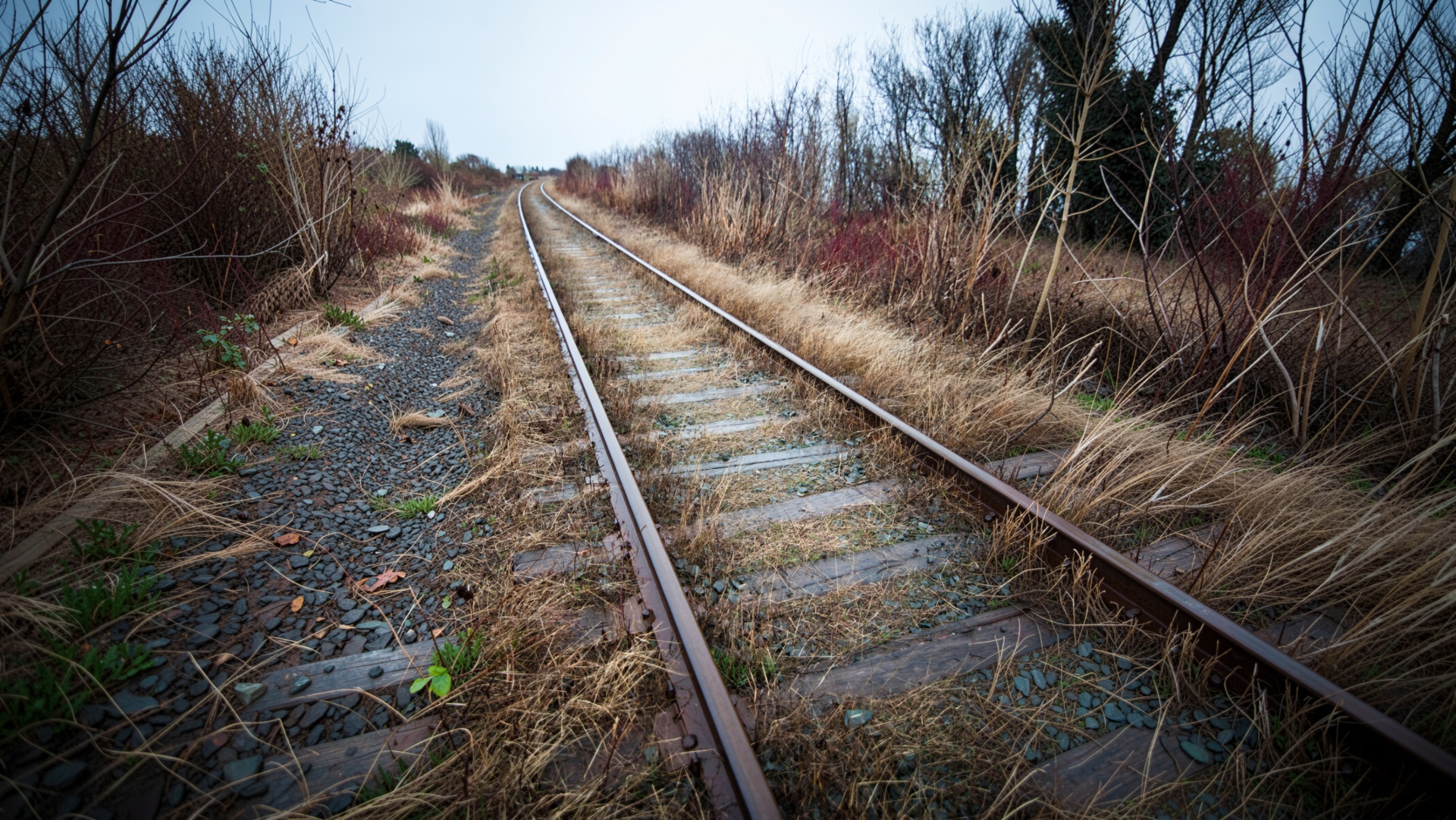
Old railway sections that have been unused for decades could take on a new role in Sweden’s total defense. Outside Jörn in Västerbotten, the Swedish Transport Administration (Trafikverket) is now rebuilding tracks on a railway that has not been used in about 35 years, to test how quickly old lines can be put back into operation if regular transport routes are disrupted.
The work is part of a larger experiment where existing railbeds are reused instead of building new railway lines from scratch. New rails and sleepers are being laid on two test sections between Arvidsjaur and Jörn, while the abandoned line between Morjärv and Haparanda is being cleared to see if it too could be reactivated for traffic.
According to Trafikverket, the explicit purpose is to strengthen Sweden’s resilience both in everyday life and during crises or war. Northern Sweden is also highlighted as particularly important for total defense.
1.5 Kilometers of New Track Per Day
Outside Jörn, the railway had become overgrown with trees, brush, and other vegetation. The tracks themselves were no longer usable, but the railbed was judged to be in good enough condition to serve as the foundation for a new line.
In a report by TV4, a special vehicle is described that lays out new sleepers and rails directly onto the prepared railbed. The construction crew claims they can complete around 1.5 kilometers of track per day.
This method is significantly faster than building an entirely new railway. At the same time, there are practical challenges, since many of the old lines run through areas with limited road connections. Therefore, materials, machinery, and personnel must be supplied along the actual railway corridor.
Once the rails are laid, further work is needed, including adding ballast, aligning tracks, and welding before the section is fully completed.
More Routes if the Railway Fails
The background is Sweden’s changed security situation and the need for alternative transport routes. The railway is central for moving large quantities of equipment, fuel, and personnel, which makes the system vulnerable if a strategically important section is blocked or destroyed.
Trafikverket therefore wants to investigate which older lines could function as backup routes. The existence of the railbed can shorten both construction time and planning compared to creating entirely new transport corridors.
However, the project in the north does not mean that all old Swedish railways are now to be reopened. Trafikverket describes the test sections as a way to gather practical knowledge ahead of future decisions about lines that have long stood unused.
In parallel, the old section between Morjärv and Haparanda, which has not had traffic since 2012, is being cleared. There, vegetation must first be removed before Trafikverket can inspect culverts, drainage, and level crossings.
If the tests show that the method works, older railway corridors could take on entirely new value. Lines previously considered redundant could, in a deteriorating security situation, instead become reserve routes for both civilian and military transport.