The Deal Nobody Reported - Swedish Jobs to Be Matched With Uzbeks
A migration pact with Uzbekistan took effect on 1 November, promising to match Swedish employers with Uzbek workers in shortage jobs such as elderly care. Not one major Swedish outlet has reported it.

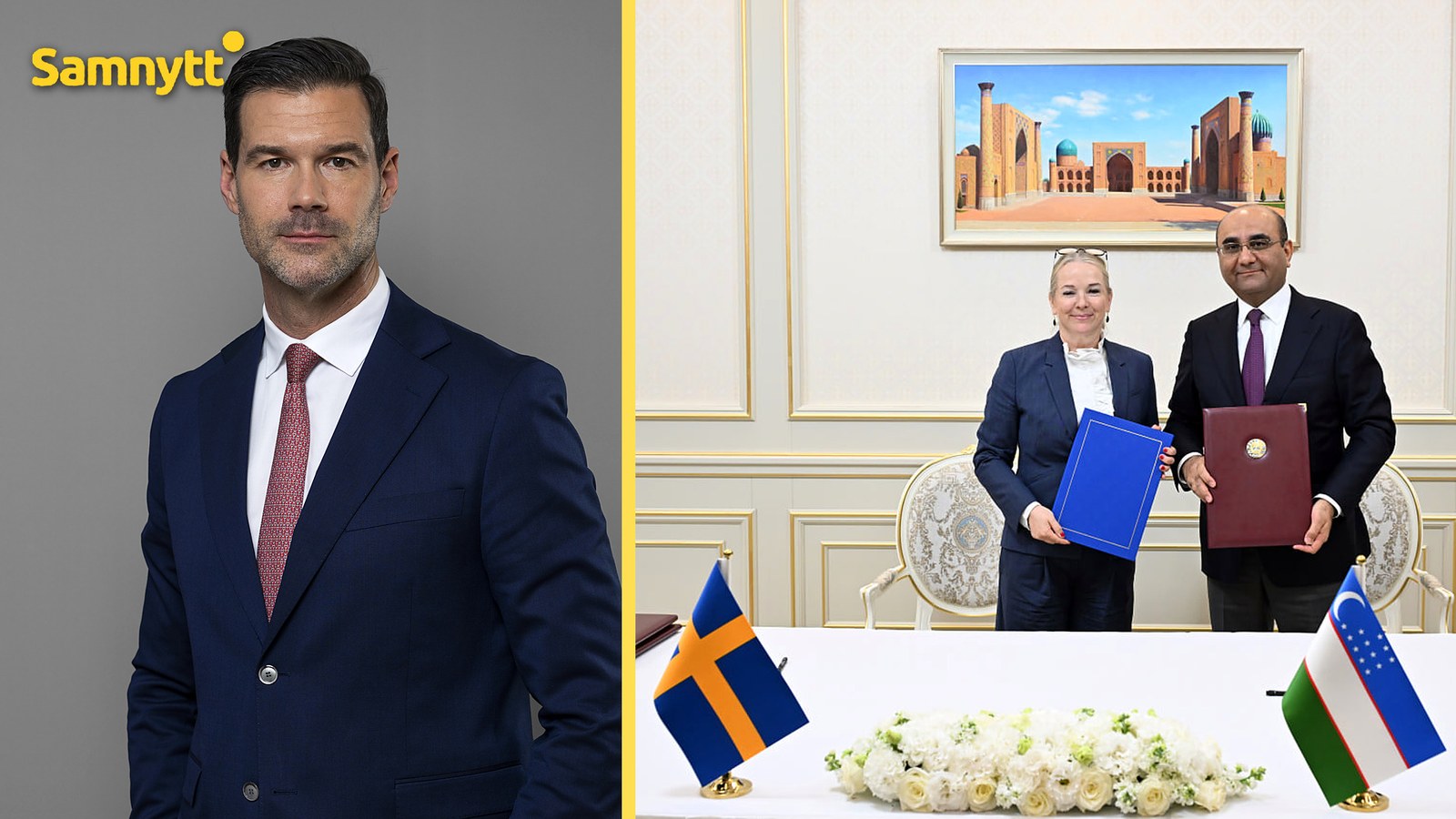
STOCKHOLM - Since 1 November, Sweden has had a new migration agreement with Uzbekistan. One of its goals is to help Swedish employers find Uzbek workers for jobs they struggle to fill.
The two countries have now started talks on how it will work in practice. Sweden's big newsrooms have not said a word about it.
The deal was signed in the Uzbek capital Tashkent on 10 June. It is a broad partnership on migration and mobility, and the full text is published in Uzbekistan's national legal database.
It is not secret. In a written answer to parliament in August, Foreign Minister Maria Malmer Stenergard called it, together with a declaration of intent on a pilot programme for legal migration, "a milestone in bilateral relations".
Yet Samnytt has found nothing about it at SVT, Swedish Radio, Dagens Nyheter, Svenska Dagbladet, Aftonbladet or Expressen. Almost everything written about the pact has appeared in the Uzbek press.
How the jobs will be matched
The agreement has two parts. One is about getting more Uzbeks into legal work in Sweden. The other is about stopping irregular migration and sending home Uzbeks who have no right to stay.
Under the text, the countries will promote skilled labour migration as well as temporary and so-called circular mobility, especially in sectors short of workers. That includes initiatives matching Swedish employers with Uzbek candidates, plus cooperation on language courses and vocational training.
The focus is meant to be on highly skilled sectors, but other skill levels are also covered as long as Swedish law, including the salary threshold, is respected.
No specific jobs are named. But when the deal was signed, Uzbekistan's migration agency said the aim was to prepare workers for the Swedish labour market in healthcare, engineering, services and care.
READ ALSO: Sweden Democrats May Drop Cabinet Demand - Labour Migration on the Table
The salary rule has loopholes
Since 1 June, a work permit in Sweden requires a salary of at least 90 percent of the national median - currently 34,470 kronor a month.
But 27 shortage occupations are exempt. For them, 75 percent of the median is enough, today 28,725 kronor.
The exempt list includes assistant nurses in home care and nursing homes, childcare assistants and care aides. In other words, exactly the care jobs Uzbekistan highlighted in June.
Meetings this month
An Uzbek delegation is visiting Sweden this week to start putting the deal into practice. The information comes from Uzbekistan's migration agency. Samnytt has found no press release from the Swedish side.
On 9 November the agency's head, Mukhsinkhodja Abdurakhmonov, met Annika Gottberg, deputy director-general of the Swedish Migration Agency. According to the Uzbek side, they discussed a pilot programme of around 18 months.
Uzbekistan proposed vocational courses at its colleges tailored to Swedish employers, Swedish language teaching and possibly a Swedish language test centre in the country.
The delegation also met Sweden's Foreign Ministry, where simpler procedures for work visas and residence permits and a pilot hiring model were discussed. Abdurakhmonov also met Migration Minister Johan Forssell.
Nothing has been decided. The Uzbek agency gives no start date, terms or numbers for the pilot.
More returns promised
The deal is also meant to get more people sent home. According to the government, Sweden has for years received more Uzbek asylum applications than any other EU country, although the number has fallen 62 percent since 2022.
Uzbekistan promises to work to curb irregular migration to Sweden and to take back its own citizens with no right to stay. It must answer a readmission request within 21 days, 30 in exceptional cases. No answer counts as a yes, and travel documents must follow within seven working days.
READ ALSO: Norway's Labour Government Tightens Demands on Immigrants - Sweden Delays
The Drottninggatan attacker was Uzbek
Uzbekistan is a secular state, but its authorities say more than 94 percent of the population is Muslim. Sweden already has bitter experience of migration from the country.
Uzbek citizen and Islamic State supporter Rakhmat Akilov came to Sweden in 2014 and applied for asylum. He was rejected and from January 2017 stayed illegally.
On 7 April 2017 he hijacked a truck and drove it down Drottninggatan, Stockholm's main shopping street. Five people were killed. In June 2018 he was sentenced to life in prison for terrorist offences and expelled for life.
The agreement runs indefinitely. It can be terminated at three months' notice, or suspended in whole or in part on grounds of national security, public order or public health.
Samnytt News Desk · Stockholm Newsroom
The Samnytt Newsroom in Stockholm reports on Swedish courts, migration, energy policy, and Nordic affairs under Responsible Publisher Simon Kristoffersson, Senior Columnist Mats Dagerlind, and Executive Director Kent Ekeroth.
Follow @SamnyttNews on 𝕏 ↗