Sweden Pays Activists Millions to Teach Queer Theory to Toddlers
A state-run fund financed by the estates of dead Swedes has handed close to 5.7 million kronor to a queer film association for intersectional pedagogy aimed at children aged three to six. Jonas Andersson asks who protects the children.

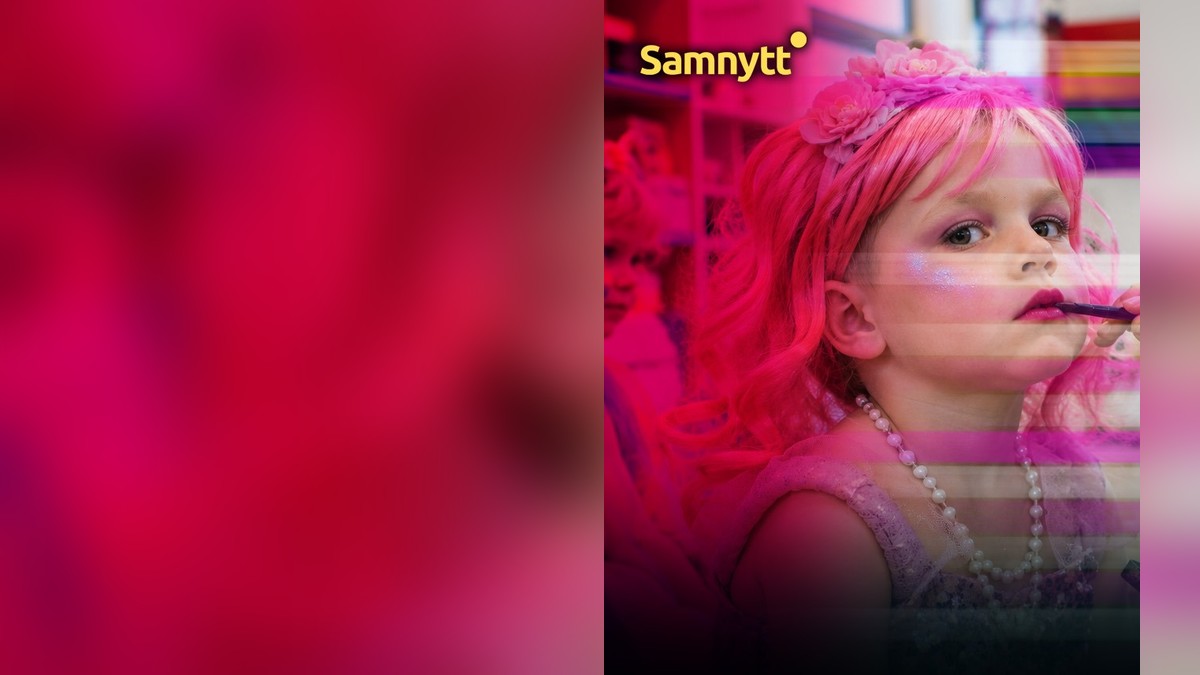
It is a moral collapse when adult activists are handed millions from the estates of dead Swedes to turn three-year-olds into objects of their political ambitions. Under the banners of inclusion, norm criticism and diversity, Sweden's identity politics grant industry has now set its sights on the very youngest members of society.
Children who cannot yet read, write or even grasp what the word sexuality means are to be introduced to a world shaped by queer theory and intersectionality. That is not progressive. It is a betrayal of childhood, and a sign of an adult world that has lost its moral compass.
We are talking about close to 5.7 million kronor that the Swedish Inheritance Fund has granted to the association Cinema Queer for a project called Mixi Mini, earlier named Tadida, described as intersectional pedagogy and play with children. The target group is children aged three to six.
Read that again. Three years old.
At an age when children discover the world by building sandcastles, learning to ride a bike, climbing trees and wondering why the moon follows the car, adult activists believe they have an urgent mission to introduce intersectional perspectives on life. Through films, stories, games, play equipment and teaching material, the project is meant to reach into Swedish preschools. And preferably into homes as well.
The children did not ask for this. Adults with an ideological worldview have identified the children as a target group. That is a crucial difference.
A world of power and oppression
Queer theory, intersectionality, critical whiteness studies, radical feminism, racialization, heteronormativity, cisnormativity, white privilege, postcolonialism, decolonization, gender fluidity, structural oppression. When I hear these words, they still echo in my head from my years as a senior lecturer at Konstfack, Stockholm's university of arts, crafts and design. A whole arsenal of inflated concepts, where verbal obscurity is too often mistaken for academic depth.
What these theories have in common is that a person is seen through their group and their supposed position in various power structures. Sex, skin colour, sexuality and ethnicity become the key to understanding the individual.
For decades, it was seen as a step forward for civilization not to judge people by their skin colour, sex or group. Parts of modern identity politics have turned that on its head. Now we are once again supposed to sort, categorize and label people by those traits. And apparently we are to start in preschool.
Of course children should learn to treat other people well, whatever they look like and however their families are made up. That takes neither intersectional theory, queer activism nor a project costing almost six million kronor. It takes present adults with good judgment. Teaching children respect is one thing. Handing them an ideological filter through which to see themselves and everyone around them is something else entirely.
A lucrative ideological industry
When I went through the documents behind the project, a familiar picture of the Swedish grant industry emerged. Of the roughly 5.7 million kronor, more than 3.7 million is earmarked for salaries.
In the original application, a board member of Cinema Queer was named as the intended project leader, for a position with total salary costs of close to two million kronor. The Inheritance Fund gave guidance on the conflict of interest question. In the budget that was finally approved, the name had disappeared from the position, while the salary and scope stayed the same. The documents do not show who finally got the job.
That does not have to mean any formal rule was broken. But it raises questions about a system where activism, ideological conviction, grant applications and years of paid employment flow together.
A whole profession of norm critics, gender educators, diversity consultants and equality strategists has grown up, and its income depends on society constantly finding new problems that need new projects, new training and new millions. If the problems go away, so does part of the business. The more norms that can be problematized, the more courses can be sold. The more power structures that can be identified, the more projects can be funded. And now they have found the three-year-olds.
Who protects the children?
When I interviewed Professor Agnes Wold, one of Sweden's best known medical scientists, about the project, she confirmed that there is a risk of ideological influence on small children. She also pointed to American research on teaching about race and group identity. That should spark a far bigger public debate.
Small children are at an extremely formative stage of life. They do not have the intellectual ability to critically assess the ideas that adult authorities present to them. That is exactly why we normally view political and religious indoctrination of small children with suspicion. But dress it up in words like inclusion, representation, diversity and social justice, and suddenly the scrutiny seems to stop.
Beautiful words are no guarantee of good outcomes. Where are the independent scientific evaluations? Where is the discussion of possible harm? What say do parents have? And who is responsible if the teaching has effects other than those intended? These questions should have been asked before a single krona was paid out.
Millions from the dead
In a country where elderly people do not always get the care they need, where children with neuropsychiatric disabilities wait for help and where preschool staff describe large groups and thin resources, there is apparently close to six million kronor available for intersectional pedagogy aimed at toddlers.
The Inheritance Fund's money comes from people who died without heirs or a will. People who worked, saved and built up their assets over a lifetime. How many of them would have wanted to fund queer pedagogy for three-year-olds? We cannot know for sure. But the question deserves to be asked, and I think I know the answer. None at all.
As early as 2024, the Swedish National Audit Office sharply criticized the fund and recommended that the current system be wound down. Yet the millions keep rolling.
It is no longer enough to check whether the money was booked correctly or whether the conflict of interest rules were followed. We must dare to question whether these activities should exist at all. A dubious ideological project does not become less dubious because the accounts are in order.
Childhood belongs to children
The most repugnant part of this story is not the money. It is the boundless self-confidence with which adults believe they have the right to make small children instruments of their own ideological ambitions.
This is not about whether a little boy may play with a doll or a little girl with a fire truck. Children have always played, imagined and dressed up. It is a natural and wonderful part of childhood. The problem starts when adults turn children's play into a tool for ideological change.
A three-year-old does not need to understand the world through theories of structural oppression, racialization, white privilege or gender power structures. A three-year-old needs security, love, play, language and the chance to discover the world without adults having decided in advance how it should be interpreted.
I do not want a right-wing preschool. I do not want a left-wing preschool. I do not want a religious, missionizing preschool. And I definitely do not want a queer activist preschool. I want a preschool where children get to be children.
Adults may devote their lives to intersectionality, queer theory and identity politics as much as they like. They can form associations, hold conferences and write books. They can live out their sexuality exactly as they wish, between consenting adults. That is none of my business. But their ideological convictions must not be made our children's business. They have no automatic right to grants of millions, and no right to make our children tools for their beliefs.
Childhood is not ideological raw material. Three-year-olds are not a political project. Full stop.
Jonas Andersson · Political Columnist
Jonas Andersson is a political columnist at Samnytt, writing on Swedish politics, the media, and the post-election crisis in Stockholm.
Follow @SamnyttNews on 𝕏 ↗