Malmö Welfare for Illegal Residents Soars 258 Percent - "Getting Around the Law"
Malmö's payouts to people with no right to be in Sweden, including those with deportation orders, have more than tripled in a year, and children in these families can get the full national welfare rate plus housing costs.

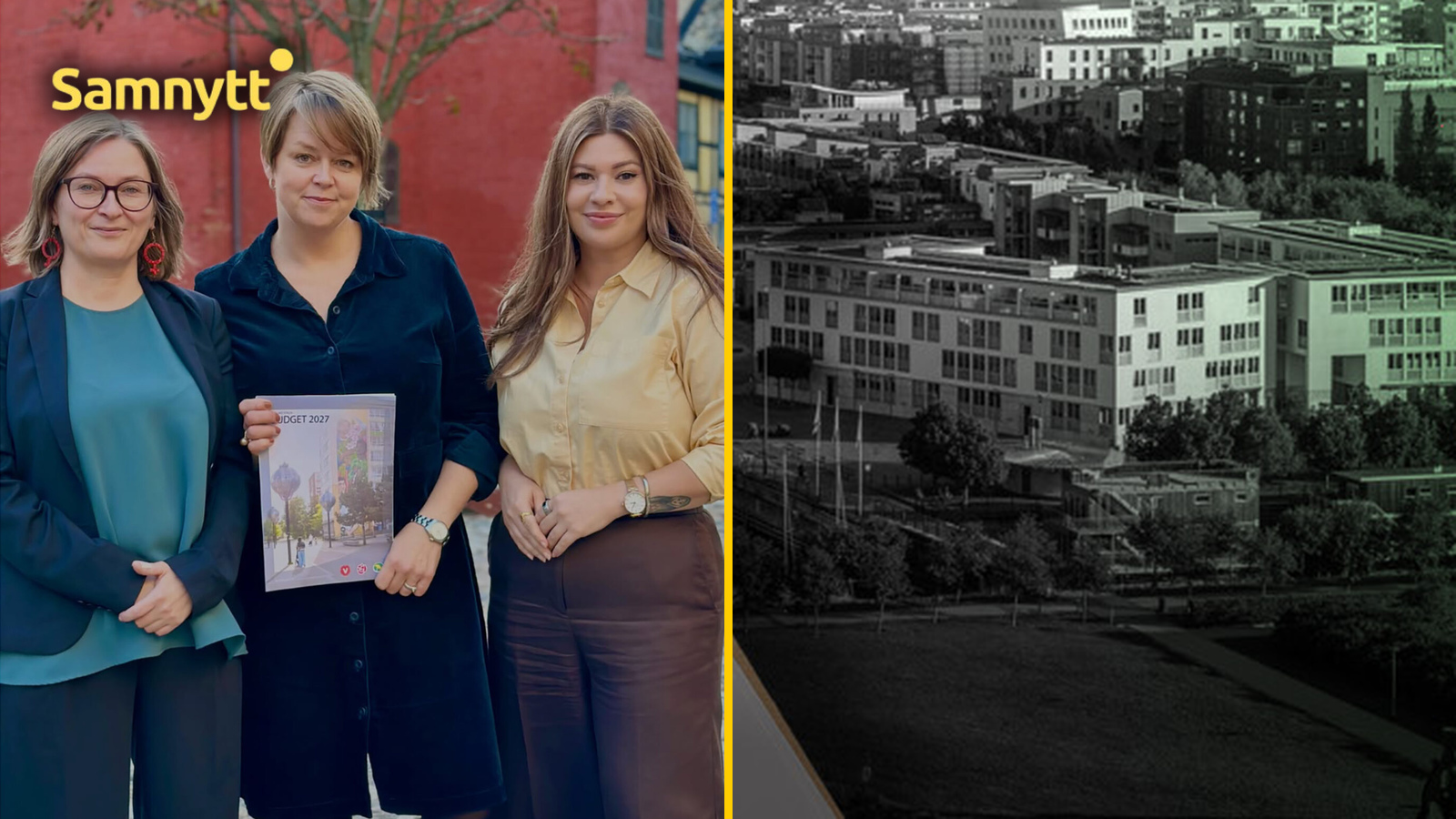
MALMÖ - Welfare payments from the city of Malmö to people with no right to be in Sweden have more than tripled in a year. Between January and September 2025 the city paid out just over 86,000 kronor. Over the same months this year the sum rose to almost 308,000 kronor - an increase of 258 percent.
The figures come from a report to the city's labour market and social services committee. They cover people with deportation orders, people whose residence permits have expired or been revoked, and people who never applied for permission to stay in Sweden at all.
For adults, the rule is narrow. By Malmö's own account, the city's responsibility for people staying in the country illegally is limited to help in acute emergencies. But for children, Malmö has decided differently.
Children Can Get the Full Welfare Rate
In the report, city officials note that the principle of "the best interests of the child" cannot be used to set aside the law. Where the law leaves room for interpretation, however, the principle can be used to pick the option most favourable to the child.
In practice, that means children in families with no right to be in Sweden can be granted far more than their parents - support up to the full national welfare standard, plus help with a reasonable housing cost based on the child's needs.
Rikard Vroland, a department head in Malmö's social services, told Samnytt the policy rests on a municipal decision taken several years ago.
"Based on the best interests of the child and the responsibility the municipality has under the UN Convention on the Rights of the Child, the conclusion is that children in family households are entitled to a higher level of support," he said.
According to Vroland, Malmö first made a legal assessment of its obligations and then took a political decision on how high the support should be.
No Outer Time Limit
Vroland puts the sharp rise mainly down to more households applying. "The short answer is that more people have applied," he said. For much of 2025 it was between one and three households a month. In 2026 the level has been around five, with a peak of seven in a single month.
The numbers need some perspective: during parts of 2024 both the number of households and the payments were considerably higher than in 2025 and 2026.
But emergency aid in Malmö does not necessarily stay an emergency. Because these households are by definition only entitled to emergency support, the city has to make a new assessment every month - for example on housing costs. That means the payments can keep coming back.
Asked whether there is, in practice, no outer time limit, Vroland did not dispute it. "It is the same legislation across Sweden. Everyone has the right to be assessed if they are in a municipality. Then different municipalities can apply that legislation in different ways," he said.
He added that the city always checks an applicant's status and right of residence, and works actively to help people move on from their situation.
"They Are Getting Around the Law"
Farishta Sulaiman of the centre-right Moderate Party, second deputy chair of the social services committee, is critical.
"In principle it is not reasonable for the state to take a decision such as deportation, or that you have no right to be in the country, and then the social services use the tools they have to let people stay on anyway," she said.
Asked whether the city is getting around the law, she was blunt: "Yes, that is what they are doing. They are getting around the law this way. We have had many discussions about this and they say children should not have to live on the street. Absolutely, I agree with that. But maybe the decision another state authority has taken should actually be enforced."
She also rejects the idea that the arrangement is automatically good for the children. "It is not in the child's best interests to live hidden from other authorities, in some kind of parallel society."
And when the city pays for housing on behalf of the children, the money in practice supports the parents too. "Absolutely. They say it is for the children's sake. But it is not as if you only pay emergency aid for the child - it ends up covering the whole family, of course."
New Law From January
Malmö has been a Social Democratic stronghold for most of modern history. After the 2026 election, the city is run by the Social Democrats, the Left Party and the Greens, who together hold a majority on the city council.
The rules are about to change nationally. Under the government's welfare reform, financial assistance will as a general rule only be paid to people who are in Sweden legally. Those staying illegally will only be able to get the help needed in an acute situation, and social services will not be allowed to grant anything beyond that. The change is due to take effect on 1 January 2027.
Malmö is also one of the biggest beneficiaries of Sweden's municipal equalisation system, which moves tax money from richer to poorer municipalities. The city says it will receive 19,265 kronor per resident through the system in 2026 - around 7.1 billion kronor in total.
Samnytt has asked the chair of the social services committee, Social Democrat Sedat Arif, for comment.
Jonas Andersson · Political Columnist
Jonas Andersson is a political columnist at Samnytt, writing on Swedish politics, the media, and the post-election crisis in Stockholm.
Follow @SamnyttNews on 𝕏 ↗