Brussels Wants to Auto-Approve Doctors Trained Outside the EU
Non-EU doctors, nurses and dentists would be cleared in four months instead of 14. Sweden warns of fake diplomas - but can be outvoted.

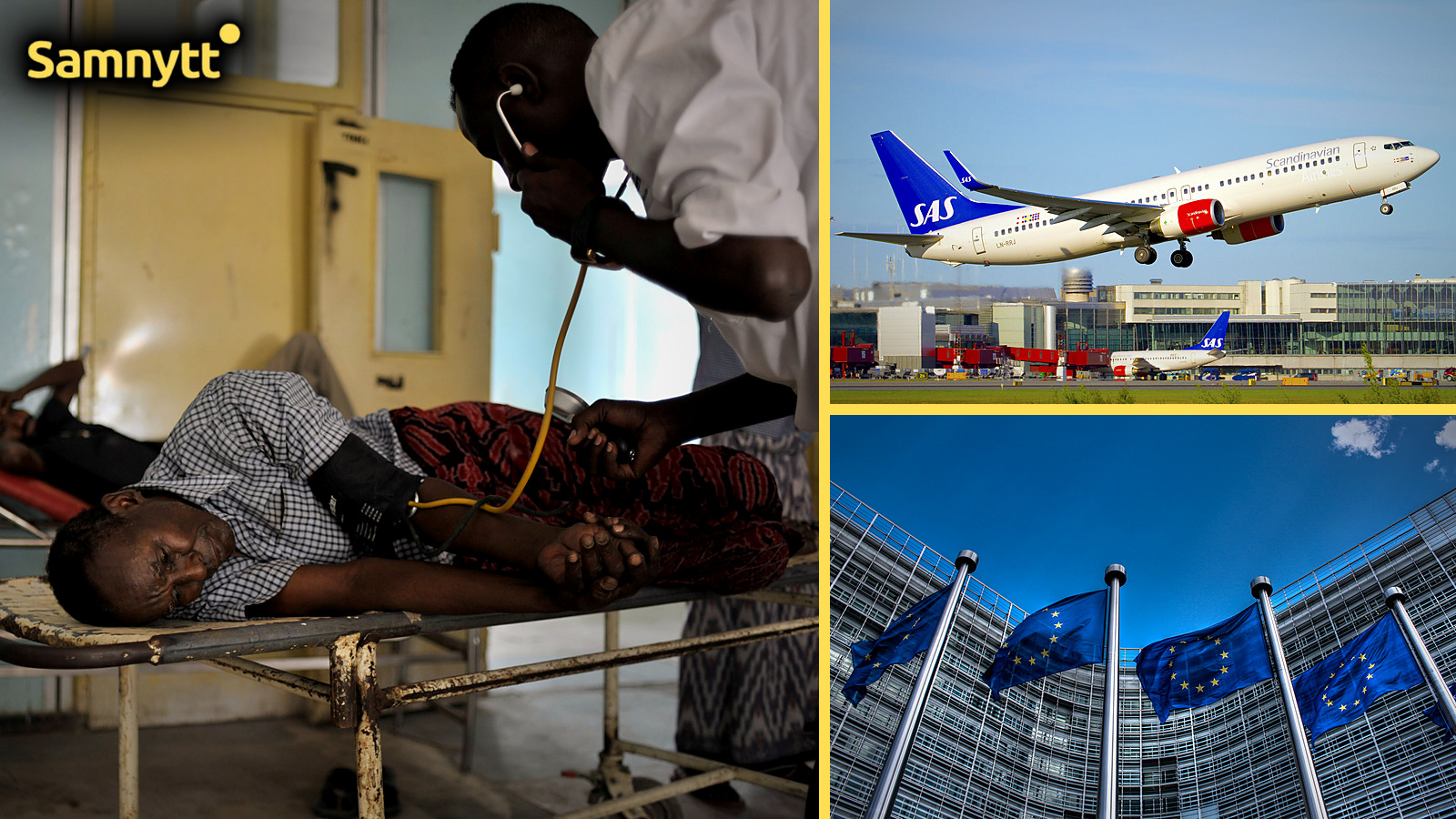
BRUSSELS - The European Commission wants doctors, nurses and dentists trained outside the EU to have their qualifications recognised automatically across the whole union. Sweden's government says yes in principle - but warns of fake diplomas and risks to patient safety.
The proposal, presented on September 15, is part of a wider package on labour mobility. It is an entirely new directive on how professional qualifications held by non-EU citizens should be approved.
The Commission says the goal is to tackle labour shortages and make it easier for employers to recruit from outside the union.
Today it takes an average of 14 months to get a non-EU qualification approved. Under the new rules it should take four. A decision on recognition would as a rule come within three months.
Automatic recognition would cover seven professions: doctors, nurses, dentists, midwives, vets, pharmacists and architects. These are the same professions already recognised automatically between EU member states, where training follows shared minimum standards.
The universities order their own reviews
A non-EU programme would be approved once a so-called trusted review body has concluded that it meets EU minimum requirements. The review bodies must be based inside the EU, and the diploma must be digital.
It is the university outside the EU that applies for the review itself. The review body may charge for the work and, under the proposal, add a reasonable margin on top of its costs.
Each review is carried out by five to nine experts, no more than three of them appointed by member states, and includes at least one site visit. An approval then holds for five years.
A single EU country that doubts a review cannot block it on its own. It can write to the Commission, but a new review is only required if at least five member states back the objection.
The Commission also wants to decide for itself which non-EU countries have reliable enough education systems. For programmes in those countries, some of the requirements would be treated as met automatically.
READ MORE: Asylum Fraud Exposed: Fake Foreign Indictments Bought for 8,000 Kronor to Win Residency
Brussels admits fake papers are a problem
In the draft law itself, the Commission writes of "the prevalence of fraudulent credentials and diploma mills". Checking documents is described as especially hard for countries with weak institutions or at war.
The answer is a new EU authenticity-check service - but it will only be advisory. At the same time, digital diplomas are to be presumed genuine, and the proposal says their validity should not be called into question.
The language requirement stays. Anyone whose training is approved must still speak the language required for the job in the country where they want to work.
Stockholm says yes - with a warning
The Swedish government gave the automatic recognition a preliminary welcome in a fact memo submitted to parliament on October 20.
But it also points to the risks when the country of origin has weak oversight of its education system. In that case, the government writes, there is "an elevated risk that incorrect or insufficiently verified documents form the basis for recognition".
Several of the professions are in healthcare, and the government says the proposals must not put patient safety at risk. It also wants each country to keep the right to shape its own rules on labour migration.
Already this summer, before the proposal was published, Germany's national dentists' association warned that thorough competence tests for non-EU training are not needless red tape but a protection for patients.
Sweden can be outvoted
The proposal will be decided jointly by the European Parliament and the Council of Ministers. In the Council a qualified majority is enough, which means Sweden can be outvoted.
Talks in the Council are due to begin this autumn. So far neither the Council nor Parliament has changed anything in the text.
In Sweden, parliament's education committee will examine whether the EU is overstepping into matters member states should decide for themselves. Its deadline runs out on December 16.
If adopted, the rules on non-EU qualifications would take effect two years later, according to the Commission.
Simon Kristoffersson · Responsible Publisher & Senior Editor (Ansvarig utgivare)
Simon Kristoffersson is the Legally Responsible Publisher (Ansvarig utgivare) and Senior Investigative Editor of Samnytt and Samnytt News under Sweden's Constitutional Freedom of the Press Act, specializing in courts, organized crime, municipal governance, and public-sector investigations.
Follow @SamnyttNews on 𝕏 ↗