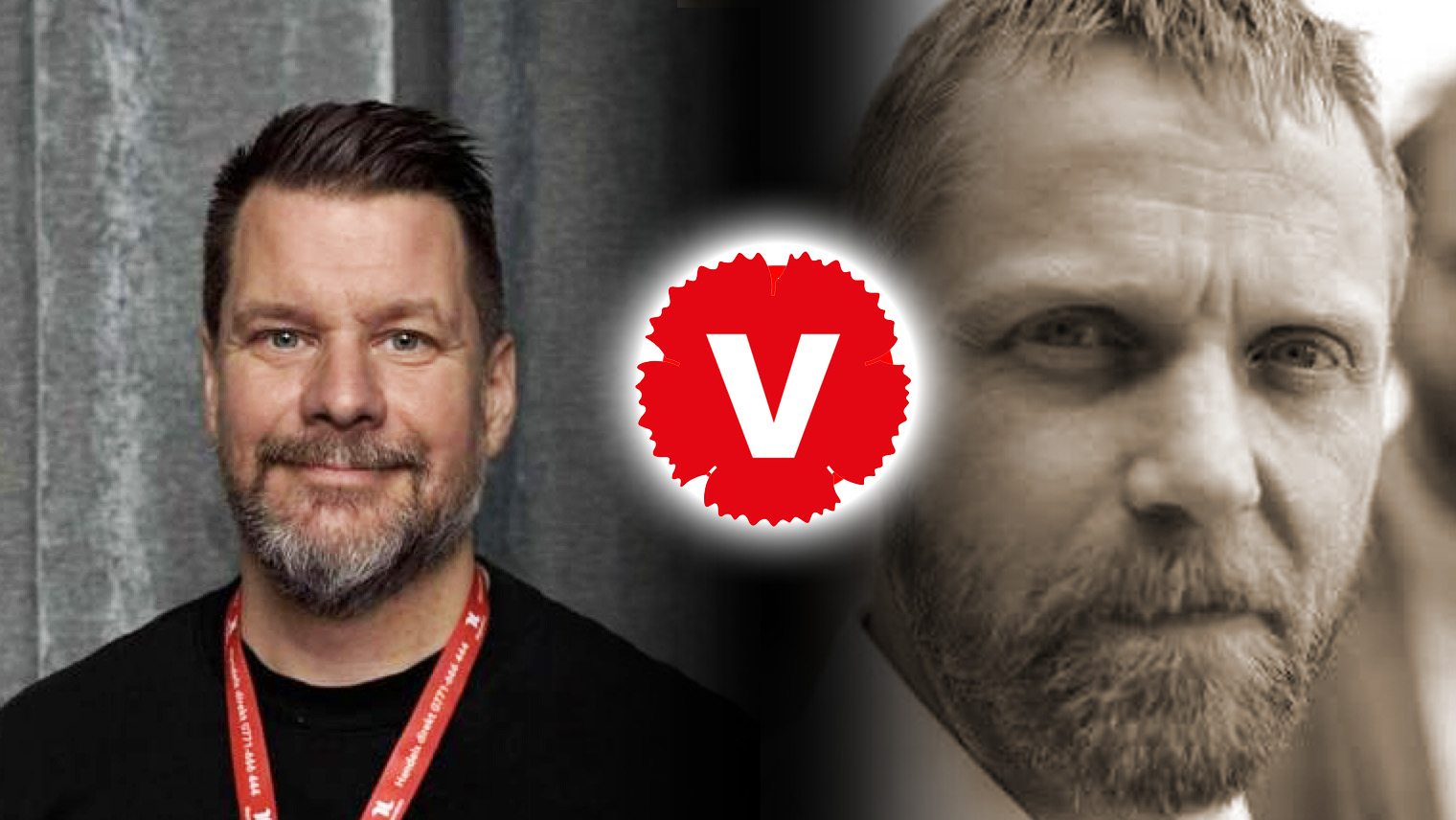
One of the most prominent politicians of the Left Party in Borlänge, Rikard Rudolfsson, is now charged with two cases of child abuse and two cases of violating the peace of children. According to the prosecutor, he has also admitted to the crimes. Despite this, Borlänge Tidning chooses to anonymize the V-top – a decision that raises questions about double standards, especially considering that the newspaper has chosen to name former right-wing politicians in significantly less serious matters. At the same time, a web search shows that the editor-in-chief himself has participated in an anti-SD campaign on social media.
When the lawsuit against Rikard Rudolfsson (V) was filed on November 27 at Falu District Court, it became clear that one of Borlänge’s most well-known left-wing politicians is now formally suspected of domestic violence. The indictment concerns two cases of assault and two cases of violating the peace of children, which, according to the indictment, took place in the family’s residence in Borlänge between August 25 and 26 this year.
Rikard Rudolfsson (V) is the chairman and group leader of the Left Party in Borlänge. He is also an elected member of both the municipal executive board and the municipal council, as well as the environmental and planning board.
According to the Prosecutor’s Office’s lawsuit, Rudolfsson is said to have hit his two children in the head with an open hand, which caused pain and scared them. The children are also said to have witnessed each other’s vulnerability. According to prosecutor Anastasiya Blomwood, the acts were committed with intent and the V-politician has admitted to the crimes in police interrogations.
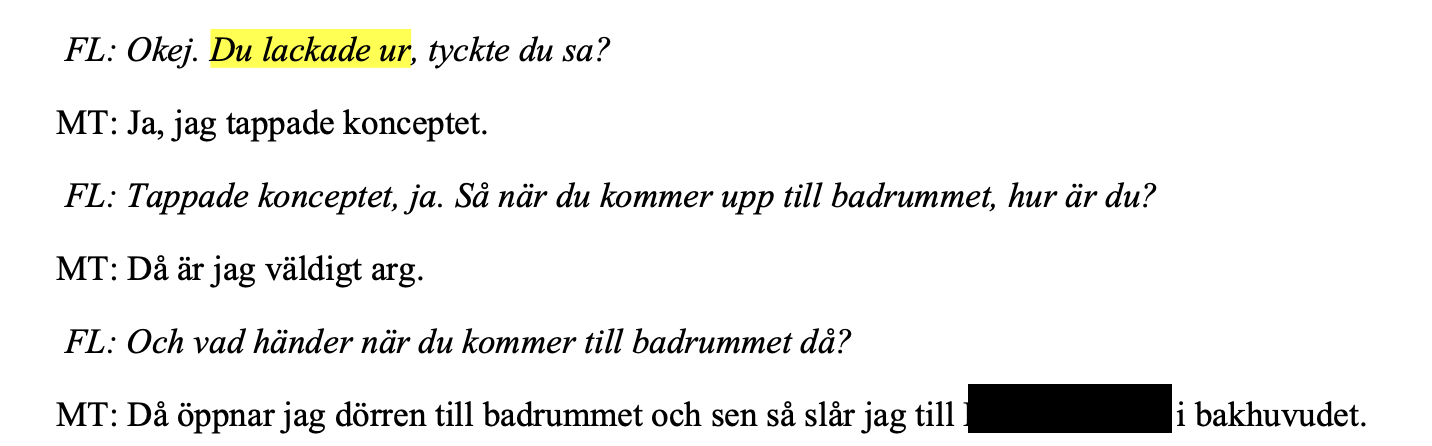
The police investigation includes video interviews with both children, where they describe the incident and the V-top’s previous outbursts in the home. The school’s report to social services and information about Rikard Rudolfsson’s aggressiveness are also included in the investigation. The documentation shows that Rudolfsson himself, in conversations with social services, admitted to being very angry and hitting the children in the back of the head.
Campaigns against violence in close relationships
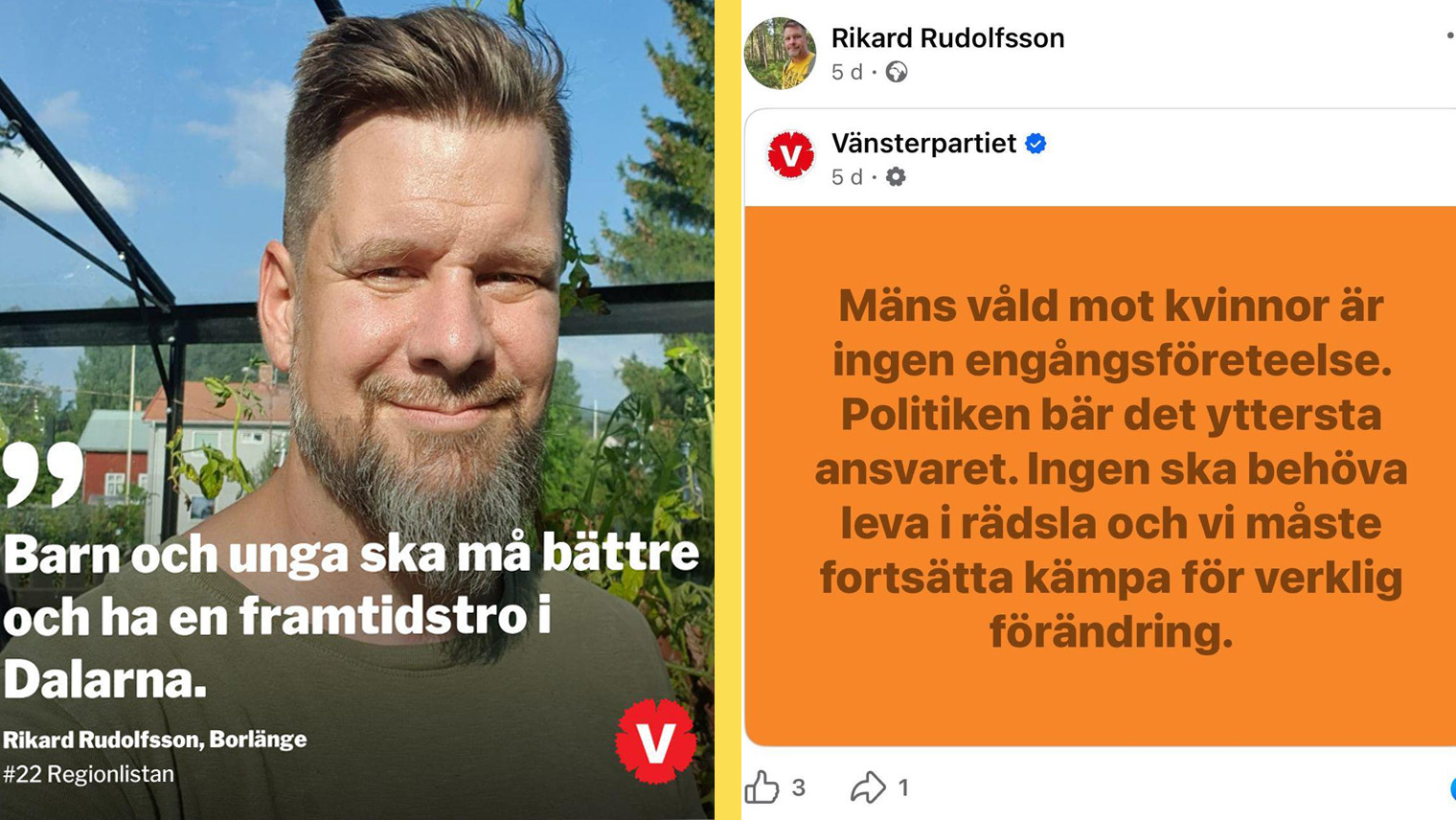
Rudolfsson has long been one of the Left Party’s most prominent figures in Borlänge politics. In addition to several important municipal assignments, he has been a recurring voice on issues such as social justice, environment and climate, equality, men’s violence against women, and children’s safety.
READ ALSO: S-top would stop violence against women – raped party colleague
The politician has repeatedly emphasized zero tolerance for violence and emphasized that children should always be protected from abuse. The indictment against him is therefore in sharp contrast to the political profile he has built up.
Different standards
Despite the extensive public interest in a case where an elected official has admitted to violence against his children, Borlänge Tidning has chosen to anonymize the politician. In a column published the same day as the news article about the indictment, editor-in-chief Erik Nyholm explains that the identity is concealed to protect the children from being identified.
READ ALSO: Feminist from the Left Party called woman a whore and raped her – convicted
Nyholm argues that publishing the name could also harm third parties and thus constitute an unjustifiable publicity damage. According to him, it is therefore press ethically necessary to avoid mentioning the politician’s name, despite his long public role.
It feels like you’re not taking press ethics seriously, because we have of course published information about… many different people. Information that may be considered blameworthy. And in a certain context, it is quite reasonable.
The editor-in-chief in an interview with Samnytt
At the same time, there are examples of how the same newspaper named right-wing politicians in the region in significantly less serious cases – even in the early stages of the legal process.
In the case of the former SD politician Daniel Lönn, both name and picture were published for a minor drug offense, despite the fact that he was no longer a politician and that his family could also be affected by the publication.
There were no similar considerations about protecting third parties on the editorial page then. This is the clear difference that now raises the question of consistency and equal treatment in the newspaper’s reporting.
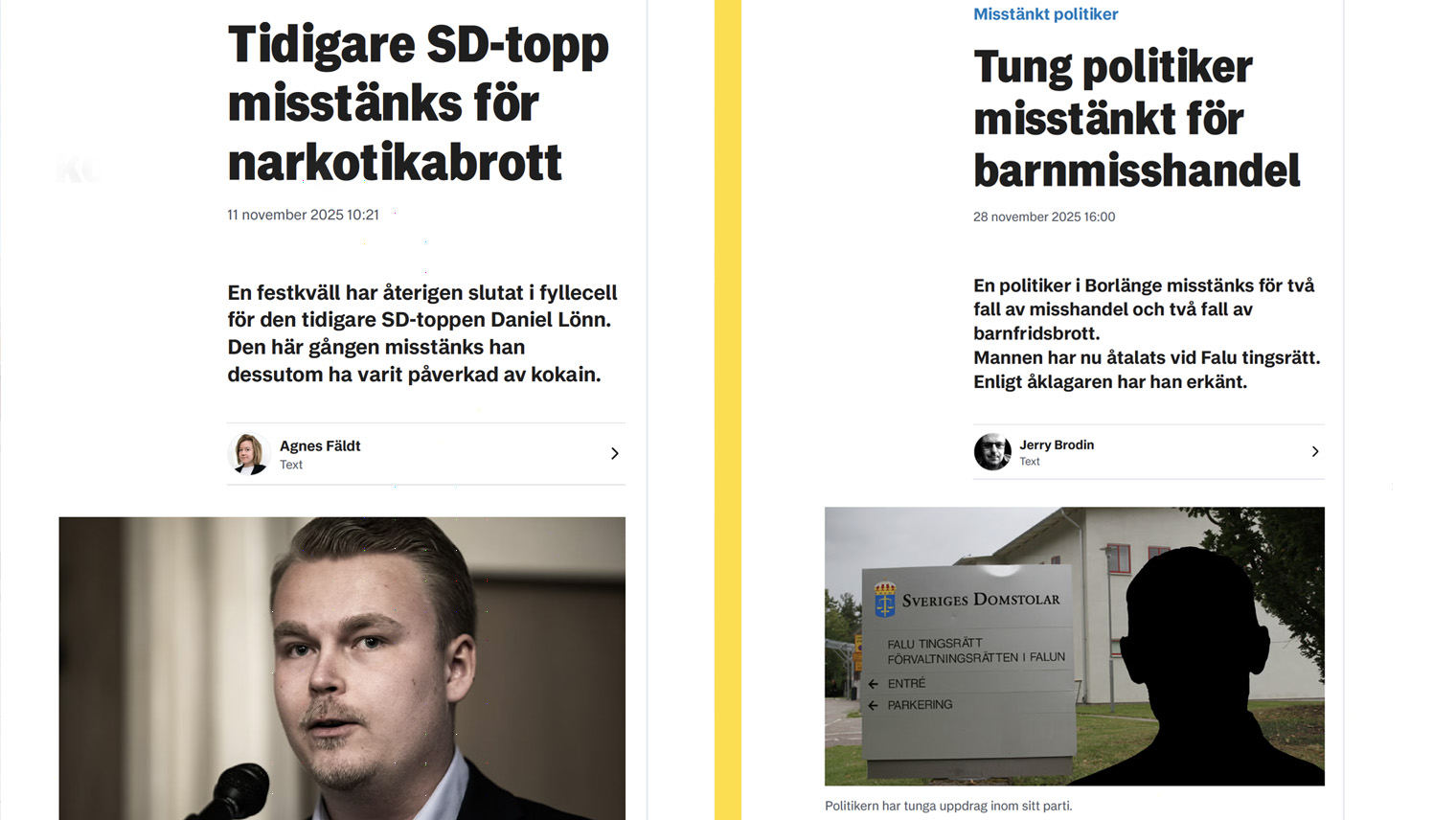
”Feels like you’re not taking press ethics seriously”
Samnytt contacted editor-in-chief Erik Nyholm at Borlänge-Tidning to ask questions about the newspaper’s standards.
In the interview, Nyholm elaborates on the reasons for the anonymization. He refers to the children’s situation and argues that a more detailed discussion would mean going against his own publishing decision.
Your column about the decision to anonymize seems unclear in the sense that some politicians are anonymized and others are not?
– The reason for the anonymization here has to do with the fact that third parties may suffer a publicity damage.
But even Daniel Lönn also has a family?
– Who are not involved in what he has done… You know, we are bound by the press ethical system. And then you make considerations between unjustifiable public interest and unjustifiable publicity damage. These are the kinds of considerations you make.
Rudolfsson, has held many important positions within the Left Party and is a public figure as a politician, why doesn’t the public interest in this case weigh more heavily for you?
– This is a consideration that I have made. And I have chosen to anonymize in this case. At this point, I should also say…
But you don’t seem to have any problem with exposing right-wing politicians with name and picture?
– Do we?
Yes, for example, Daniel Lönn in Dalarna.
– Yes, but you have one example, is it something you can generalize from? I am only responsible for my own publishing decisions.
When asked why SD politicians were previously named, Nyholm responds that the circumstances in those cases were different and that therefore they cannot be directly compared. However, the question remains. If press ethics are to protect third parties, shouldn’t it apply regardless of whether the politician belongs to the Left Party, the Sweden Democrats, or any other party.
But you mean that the decision to anonymize has nothing to do with the fact that this politician is from the Left Party?
– No, absolutely not. And I really can’t talk about this without going against my own publishing decision.
He continues:
– It feels like you’re not taking press ethics seriously, because we have of course published information about… many different people. Information that may be considered blameworthy. And in a certain context, it is quite reasonable.
Nyholm elaborates:
– When it comes to my assessment of Daniel Lönn, and the publication we made then, my assessment was that if this had been the first time something similar happened, maybe my assessment would have been different.
How would you describe Daniel Lönn, and his political career compared to Rickard Rudolfsson, in terms of public interest?
– Daniel Lönn has had a rocket career, you could say.
But you don’t think that Rikard Rudolfsson has had an equally important political career that is worth highlighting?
– But it’s like this… I think it was the current press ombudsman who said that before the law, everyone is equal, but before press ethics, every situation is different… There are many different components to consider. Which means that you can’t generally compare one publication with another.