Ukrainian With Canadian Passport Wins Right to Protection in Sweden
Sweden's highest migration court rules that Ukrainians keep EU temporary protection even if they hold citizenship in a safe country like Canada. The Swedish Migration Agency loses, and the precedent now applies to all similar cases.

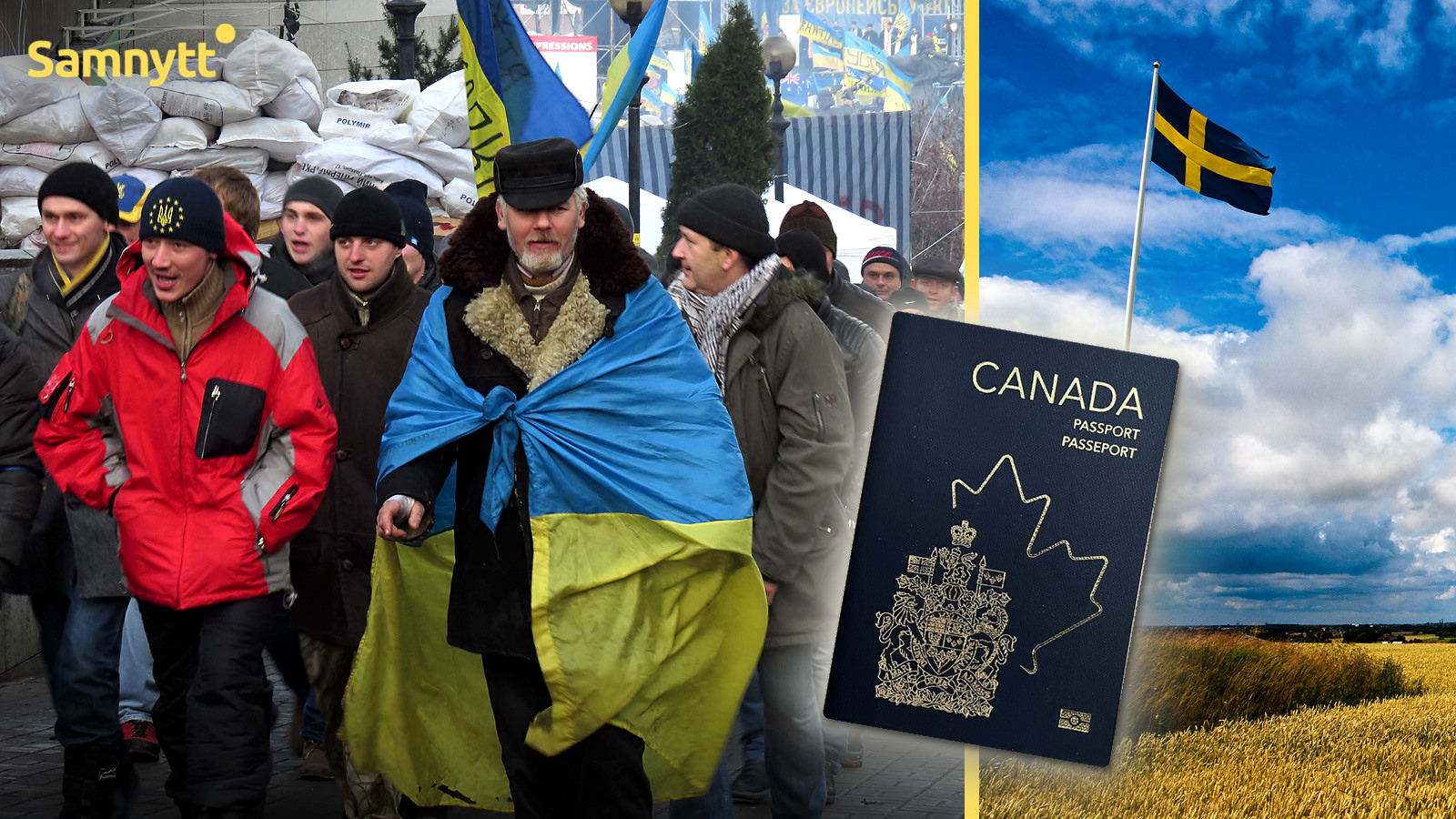
STOCKHOLM - Ukrainians who fled the war have the right to temporary protection in Sweden even if they also hold citizenship in another country outside the EU, and even if they could simply move there. That is the conclusion of Sweden's highest migration court in a new precedent-setting ruling.
The Swedish Migration Agency had refused to extend the residence permit of a man with both Ukrainian and Canadian citizenship, arguing that he could go back to Canada. The agency has now lost the case in the final instance.
The man came to Sweden after Russia's invasion of Ukraine and was granted a permit under the EU's Temporary Protection Directive, the rules that since spring 2022 have let Ukrainian war refugees live and work in EU countries without applying for asylum.
When he applied to have the permit extended, the Migration Agency said no. In its view he was not covered by the protection, since he also holds Canadian citizenship and had given no reason why he could not return there.
"Should Not Be Covered"
The agency had already lost at the Administrative Court in Gothenburg in February. That court found that neither the EU rules nor Swedish law say anything about excluding Ukrainians with dual citizenship from the protection.
The agency appealed, pointing to a basic principle of asylum law: a person who can get protection in their own country should turn there first, before other countries have to step in.
"A person who can return to their country of origin, or one of their countries of origin, should not be covered by the right to temporary protection under the Temporary Protection Directive," the Migration Agency argued, adding that nothing had emerged to suggest the man could not move back to Canada.
Being Ukrainian Is Enough
The Migration Court of Appeal, part of the Administrative Court of Appeal in Stockholm and the last instance in migration cases, disagreed. In its ruling of October 16, published this week as MIG 2026:10, it stuck strictly to the wording of the EU decision from March 2022 that triggered the protection.
That decision covers Ukrainian citizens who lived in Ukraine before February 24, 2022, and were forced to leave because of the Russian invasion. The man meets every one of those conditions.
Nothing in the directive or the EU decision says that citizenship in another non-EU country changes anything, the court found. The Canadian passport is therefore irrelevant, and whether the man could actually live safely in Canada is never even examined.
The Migration Agency's appeal was rejected. The case goes back to the agency, which must process his application again without being able to refuse him by pointing to Canada.
Binding for Similar Cases
Rulings from the Migration Court of Appeal are precedents that in practice dictate how the Migration Agency and the migration courts must handle similar cases. The ruling therefore applies not only to this man but to every Ukrainian covered by the EU decision who also holds citizenship in another non-EU country. How many people that involves in Sweden is not stated in the ruling.
The temporary protection has been extended several times, and the EU has now decided it will remain in force until March 4, 2028. In its July forecast, the Migration Agency expected around 10,000 Ukrainians to seek protection in Sweden in 2026, and roughly as many in 2027.
Switzerland Went the Other Way
The ruling is in line with how the European Commission has interpreted the rules. In a 2022 Q&A document, the Commission wrote that Ukrainians covered by the EU decision are entitled to protection even if they hold another citizenship, and that the possibility of returning there is not a requirement.
Switzerland, which is outside the EU and runs its own equivalent protection system, reached the opposite conclusion. In December 2022 its Federal Administrative Court denied protection to a Ukrainian with Canadian citizenship on the grounds that he could get protection in a safe country, according to a summary by the EU Agency for Asylum. The Swiss court noted that Ukrainians with dual citizenship would otherwise be better off than asylum seekers in the same situation.
In Sweden, which is bound by the EU rules, the Migration Court of Appeal's reading now applies. As long as the rules stay as they are, it is enough to be a Ukrainian citizen who lived in Ukraine when the war broke out.
Mats Dagerlind · Senior Political Columnist
Mats Dagerlind is Senior Political Columnist at Samnytt and Samnytt News. A veteran Swedish political commentator and essayist, he covers Swedish domestic politics, free speech, cultural identity, and media accountability.
Follow @SamnyttNews on 𝕏 ↗