Norwegian Professor Plans to Leave Country – Claims His Research on Russia Is Being Criminalized
The Norwegian political scientist and professor Glenn Diesen plans to leave Norway for most of next year to do research in China and Australia. The reason is a long-standing conflict over his analyses of Russia,…
- The Norwegian political scientist and professor Glenn Diesen plans to leave Norway for most of next year to do research in China and Australia.
- The reason is a long-standing conflict over his analyses of Russia, NATO, and the war in Ukraine.
- Diesen claims he is the target of a systematic campaign where politicians, media, and organizations try to silence him by labeling his research as Russian propaganda.
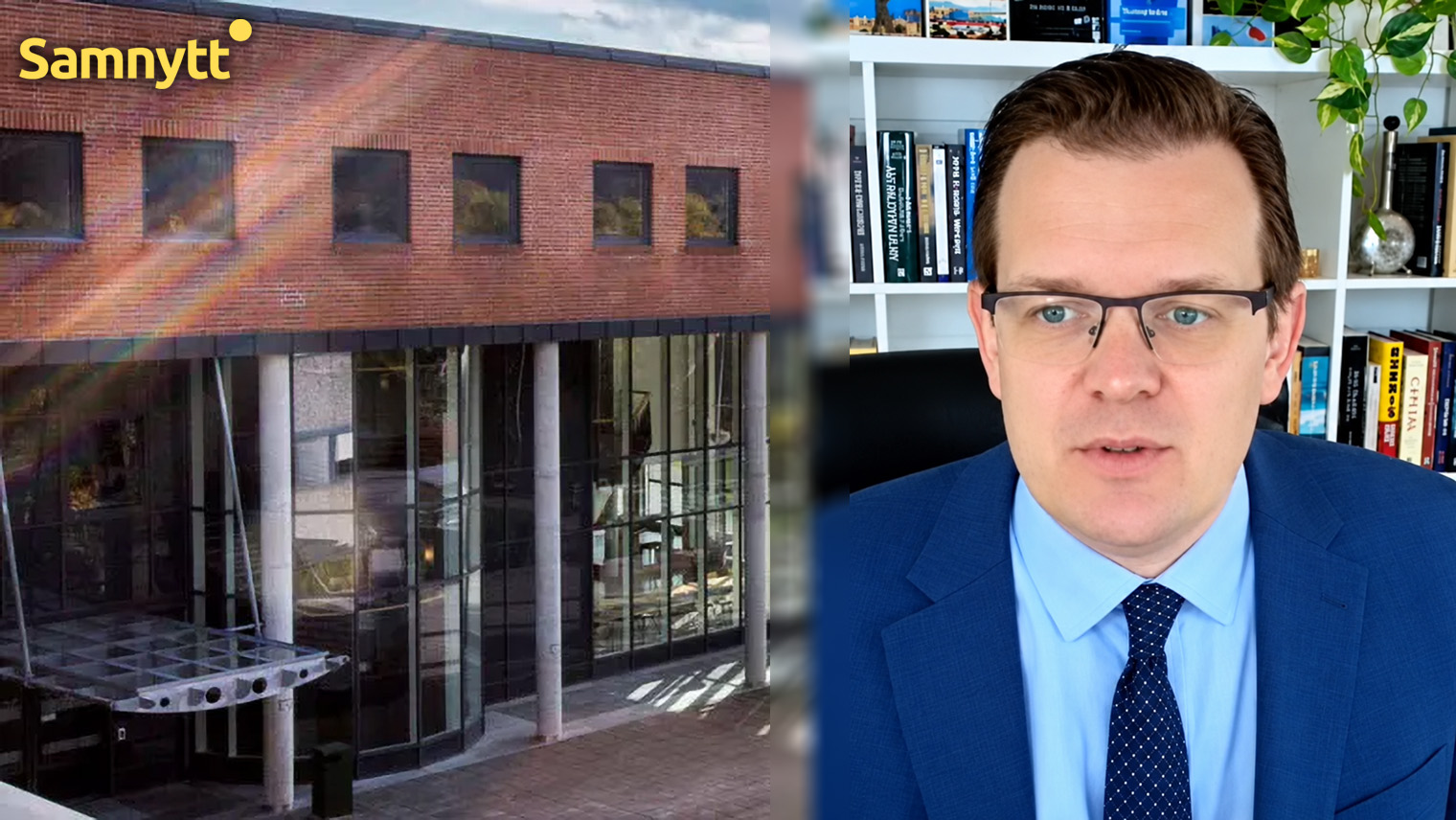
The Norwegian political scientist and professor Glenn Diesen plans to leave Norway for most of next year to do research in China and Australia. The reason is a long-standing conflict over his analyses of Russia, NATO, and the war in Ukraine. Diesen claims he is the target of a systematic campaign where politicians, media, and organizations try to silence him by labeling his research as Russian propaganda. His university denies allegations that his research is being criminalized.
Glenn Diesen, professor of political science at the University of South-Eastern Norway (USN), has applied for unpaid leave from January 11 until the end of 2027. During this period, he plans to mostly stay in China and Australia. This is reported by the Norwegian higher education magazine Khrono, which has seen the professor’s leave application.
Diesen primarily researches Russia’s foreign policy, geopolitics, and the economic and strategic cooperation between Russia and China. He believes that the political climate in Norway has made it increasingly difficult to conduct research that starts from perspectives other than those dominating the Western debate.
– I feel that in today’s Norway there is very little room for academic research in this field, as academic cooperation and research are being criminalized, he told Khrono.
He describes the decision to seek work abroad as a means to escape what he perceives as a long-standing smear campaign.
– I am using my own money and vacation days to work abroad to get away from the smear campaign in the Norwegian media and the pressure placed on the university. I want to leave the country in order to be able to conduct research.
Accused of Spreading Russian Propaganda
The background is several years of fierce disagreements regarding Diesen’s analyses of the conflict between Russia and the West. Diesen has repeatedly argued that NATO’s eastward expansion and the West’s ambition to bring Ukraine closer to the Western defense alliance were decisive factors behind the Russian invasion.
He claims that Western decision-makers underestimated Russia’s security concerns and that this policy contributed to a war that has primarily affected Ukraine. His critics, on the other hand, believe that his reasoning risks legitimizing Russian aggression by placing a disproportionately large share of the blame on the West.
Diesen’s appearances in Russian media have received particular attention. Among the organizations that have harshly criticized him is the Norwegian Helsinki Committee, which accused the professor of spreading Russian propaganda.
Diesen rejects this characterization and argues that his research is about understanding why conflicts arise, not defending Russia’s actions. In a previous opinion article in Khrono, he challenged the labels “controversial” and “pro-Russian,” which he claims are used to cast suspicion on him instead of responding to his arguments.
He pointed out that a key duty for researchers is to challenge established beliefs, especially in wartime when demands for national cohesion and loyalty are particularly strong.
– It is possible that I am wrong in my analysis of Russian intentions, and there are counterarguments, but in academia and an open society, arguments must be allowed to compete so that we achieve the best possible understanding of reality, he wrote.
TV Debate Sparked Media Storm
The conflict escalated ahead of Norway’s 2025 general election. Diesen became politically active and stood as the top candidate in Akershus for the newly formed party Peace and Justice (FOR), which, among other things, advocated stopping Norway’s weapons aid to Ukraine and seeking a diplomatic solution to the war.
The party gained attention after a campaign in Oslo’s public transport system. It later emerged that the campaign was financed by billionaire Atle Berg, who lives in Russia.
Soon after, Diesen participated in NRK’s debate program Debatten, where he faced widespread criticism. He made statements about historic support for NATO membership in Ukraine and about the peace negotiations between Russia and Ukraine in Istanbul in the spring of 2022.
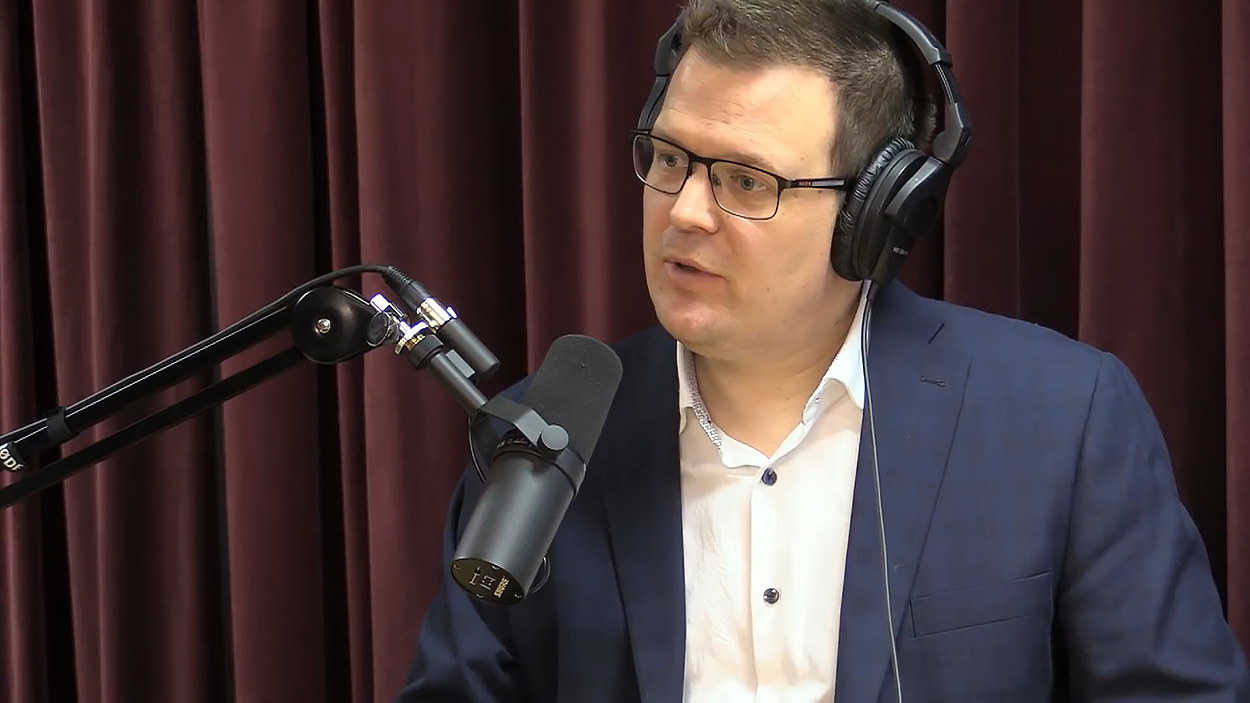
NRK had experts at the Norwegian Defence Research Establishment (FFI) review several of his claims and asserted that they could be wholly or partly refuted. Diesen later questioned the review process, claiming that his statements were taken out of context or met with arguments that didn’t address what he had actually said.
Particularly controversial is his view that the US and UK helped prevent a peace agreement between Russia and Ukraine in spring 2022. He refers, among other things, to statements from people who participated in or had insight into the negotiations. Critics say that this information isn’t sufficient to prove the Western powers sabotaged a finalized or imminent peace settlement.
Withdrew from Politics
After the massive media attention, Diesen announced that he wanted to withdraw his candidacy for parliament. However, as the deadline to alter the electoral lists had already passed, his name couldn’t be removed from the ballot.
He explained that his political involvement had brought too many consequences for himself and his family. Shortly thereafter, he also announced he no longer wished to take part in public debate in Norway.
– I have tried to argue why NATO’s policy will lead to the destruction of Ukraine, but I am met only with accusations of spreading Russian propaganda and increasing pressure on my university, he wrote to the newspaper Fædrelandsvennen.
He referred to his responsibility toward students, colleagues, and the university’s reputation. However, the decision did not mean he stopped his international advocacy. Diesen runs a prominent YouTube channel where he interviews researchers, politicians, and others about international conflicts and geopolitics. The channel has more than half a million subscribers.
The activity has also become economically significant. According to Khrono, his company Diesen Media AS had revenues equivalent to 7.6 million Norwegian kroner in 2025 and reported a profit of 4.5 million. Earlier this year, Diesen reduced his employment at the university by 20 percent to devote more time to book writing and other ventures.
Denied Permission to Lecture for Institution in Moscow
A concrete example of the conflicts between Diesen and his employer concerns a planned set of lectures at the American University in Moscow. Diesen had been asked to record lectures for the institution and therefore applied for permission from USN. The university denied the application.
According to the university management, there was a risk that this task could violate Norwegian regulations for exporting services to Russia, which were tightened after the invasion of Ukraine in 2022. A regulatory violation could also damage the university’s reputation. Diesen said that he respected the denial but linked it to the pressure that he believes journalists exert on his employer.
Khrono’s review also showed that the American University in Moscow cannot be fully compared to a regular university. The institution was founded after the Cold War to promote contacts between the US and Russia, but for some time now is considered to have very limited teaching activity. USN emphasizes that the denial was not based on what Diesen intended to say in the lectures, but rather on legal and administrative considerations.
University Rector Defends Freedom of Expression
Despite extensive criticism, Diesen has received support from several academics and university officials. University Rector Pia Cecilie Bing-Jonsson has repeatedly defended his right to express opinions that provoke strong reactions.
– We should not respond to statements we disagree with by using employer authority. Statements should be met with counterstatements, in academic and public debate, she has emphasized.
She has also stressed that universities’ obligation to protect academic freedom must outweigh concern for their own reputations. The case has attracted so much attention that it was discussed at a closed meeting among Norwegian university and college rectors. According to information given to Khrono, there was broad support for USN’s rector’s principled stance.
At the same time, other commentators have questioned whether academic freedom can be invoked as protection from scrutiny of researchers’ factual claims. Media critic Anki Gerhardsen, for example, has pointed out that professors have a special responsibility for scientific rigor and that it must be possible to discuss how researchers use their academic authority in public debate. She also emphasized that she does not advocate that Diesen should lose his job or be silenced.
Striking Back at the Media
After the latest article in Khrono, Diesen published a lengthy and highly critical post on Facebook. There, he describes what he considers to be a public execution of his professorship and reputation.
He accuses the media of uncritically reproducing his opponents’ depictions and avoiding a factual discussion about his research. He is particularly critical of the repeated use of the “pro-Russian” label in reports.
According to Diesen, Norway’s defense minister identified him as a propagandist because of his view that NATO’s expansion contributed to triggering the war in Ukraine. He also claims his participation in public events has been made more difficult due to pressure on event organizers.
As an example, he mentions a planned appearance alongside former CIA employee John Kiriakou, where according to Diesen a venue was withdrawn after media attention. Diesen also directs strong accusations against the Norwegian Helsinki Committee, which he claims has actively tried to have him fired and prevented his public appearances.
This is Diesen’s own account of events. The organization has previously denied any campaign of persecution against him. He believes that the line between criticizing a researcher’s conclusions and attempting to make research impossible has been crossed.
University Rejects Claims of Criminalization
Despite Diesen’s description of the situation, his employer does not believe there is evidence that research on relations between Russia and China is criminalized in Norway. Department head Bjørn Hansen emphasizes that researchers’ right to choose their own topics and methods is protected under Norwegian law.
– We do not see any basis for saying that the research is criminalized, even if it is debated, he told Khrono.
When asked directly if the university has rejected any research projects that Diesen wished to carry out, Hansen answered no. There is a contradiction between Diesen’s experience of political and social restrictions and what the university claims it has prevented him from doing. Diesen has not presented any information indicating he is being criminally investigated because of his research.
Wants to Continue Research in China
In his application for leave, Diesen listed Renmin University in China as his planned workplace. However, he told Khrono that he will most likely divide his time between China and Australia, and that he may also work at another Chinese university.
He has previously worked at an economics school in Moscow and has had international academic contacts for several years. As early as 2024, he applied for Australian citizenship and left open the possibility of eventually settling there. His application for leave has not yet been decided. The university expects to make a decision in mid-November.
For Diesen, the planned stay abroad is about more than the possibility to conduct research at other institutions. He describes it as a necessary step to continue analyzing international power relations without constantly having to defend his own legitimacy as a researcher.
The fact that the Norwegian professor is now seeking to move to China—a country where academic and political freedom of expression is generally considered to be far more restricted than in Norway—adds an extra dimension to the already heated debate.