COLUMN • The world’s second largest sporting event, after the Olympics, kicks (pun intended) off with the opening match on June 11 as one of the host nations, Mexico, faces South Africa at the legendary Azteca Stadium, where Argentina with Maradona won their second World Cup gold in 1986. The reason Mexico got to host again in 1986 – after also hosting in 1970 – was that the designated country, Colombia, withdrew at the last minute.
North America is therefore the place where the world’s best football nation will be crowned in the final, which takes place on July 19 at MetLife Stadium in New Jersey, USA. In 1994, the USA was the sole host of the event, and despite the nation’s relative disinterest in “soccer” compared to American football, baseball, hockey, and basketball (which are more popular), it still stands out with record attendance numbers. Nearly 3.6 million people watched the 64 matches, with Brazil in 2016 and Germany in 2006 coming right behind the USA with about 3.4 million spectators.
The USA was also responsible for one of the World Cup’s biggest upsets in 1950, when, with an amateur team, they defeated England’s star-studded professional team in the group stage with 1-0, in a tournament where the British, together with Brazil, were considered favorites to win it all. England, who had previously boycotted the tournaments of the 1930s due to FIFA’s amateur rules, scandalously went out in the group stage. However, they got their revenge at home in 1966 and became world champions – after defeating West Germany – for the first and only time.
Swedish amateur rules caused trouble
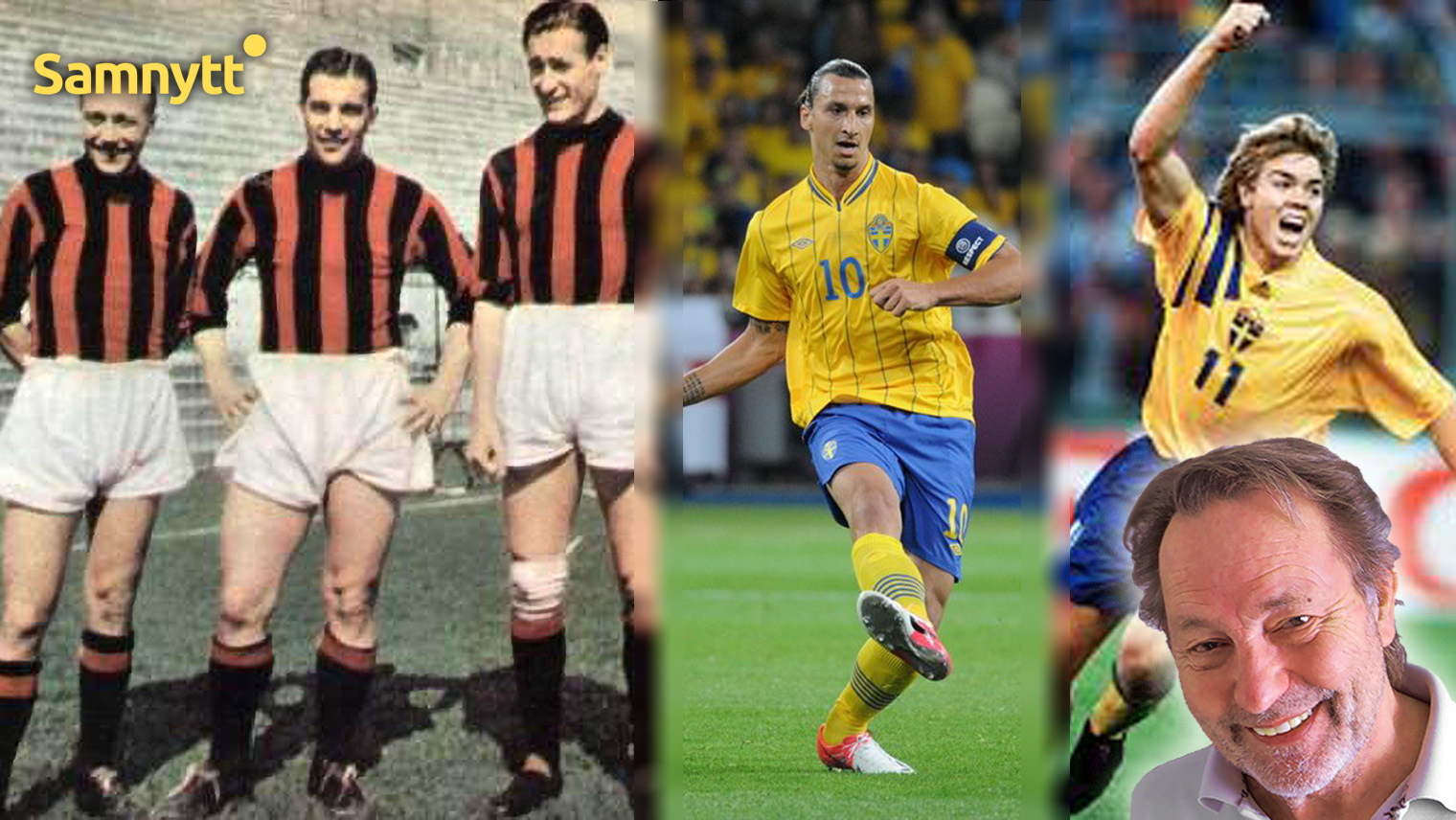
This year marks the 23rd World Cup finals, and for the first time – compared to the previous 32 teams – there are 48 participating nations, divided into 12 groups, where the best teams advance to the round of 16. Brazil is the only nation to have taken part in every tournament and has won the most times. They have claimed five World Cup titles in total, with their first gold in Sweden in 1958 after a 5-2 victory against a home team reinforced with professionals. After Sweden’s Olympic victory in 1948, especially football-crazy Italy set their sights on Swedish talent and quickly signed the attacking trio “Grenoli” (Gren, Nordahl, Liedholm) to AC Milan.
However, these three world stars were not allowed to play in the World Cup due to the Swedish Football Association’s amateur rules, which probably killed Sweden’s chances of ever becoming world champions. In 1950, Sweden’s amateur team still finished third in a tournament in Brazil, where they faced the host nation in the final round at the legendary Maracana Stadium in front of 140,000 spectators and suffered their biggest World Cup defeat of all time, 7-1 to Brazil.
The 1954 World Cup in Switzerland took place without Swedish participation as we were already eliminated in the qualifiers. Had the Swedish professionals playing in Italy and France been allowed to participate, Sweden would likely have been favorites to win along with Hungary. Imagine a five-man forward line with Yngve Brodd (Toulouse FC), Gre-No-Li (Milan), and Nacka Skoglund (Inter). Hungary, with Real Madrid star Ferenc Puskas, who had gone unbeaten since May 1950 with 27 wins and 4 draws, met West Germany in the final, whom they had crushed 8-3 in the group stage, only to lose 3-2 in the final—a major comeback for Germany after World War II. In retrospect, there were rumors of doping as syringes were found in the German dressing room containing the “war drug” Pervitin (methamphetamine).
The professionals allowed in 1958
In 1958, the professionals were finally allowed in the Swedish national team, fielding an attacking line comprising, from the right: Hamrin, Gren, Simonsson, Liedholm, and Skoglund. Absent was “the center tank” Gunnar Nordahl, who had won the Serie A top scorer title five times; injured and out of form, he was replaced by Örgryte’s Agne Simonsson. Despite his great successes in Italy, Nordahl’s greatest regret was not being able to represent Sweden after 1949.
This places him among the great football stars who never played in the World Cup, including Real Madrid striker Alfredo di Stefano, the Frenchman Eric Cantona, George Best from Northern Ireland, and George Weah (Liberia). Three of these have won the Ballon d’Or: di Stefano (’57 and ’59), George Best (’68), and Weah (’95). Cantona finished third in ’93—something no Swedish player has matched, not even Zlatan with his 11 nominations; his best was a fourth place finish in 2013. Other Swedish fourth-placers are Agne Simonsson (’59) and Tomas Brolin (’94).
Many consider Brolin to have been the world’s best footballer in 1994 when Sweden reached the semifinals and lost to eventual winners Brazil, but then clinched the bronze medal after a 4-0 win over a possibly hungover (?) Bulgaria. Among Sweden’s other World Cup successes are fifth place finishes in 1974 and 2002, when Sweden won the “group of death” (Argentina, England, and Nigeria) only to make a heartbreaking exit in the round of 16 against Senegal after extra time and the “Golden Goal” rule (applied in ’98 and ’02, abolished in 2006). 2018 was also a success: Sweden won their group, then beat Switzerland in the round of 16, before falling to England in the quarterfinals.
Sweden’s chances this year
So what are Sweden’s chances in this year’s tournament? Judging from last year’s qualifying results, Sweden hardly belongs at the World Cup: the team finished last in their group, losing twice to both Kosovo and Switzerland. But thanks to a new rule regarding previous wins, Sweden still, somewhat bizarrely, got to play for a qualifying spot and managed to clinch a place in the tournament after beating tough opponents like Ukraine and Poland.
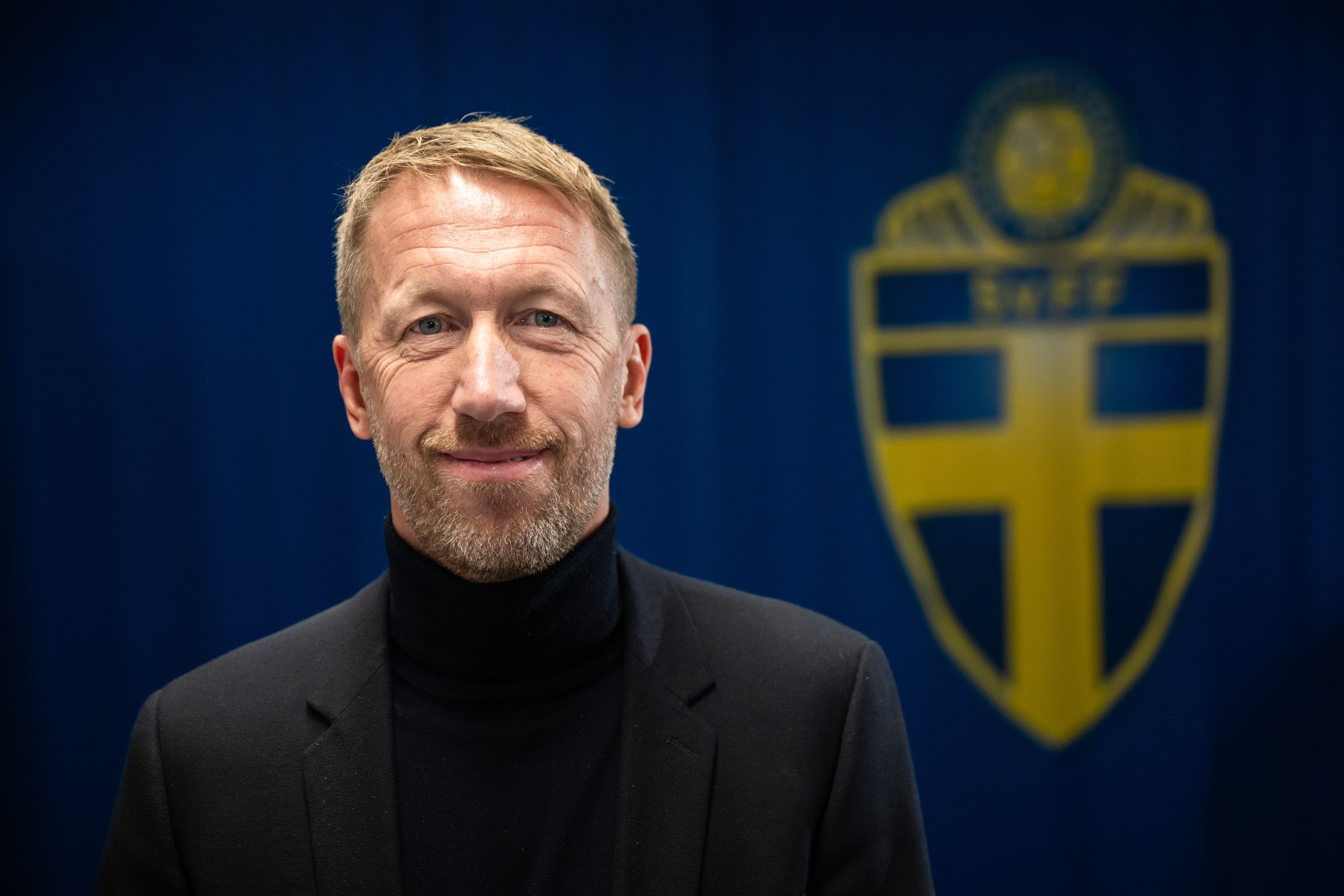
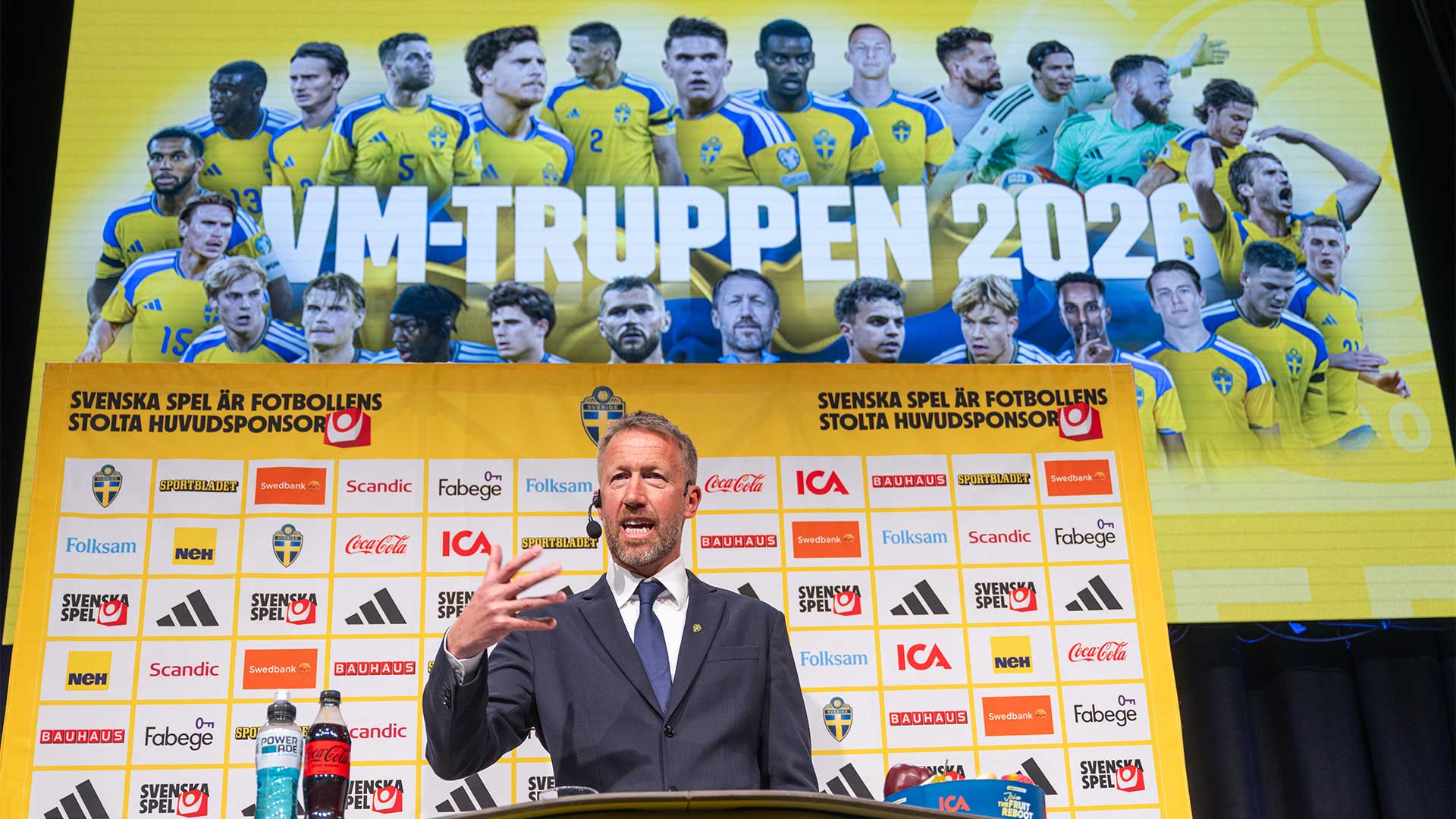
The new national team coach, Graham Potter, successfully focused on a solid defense and counter-attacking play—in other words, “long balls to Bengt,” except that in this case Bengt was Arsenal’s Viktor Gyökeres, who, like other Swedish “target players” such as Martin Dahlin and Ibrahimovic, can receive a long pass with his back to goal, turn the defender, and attack. The tactic paid off, with Gyökeres scoring a hat trick. In the following game against Poland, the opponents totally dominated with 65 percent possession and many scoring opportunities. Higher forces (?) seem to have scripted the match with a Swedish goal in the final minute of the first half and a winner in the 88th minute, scored by the same man who saved us in the previous match: Viktor Gyökeres!
On paper, Sweden has a fairly good team, including Nilsson-Lindelöf, Lucas Bergvall, Elanga, Gyökeres, and Alexander Isak. Unfortunately, it seems that Dejan Kulusevski is still injured and that midfield maestro Emil Forsberg didn’t make Potter’s 26-man squad. Sweden’s first match is against Tunisia on June 15—a must win, as four days later comes a tough encounter with favorites Holland, followed by the group stage finale on June 26 against a difficult Japanese team. It may be enough with a win and a draw to advance to the round of 16, although we could then face Brazil if we’re unlucky. If Sweden qualifies as third in the group, it could mean facing Germany or France, in which case the World Cup story will probably end. But as they say, the ball is round and (almost) anything can happen. To be continued.